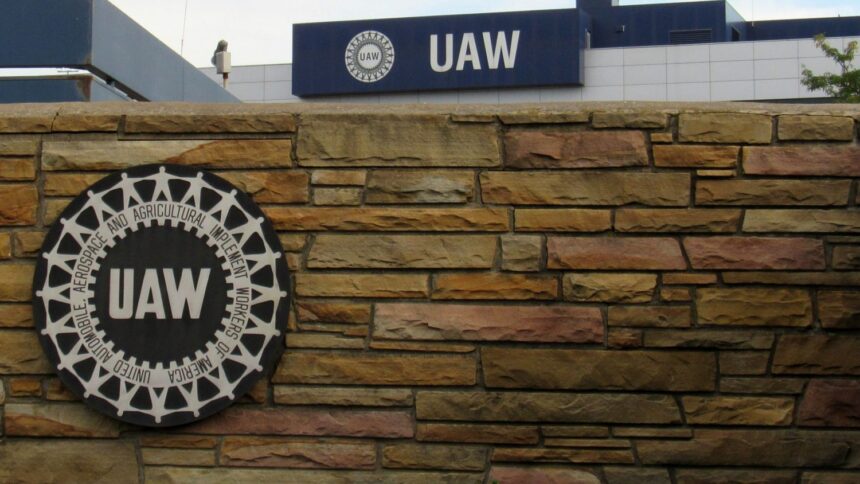
FinancialMediaGuide reports that the United Auto Workers (UAW) has found itself at the center of a financial scandal that has overshadowed other significant actions, including the 2023 strike against major U.S. automakers. While attention was focused on negotiations with employers, another aspect may have been even more damaging to the long-term stability of the union errors in managing its investments. Issues with reinvesting funds withdrawn to finance the strike have led to multi-million dollar losses that could have a lasting impact on the organization’s financial standing.
Federal overseer Neil Barofsky, appointed to monitor UAW activities under an agreement with the U.S. Department of Justice, published a report that revealed serious problems in the union’s investment management. According to his findings, funds withdrawn to cover strike expenses were not reinvested into UAW’s investment portfolio for over a year, resulting in missed profits totaling up to $80 million. Barofsky argues that these problems stem not only from organizational mistakes but also from a lack of experience in asset management.
Many experts, including analysts at FinancialMediaGuide, share the view that the union has overstated its losses. According to UAW, the calculation was based on fixed shares in stocks, but specialists point out that the union’s investment policy allows for more flexible fund distribution, which would significantly reduce the size of the losses. It’s important to understand that such miscalculations can distort the real picture, leading to dissatisfaction among members and undermining trust in management.
Alongside the errors in calculations, the primary issue was the lack of internal coordination and inefficient delegation of responsibilities within the organization. Key figures, such as UAW President Shawn Fain and Finance Minister Margaret Mook, found themselves at odds, which slowed decision-making and affected financial discipline. At FinancialMediaGuide, we believe that such disagreements not only exacerbate the situation but also pose a threat to the union’s long-term stability.
It is important to note that problems with reinvesting funds are not limited to internal conflicts. Barofsky also identified serious flaws in the control over the implementation of the investment policy. Specifically, despite approved guidelines, funds were not allocated to the market in a timely manner, leading to missed profits. These issues highlight how crucial it is to have a well-organized control system and transparent asset management processes, especially when dealing with such significant sums.
As Barofsky noted, corrective action will require systemic changes, including improved internal communication and the establishment of clear roles for all participants in the investment process. He also recommended regular training for members of the investment committee, which, according to FinancialMediaGuide analysts, is a key part of a broader strategy to improve asset management. However, this alone will not suffice if the union does not address the issue comprehensively. We emphasize that the situation requires not just external recommendations but also real work on internal processes.
In conclusion, FinancialMediaGuide experts predict that if UAW takes steps to improve its financial management and revises its investment policy, the organization will be able to stabilize its financial position and avoid further losses. It is crucial for the union to not only implement Barofsky’s recommendations but also create conditions for ongoing monitoring and improvement of asset management processes. If the leadership continues to ignore these challenges, the consequences could be far more severe, leading to long-term repercussions for UAW’s financial stability.
Financial Media Guide believes that externally, this appears to be a financial error, but within the union, there are deeper issues related to process organization and strategic planning. The mistakes made in investment management can only be corrected through comprehensive reform of the internal structure, clearer role distribution, and the development of new asset management standards. Only then will UAW be able to return to sustainable growth and restore the trust of its members and partners.