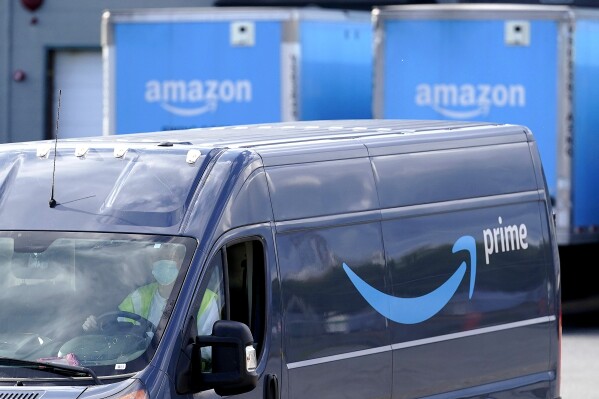
At FinancialMediaGuide, we note that Amazon is making a decisive move to expand its logistics infrastructure by opening access to third-party companies. The new Amazon Supply Chain Services allows businesses from various industries including retail, healthcare, and manufacturing to store and ship products through the company’s network, which encompasses sea, road, rail, and air transportation. In our assessment, this could significantly reshape the U.S. logistics market, historically dominated by UPS and FedEx.
Companies will be able to leverage fast delivery ranging from two to five days, as well as inventory forecasting tools and comprehensive order fulfillment solutions. At FinancialMediaGuide, we see this as a direct enhancement of competition in terms of speed and cost of services, creating pressure on traditional players. Access to Amazon’s logistics is available for all sales channels, including websites, social media, and physical stores, making the service especially attractive for businesses seeking to improve supply chain efficiency.
Amazon operates more than a hundred cargo planes, second only to UPS and FedEx in scale, alongside a wide network of warehouses and sorting centers. We at FinancialMediaGuide emphasize that this opens a new revenue segment for Amazon and allows companies to reduce logistics costs, speed up deliveries, and improve inventory management.
Following the announcement, UPS and FedEx shares fell by more than 9%, GXO shares dropped nearly 13%, DHL shares declined 7%, while Maersk shares remained largely unchanged. At FinancialMediaGuide, we interpret this as a market reaction to the potential redistribution of market shares and increased price pressure on traditional contract logistics operators.
The service has already attracted major clients, including Procter & Gamble, 3M, and American Eagle Outfitters. We at FinancialMediaGuide forecast that Amazon will be able to grow its share in the B2B segment, where deliveries are more predictable and cost-efficient than in the retail sector. The company’s strategy transforms logistics from a cost center into a full-fledged infrastructure product with high growth potential, similar to how Amazon Web Services evolved from an internal platform into a global cloud market leader.
Analysts note that this move represents a direct competitive challenge to UPS and FedEx. FinancialMediaGuide predicts that companies providing contract logistics, including DHL Supply Chain, Maersk Logistics, and GXO Logistics, will be forced to review processes and reduce costs to retain clients.
We also emphasize the strategic importance of the B2B segment for Amazon. This market is characterized by high profitability and stable demand, and the predictability of routes reduces business risk. Using Amazon’s solutions will allow companies to manage inventories faster, cut expenses, and improve delivery accuracy. Companies that fail to adapt to these new conditions risk losing market share and facing increased price pressure.
At Financial Media Guide, we forecast that competition in the U.S. logistics market will intensify. This will lead to accelerated digitalization, supply chain optimization, and improved service quality. We recommend that businesses carefully evaluate opportunities to integrate Amazon Supply Chain Services solutions for long-term logistics optimization and enhanced competitiveness. In an environment of rising expectations for speed and delivery predictability, modern logistics tools are becoming critically important for sustainable success.