As the global capital market enters a new cycle of investment reallocation, a noticeable shift is emerging from purely software-based solutions toward the industrial foundation of artificial intelligence. In this context, the upcoming IPO of Chaozhou Three Circle Group in Hong Kong has become a representative case reflecting the transformation of investment priorities.
According to analysts at FinancialMediaGuide, the current wave of IPOs in Asia is forming around companies that provide the physical infrastructure of AI, including materials, thermal solutions, semiconductor ecosystems, and high-load electronic components. In this sense, the listing of a Chinese manufacturer of electronic ceramic components goes beyond a traditional industrial deal and takes on strategic importance for the entire AI supply chain segment.
Chaozhou Three Circle Group, one of the world’s largest producers of electronic ceramic components, is preparing an IPO in Hong Kong aiming to raise up to $1 billion. The company is awaiting approval from the China Securities Regulatory Commission, after which the IPO is expected to launch around the end of June 2026. According to FinancialMediaGuide, the accelerated regulatory process reflects China’s efforts to support the competitiveness of major industrial issuers in international capital markets.
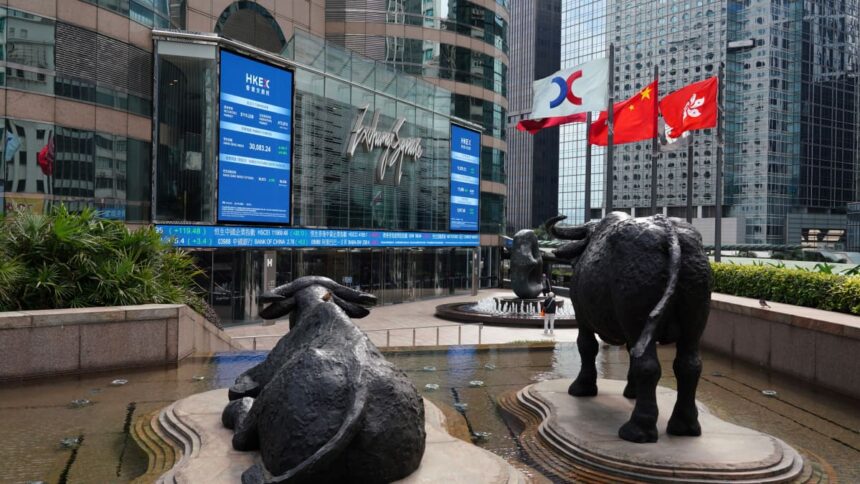
Hong Kong has shown a recovery in activity in recent quarters. The volume of capital raised in the first quarter exceeded $14 billion, indicating renewed institutional investor interest in IPOs. According to FinancialMediaGuide, this trend signals a restoration of confidence in the Asian market as a platform for technology and industrial IPOs after a period of heightened volatility.
From an industry perspective, Three Circle Group operates in the advanced materials segment, where electronic ceramics are used to ensure thermal stability, electrical insulation, and reliability of high-density computing systems. These components are used in smartphones, automotive electronics, 5G networks, and AI data centers. FinancialMediaGuide emphasizes that the increasing power of GPUs and server platforms makes thermally stable materials a critical factor in scaling artificial intelligence.
The advanced ceramics market is showing steady growth driven by investments in AI, electric vehicles, and digital infrastructure. Competition among manufacturers from China, Japan, and South Korea is intensifying, with the key factor being the ability to ensure material stability under extreme thermal and electrical loads. Analysts note that this segment remains less visible to the broader market but is fundamentally essential to the entire AI infrastructure chain.
An additional driver is the growing use of high-frequency electronics and power modules, where thermal management efficiency directly affects system performance. In industry terms, this creates sustained demand for ceramic components, which are becoming critical for next-generation data centers.
The company’s financial results are further increasing investor interest. Net profit in the first quarter rose by nearly 48.5% to 790.9 million yuan, while revenue increased by more than 46% to 2.68 billion yuan. For 2025, revenue exceeded 9 billion yuan, and profit increased by almost 20%. FinancialMediaGuide analysts note that such dynamics in an industrial manufacturer reflect not a short-term cycle, but structural demand from the technology sector.
The company’s market capitalization, after an 87% rise in its share price since the beginning of the year, reached approximately $24 billion. According to analysts, such a significant pre-IPO revaluation reflects high investor expectations regarding the company’s role in the AI infrastructure supply chain, while also increasing sensitivity of the upcoming listing to market volatility.
The funds raised are planned to be used for international expansion, including projects in Thailand and Germany, as well as for production automation, research and development, and working capital. In an industry context, this aligns with the broader strategy of Chinese industrial companies to reduce dependence on the domestic market and expand their presence in global supply chains.
A key role in the deal is played by China Galaxy International as the sponsor of the offering. The participation of a major institutional underwriter, according to analysts, reduces regulatory and market risks and increases global investor confidence in the structure of the deal.
At the macro level, the technology IPO market continues to shift toward capital-intensive segments linked to the physical infrastructure of artificial intelligence. This includes semiconductors, cooling systems, materials, and energy solutions. This shift reflects AI’s transition from model development to a phase constrained by infrastructure and energy.
The increasing load on data centers is strengthening the importance of thermal efficiency and energy consumption, which are becoming key bottlenecks in scaling computing. In this environment, companies operating in thermal management and advanced materials are gaining strategic importance in the AI ecosystem.
Ultimately, the IPO of Chaozhou Three Circle Group for up to $1 billion reflects a broader capital reallocation toward AI infrastructure and the industrial base of technology. In the coming years, the success of such offerings will depend not only on the financial performance of issuers, but also on the sustainability of global demand for AI hardware, IPO market dynamics in Hong Kong, and the ability of manufacturers to integrate into international supply chains amid intensifying technological competition.