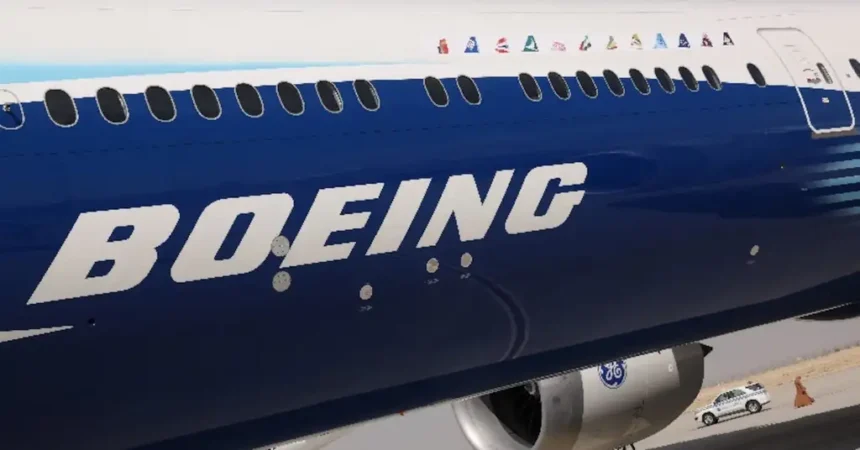
U.S. President Donald Trump announced that China has agreed to purchase 200 Boeing aircraft, with the potential to increase the order to 750 units if deliveries proceed successfully. According to experts at FinancialMediaGuide, this development could serve as an important signal for the global aviation industry and allow Boeing to strengthen its position in the Chinese market after nearly a decade-long pause due to trade disputes. For component manufacturers and service companies, it opens up prospects for long-term cooperation.
Trump noted that the current order consists of 200 aircraft, with the possibility of expansion to 750 if production proceeds smoothly. This approach, combining new and existing orders, reflects China’s strategic caution and its desire to minimize logistical and financial risks.
During his visit to China, Boeing CEO Larry Calh and representatives from GE Aerospace discussed potential deals and after-sales service arrangements. The involvement of top executives at this level demonstrates the seriousness of the negotiations and both sides’ readiness for long-term collaboration, which analysts view as a positive sign for the stability of the U.S. aviation industry.
FinancialMediaGuide believes that for China, a major Boeing order will help offset limitations of the national COMAC C919 project, which is currently unable to fully meet the growing demand for narrow-body and medium-sized aircraft. Combining foreign and domestic manufacturers will create a flexible infrastructure capable of supporting passenger growth and expanding international routes, experts note.
The cost of 200 aircraft is estimated at $17–19 billion, assuming around 80 percent of the order consists of MAX models. If a significant portion of the order includes wide-body aircraft, the total could reach $25 billion. Even a minimal order volume will have a noticeable impact on Boeing’s financial performance and strengthen competition with Airbus, which in recent years has actively expanded its presence in the Chinese market.
Market reaction was swift: Boeing shares dropped nearly 4 percent, and GE Aerospace shares fell about 2 percent. This is due to uncertainty regarding the structure and timing of deliveries, as initial investor expectations had anticipated larger order volumes.
A key factor for China remains guarantees for after-sales service and parts availability. Without clear service agreements, expanding the order to 750 aircraft is unlikely. Previously, Chinese airlines have been cautious with large-scale aircraft purchases if full operational support is not guaranteed.
Trump also mentioned a possible visit by Xi Jinping to Washington, creating a platform for discussions on the next batch of orders. This opens opportunities for gradually increasing purchase volumes and strengthening bilateral trade relations in the aviation sector.
If the full order is realized, it would become the largest deal in civil aviation history, surpassing the previous IndiGo record of 500 Airbus narrow-body aircraft. Distributing deliveries among China’s largest state-owned carriers will optimize logistics, reduce operational risks, and ensure smooth integration of aircraft into the market.
Overall, Financial Media Guide notes that the deal carries strategic significance for Boeing and the entire U.S. aviation industry. Investors should closely monitor the progress of negotiations, and supplier companies should prepare for increased demand for service and equipment support. Successful execution of the order will strengthen Boeing’s financial position, intensify competition with Airbus, and have a long-term impact on the balance of power in the global civil aviation market.