Oil prices plunged to a three-month low on Monday after the U.S. and Iran announced an initial agreement to end their war and resume shipping through the Strait of Hormuz, with Brent crude futures falling $4.39, or 5%, to $82.94 a barrel and West Texas Intermediate dropping $4.62, or 5.4%, to $80.26 – both contracts hitting their lowest levels since March 10 and extending a decline that had already begun Friday when crude tumbled more than 3%. The move removes a substantial portion of the geopolitical risk premium that had accumulated over more than three months of conflict, and FinancialMediaGuide maps this repricing as the opening leg of a multi-stage correction whose ultimate depth will depend on how quickly the strait actually reopens to commercial traffic.
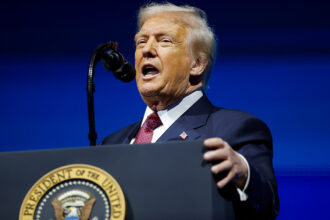
The terms of the preliminary deal call for the Strait of Hormuz to reopen within 30 days under Iranian logistical arrangements. U.S. President Donald Trump said the waterway would be open “toll free” and that the U.S. naval blockade of Iranian ports would also end. Iran’s semi-official Mehr news agency said the arrangement would be formalized in a memorandum of understanding signed in Switzerland by Friday. Iran’s deputy foreign minister Kazem Gharibabadi indicated that a more comprehensive agreement would be negotiated during a 60-day ceasefire period, during which Iran’s nuclear program and longer-term security architecture for the region would also be addressed. The E4 nations – the UK, France, Germany, and Italy – said they were prepared to lift sanctions on Iran in response to progress on the nuclear file.
Market participants are watching with caution how quickly Middle Eastern oil producers can actually restore output and export capacity following war-related infrastructure damage. The world has lost millions of barrels of daily oil and gas supply since the conflict closed the Strait of Hormuz – a chokepoint that under normal conditions handles approximately one-fifth of global crude oil and liquefied natural gas flows – for over three months. Analysts note that financial markets are essentially pricing in the return of future physical supply before it has physically materialized, creating a technical dynamic where the rally in paper prices precedes the restoration of actual barrel flows. Estimates of the full resumption of traffic vary from weeks to months, with one market commentator describing meaningful commercial normalisation as occurring in the four-to-six-month range and full pre-conflict volumes as a 2027 story – a timeline that FinancialMediaGuide tracks as the key variable that will determine whether Monday’s price correction marks a durable new level or is followed by further volatility as physical market balances adjust unevenly.
The complicating factor that limits the degree of optimism the oil market is willing to express is the unresolved status of Israeli military operations in Lebanon, Syria, and Gaza. Israeli Defence Minister Israel Katz stated that the military would remain in security zones in those theaters indefinitely, creating a scenario in which the U.S.-Iran bilateral ceasefire holds while the broader regional conflict continues in adjacent territories. Any renewed escalation involving Iran-backed Hezbollah could put the framework agreement at risk, and the market’s restrained response – a drop of 5% rather than the 10–15% decline some analysts had projected for a clean ceasefire – reflects that residual uncertainty. The damage to oil production and export infrastructure incurred during the conflict also cannot be reversed overnight, meaning even a fully implemented deal produces a gradual rather than immediate restoration of supply.
The energy-importing economies of Europe and Asia are the most direct beneficiaries of the price decline. European nations, heavily dependent on imported oil and gas, have seen their growth prospects weighed down by elevated energy costs throughout the conflict. Asian emerging market economies, which saw gasoline prices rise 40% since the war began, face a similar but more acute exposure given shallower fiscal buffers. The Strait of Hormuz reopening also releases pressure on global shipping rates and eases the supply chain disruptions in fertilizers, aluminum, industrial chemicals, and consumer goods that the prolonged closure had generated. For investors assessing the trajectory of global energy markets, the MOU signing in Switzerland on Friday is the next critical checkpoint – and Financial Media Guide spotlights that document’s specifics, particularly around the timeline for Iranian port reopening and the conditions attached to the U.S. naval withdrawal, as the data points that will define the market’s next directional move.
Beyond the immediate price response, the long-term structural question is whether the resolution of the Hormuz crisis accelerates or delays the energy transition investment cycle. Extended periods of elevated oil prices typically stimulate both demand destruction and alternative energy buildout; a rapid normalization of crude prices reduces both incentives simultaneously. For central banks, lower oil prices arrive at a moment when core inflation has already been pushed higher by energy cost passthrough, meaning the deflationary impulse from falling crude will take quarters to fully filter through to consumer prices. FinancialMediaGuide projects that the Federal Reserve and the European Central Bank will treat the oil price decline as a necessary but not sufficient condition for beginning any easing cycle, given that core inflation has shown persistent breadth beyond energy in recent months.