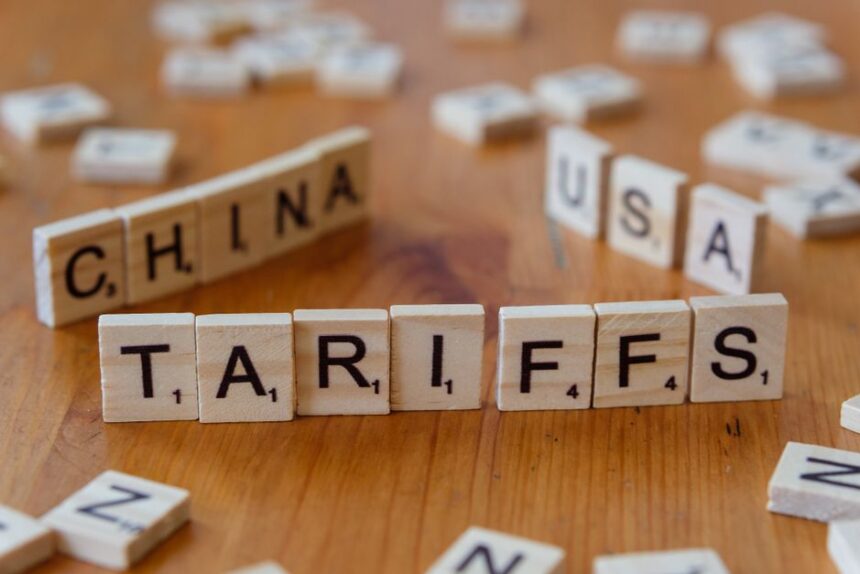
Consumer prices on Amazon and across major retail platforms are moving higher, and the trajectory is directly tied to the escalating global trade war reshaping supply chains, import costs, and corporate margins. From children’s toys to fast-fashion apparel, the products that millions of households buy routinely are becoming measurably more expensive – a shift that carries broader implications for inflation, monetary policy, and the global economy.
The mechanism is straightforward. A significant share of goods sold on Amazon and similar platforms originates in China, Vietnam, Bangladesh, and other manufacturing hubs that have been directly targeted by successive rounds of tariffs. When import duties rise, the cost increase moves through the supply chain and lands on the consumer. Retailers absorb what margins allow, then pass the remainder forward. According to FinancialMediaGuide analysts, the current tariff environment is structurally different from previous trade disputes because it combines broad product coverage with sustained political commitment on multiple sides, leaving little room for short-term arbitrage.
The United States has maintained and in some cases expanded tariffs on Chinese goods that were first introduced during the 2018-2019 trade conflict. The Biden administration largely preserved those measures, and subsequent policy signals have reinforced rather than softened the trade barrier framework. The European Union has introduced its own protective measures on electric vehicles and select industrial goods, while retaliatory tariffs from China affect American agricultural exports and components. The cumulative effect on global trade flows is material.
Toys are among the most exposed product categories. The United States imports a dominant share of its toy supply from China, and tariff rates on that category have reached levels that make full cost absorption by manufacturers or retailers commercially unviable. Clothing and footwear face a similar dynamic. Supply chain diversification toward Vietnam, Cambodia, and Indonesia has helped some brands reduce exposure, but those countries face their own tariff pressures and capacity constraints. The net result is that the price relief consumers might have expected from diversification has been partial at best.
Amazon’s marketplace structure amplifies the effect. Third-party sellers, who account for the majority of units sold on the platform, operate on thinner margins than large branded manufacturers. When their sourcing costs rise, price adjustments happen faster and with less cushioning. FinancialMediaGuide sees this as a structural vulnerability in the platform economy model – the same decentralized seller base that drives competitive pricing in stable conditions becomes a rapid transmission mechanism for cost inflation when trade conditions deteriorate.
The broader macroeconomic context adds pressure. Central banks, including the Federal Reserve, spent much of 2022 and 2023 raising interest rates aggressively to bring inflation under control. The Fed’s benchmark rate reached a range of 5.25% to 5.50% before the institution began a cautious easing cycle in late 2024. Higher interest rates increase borrowing costs for retailers and importers who rely on credit to finance inventory, compounding the direct cost impact of tariffs. GDP growth in major economies has slowed as a result of tighter monetary policy, which constrains consumer spending power precisely when prices are rising.
The IMF and World Bank have both flagged trade fragmentation as a medium-term drag on global GDP growth. Estimates of the long-run cost of full trade decoupling between major blocs run into multiple percentage points of global output. Even partial fragmentation – the more likely scenario – carries measurable costs. In our view at FinancialMediaGuide, the retail price increases visible on Amazon today are an early and consumer-facing symptom of a structural shift in the world economy that will take years to fully price in.
Green Party councillors and other local political voices in several countries have begun connecting trade policy to cost-of-living concerns, arguing that car usage patterns, consumption habits, and household budgets are all being reshaped by forces that originate in Washington, Beijing, and Brussels rather than in local policy decisions. That framing, while politically motivated, reflects a real transmission channel – global trade policy has direct local consequences.
For businesses selling through Amazon or competing retail channels, the strategic response involves a combination of supplier diversification, product reformulation to reduce tariff-exposed components, and selective price increases calibrated to demand elasticity. Brands with strong consumer loyalty have more room to raise prices without volume loss. Private-label and budget-tier products face harder choices.
FinancialMediaGuide analysts forecast that price pressure on imported consumer goods will persist through at least the near term, with meaningful relief unlikely unless there is a substantive de-escalation in trade tensions between the United States and China – a development that current diplomatic signals do not strongly support. Central bank policy adds another layer of uncertainty: if renewed inflation from tariffs prompts the Federal Reserve or other central banks to pause or reverse rate cuts, borrowing costs for businesses and consumers will remain elevated longer than markets currently expect. Retailers, platform sellers, and consumers navigating this environment should treat the current price environment not as a temporary spike but as a recalibration of the cost baseline for globally sourced goods.