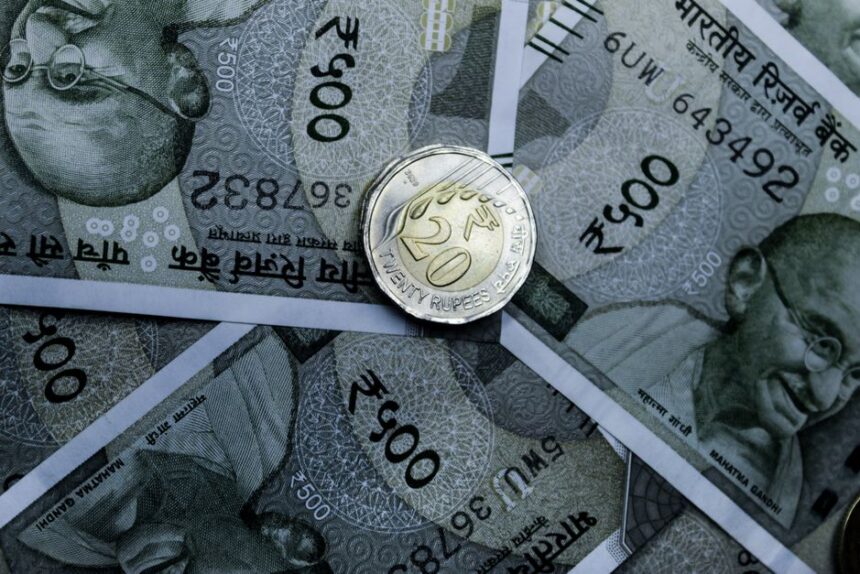
The Indian rupee held its ground in a narrow trading range as market participants weighed a mix of competing signals while bracing for the Reserve Bank of India’s upcoming monetary policy decision. The currency showed little directional movement, reflecting the cautious mood that has settled across currency desks ahead of what could be a pivotal announcement from the central bank.
The rupee traded nearly flat against the US dollar, with dealers noting that neither bulls nor bears were willing to take strong positions given the uncertainty surrounding the RBI’s next move. The local unit hovered around the 83-84 range per dollar, with intraday swings remaining contained as traders opted to sit on the sidelines rather than commit to aggressive bets.
What Is Driving the Cautious Sentiment
Several forces are pulling the rupee in different directions simultaneously, making it difficult for the currency to establish a clear trend. On one hand, a relatively stable domestic macroeconomic backdrop and steady foreign portfolio inflows into Indian equities have provided some support. On the other hand, a resilient US dollar, elevated global risk aversion, and persistent concerns about crude oil prices continue to weigh on sentiment.
Crude oil remains a critical variable for the rupee, given India’s status as one of the world’s largest importers of the commodity. Any uptick in oil prices translates directly into higher import bills, widening the current account deficit and putting downward pressure on the domestic currency. Recent volatility in global energy markets has kept traders on edge, adding another layer of complexity to an already uncertain environment.
Foreign institutional investor activity has been mixed. While equity markets have seen some inflows, the debt segment has not attracted the same level of enthusiasm. The divergence in flows across asset classes has made it harder to gauge the net impact on the rupee, contributing to the sideways drift observed in recent sessions.
The RBI Policy Decision in Focus
The central bank’s monetary policy committee meeting is the single biggest event risk on the horizon for rupee traders. Market participants are closely watching for any signals regarding the interest rate trajectory, liquidity management, and the RBI’s stance on inflation versus growth.
Expectations are divided. A section of the market anticipates that the RBI could hold rates steady while maintaining a cautious tone on inflation, particularly given that food prices have remained elevated. Another group believes the central bank might signal a shift toward easing, especially if global central banks, including the US Federal Reserve, begin cutting rates more aggressively.
The RBI’s commentary on the rupee itself will also be scrutinized. The central bank has historically intervened in currency markets to prevent excessive volatility, and any guidance on its tolerance for rupee depreciation or appreciation could move the currency meaningfully in either direction.
Global Factors Adding to the Complexity
Beyond domestic considerations, the rupee is also navigating a challenging global landscape. The US dollar index has remained firm, supported by a resilient American economy and a Federal Reserve that has been measured in its approach to rate cuts. A strong dollar typically puts pressure on emerging market currencies, including the rupee.
Geopolitical tensions in various parts of the world have also contributed to risk-off sentiment at times, prompting investors to seek safety in the dollar and other traditional safe-haven assets. This dynamic has periodically weighed on the rupee, even when domestic fundamentals appeared supportive.
China’s economic trajectory is another variable being monitored closely. A slowdown in the Chinese economy can have ripple effects across Asian currencies and commodity markets, indirectly influencing the rupee through trade and capital flow channels.
Market Positioning and Technical Outlook
From a technical standpoint, the rupee appears to be consolidating within a defined range, with traders reluctant to push the currency beyond key support or resistance levels ahead of the policy announcement. Options market data suggests that implied volatility has ticked up slightly, indicating that participants are pricing in the possibility of a sharper move once the RBI’s decision is known.
Currency dealers have noted that corporate hedging activity has been relatively subdued, with exporters and importers both holding back from locking in rates aggressively. This restraint on both sides of the market has contributed to the low-volatility environment seen in recent trading sessions.
What Comes Next
The rupee’s near-term direction will largely depend on the RBI’s policy outcome and the tone of the accompanying statement. A hawkish surprise could lend support to the currency by reinforcing the interest rate differential with other economies. A dovish tilt, meanwhile, might put some pressure on the rupee, though the extent of any move would depend on how markets interpret the broader growth and inflation outlook.
Beyond the RBI decision, traders will continue to monitor US economic data, global commodity prices, and foreign fund flows for directional cues. The interplay of these domestic and international factors is likely to keep the rupee in a state of cautious equilibrium until greater clarity emerges from the central bank’s deliberations.