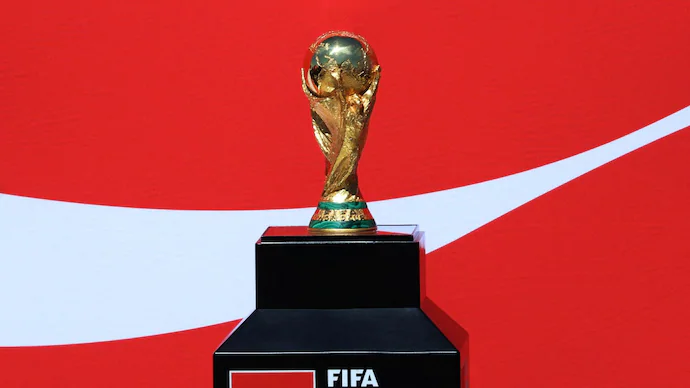
At FinancialMediaGuide, we observe that the market for broadcasting rights to the FIFA World Cup 2026 is undergoing one of the most illustrative transformations in recent years. Negotiations surrounding the tournament highlight how global football popularity is colliding with local media market economics particularly in Asia, where India and China play a crucial role in shaping the global audience structure.
The main point of tension has emerged in India, where the Reliance–Disney joint venture has reportedly offered around $20 million for broadcasting rights. This figure is significantly below the previously expected ~$100 million for the combined 2026 and 2030 World Cup rights package. According to FinancialMediaGuide analysts, this gap reflects a shift in how football content is valued in a market dominated by cricket, which drives the bulk of advertising revenue.
Football in India remains fast-growing but is still a niche product in terms of commercial return. Even with a substantial digital audience, its advertising efficiency lags behind local sports formats. This explains the cautious stance of media companies and the reduced aggressiveness in bidding for FIFA World Cup India broadcasting rights.
Sony’s withdrawal from the deal further underscores this trend. Major broadcasters are increasingly evaluating not just audience scale, but actual monetization potential. Amid rising sports rights costs and pressure on advertising revenues, companies are seeking to minimize risk especially in segments with less predictable returns.
The situation in China adds another layer of uncertainty to the global FIFA World Cup 2026 media rights market. The absence of a confirmed agreement at this stage is unusual, considering that in previous cycles, Chinese state media platforms secured rights early and launched large-scale promotional campaigns.
At the same time, China remains the largest driver of digital football consumption. Nearly half of global digital viewing time during the previous World Cup came from Chinese audiences. However, high engagement does not always translate into proportional revenue, limiting willingness to pay premium prices for FIFA World Cup streaming rights.
Additional industry data indicates that the global sports media rights market has become more restrained overall. After a period of aggressive investment, streaming platforms and media groups are shifting toward more pragmatic strategies, where return on investment takes precedence over pure audience expansion.
There is also a growing trend toward fragmentation of rights. Instead of exclusive deals, hybrid models are increasingly used, with broadcasting shared between television and digital platforms. This lowers the value of individual packages and weakens the negotiating position of rights holders.
Historically, India and China finalized World Cup agreements much earlier, enabling early planning of advertising campaigns and technical infrastructure. The current delays signal a tougher phase of negotiations and a reassessment of FIFA World Cup broadcasting rights valuation amid changing market conditions.
In the previous cycle, broadcasting rights in India were valued at around $60 million, with a digital audience exceeding 110 million viewers. Despite growing interest in football, current macroeconomic conditions, a slowdown in the advertising market, and budget shifts toward local sports have influenced investment decisions.
Another factor putting pressure on valuations is the tournament’s geography. Matches held in North America will be broadcast in Asia primarily at night, reducing TV ratings and lowering the value of advertising slots directly impacting deal economics.
In China, the situation is further complicated by structural market characteristics. Despite having more than 200 million football fans, the level of commercial monetization remains limited. This creates a disconnect between audience scale and financial returns from sports content.
Meanwhile, Reliance-Disney continues to invest heavily in cricket, strengthening its position in the most profitable segment of India’s sports market. This reflects a rational reallocation of resources toward more stable assets.
According to FinancialMediaGuide analysts, the current situation around FIFA World Cup 2026 broadcasting rights reflects a broader structural shift in the industry. The market is gradually moving from a value-maximization model toward one focused on efficiency and flexibility.
In the coming weeks, the key factor will be the ability of all parties to reach a compromise. A likely scenario involves further adjustments to FIFA’s pricing expectations and a transition to more flexible rights sales formats, including the separation of digital and television packages.
At Financial Media Guide, we believe the outcome of these negotiations will set a new benchmark for the entire sports broadcasting industry. The FIFA World Cup 2026 is becoming not only the biggest sporting event, but also a critical moment for reassessing media rights valuation where the balance between global demand and local monetization will define the future of the market.