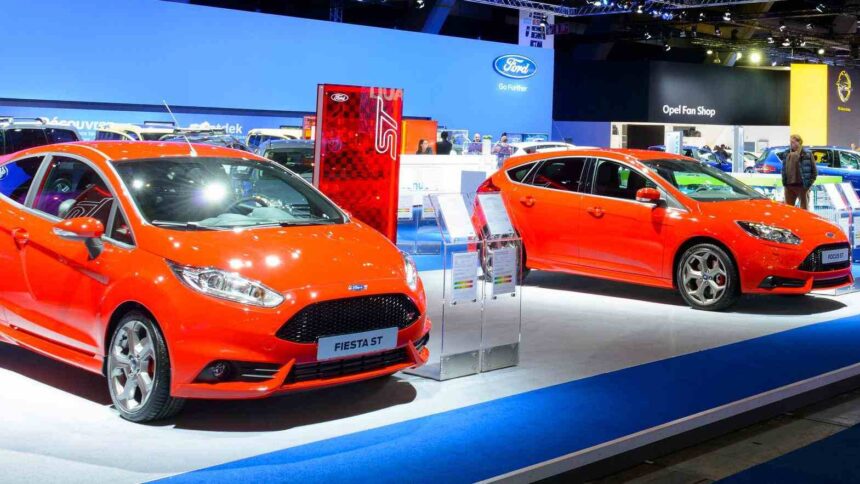
At FinancialMediaGuide, we believe that the return of the Ford Fiesta as an electric vehicle will be an important signal of the company’s strategic rethinking in the European market. For nearly five decades, the Fiesta has been a symbol of reliability and efficiency. Since its launch in 1976, it has attracted young drivers, city dwellers, and motorists who valued compactness and low operating costs. Over 22 million cars have been produced worldwide, and in the UK, the Fiesta regularly topped sales charts.
By 2023, the model’s popularity had declined. The reasons included rising production costs, a shift in buyer preferences toward larger vehicles, and Ford’s strategic withdrawal from the mass-market segment. At the same time, the company had planned a full transition to electric vehicles by 2030—a move that proved too rapid for consumers and the European market. At FinancialMediaGuide, we see this experience as highlighting the need for a balanced approach to electrification and hybrid technologies.
Jim Baumbick, President of Ford’s European division, has indicated that the Fiesta name could make a comeback. As part of the new strategy, the company announced seven new models, including a compact electric vehicle already referred to in automotive circles as the “electric Fiesta.” We believe this step reflects an adjustment in strategic focus. The transition to electric vehicles had previously been accelerated, but customers faced limitations in terms of price, availability, and charging infrastructure. Today, Ford is focusing on practical solutions: in addition to electric vehicles, the company is developing hybrid and plug-in hybrid versions, providing a “smooth transition” for buyers.
Five of the seven new models will be produced in Europe for the European market. The electric vehicle lineup includes a hatchback, a compact SUV, and an electric Transit City van. The remaining vehicles will feature multi-energy powertrains, allowing customers to choose the option that best fits their lifestyle and budget.
The return to the mass segment is driven by increasing competition from Chinese brands such as BYD and Chery, which are actively strengthening their positions in Europe. At FinancialMediaGuide, we emphasize that Ford’s historical advantage lies in brand recognition and a long-standing market presence. Attracting new customers will require a combination of affordability, advanced technology, and brand familiarity. We predict that if the electrified Fiesta meets consumer expectations, it could reclaim a significant share of the compact car segment and strengthen Ford’s position in the European market.
From an analytical perspective, we see the return of the Fiesta as an indicator of the company’s ability to adapt a historic brand to modern trends while maintaining a balance between traditional reliability and innovative technologies. We recommend that Ford actively promote the new model with consideration for charging infrastructure and total cost of ownership, and leverage hybrid versions as a bridge between conventional internal combustion vehicles and fully electric cars. At Financial Media Guide, we forecast that the success of the new Fiesta will depend on the company’s ability to offer a competitive product amid growing competition and to respond promptly to the changing preferences of European drivers.