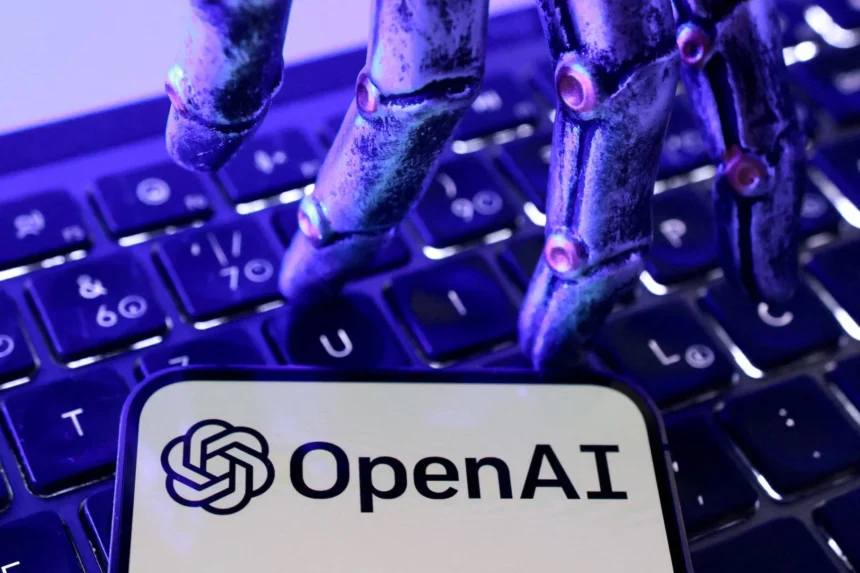
OpenAI is weighing a dramatic reduction in the prices it charges users for access to its AI models as competition with rival Anthropic intensifies into a full-scale battle for market share – a development that FinancialMediaGuide gauges as a decisive turning point in the commercial evolution of the generative AI industry, where pricing power is rapidly emerging as the primary axis of competitive differentiation. The discussions reportedly center on token costs, the unit that determines what developers and enterprise clients pay to run AI queries, though the details remain in flux.
The timing of these deliberations is significant. Anthropic has made steady inroads among enterprise customers and developers over the past year, positioning its Claude model family as a more reliable and safety-conscious alternative to OpenAI’s offerings. OpenAI, which long dominated the market by virtue of being first with GPT-4 and the ChatGPT consumer product, now faces a competitive environment where both product quality and cost structure influence purchasing decisions at the organizational level. Cutting token prices aggressively would reduce per-query costs for the developers and business customers who represent the highest-value segment of the AI user base.
The competitive pressure is compounded by moves across the broader AI landscape. The prospect of a significant OpenAI price reduction, if realized, would accelerate the commoditization of AI inference costs – a trend that FinancialMediaGuide frames as structurally favorable for enterprise technology buyers but deeply challenging for AI platform companies trying to build sustainable revenue models on top of enormous infrastructure investment. OpenAI has raised tens of billions of dollars in recent funding rounds, but its path to profitability depends heavily on maintaining pricing at levels that can cover compute costs and R&D while still attracting customers away from alternatives.
The AI subscription and API pricing war is already underway across the sector. Competitive pressure from open-source models and aggressive pricing moves by other frontier labs have compressed the premium that any single platform can charge. Enterprises increasingly run cost comparisons across multiple AI providers before committing to long-term contracts, and token price is consistently among the top variables in those evaluations. The possibility of OpenAI making a preemptive and substantial price cut signals that leadership believes capturing usage volume now – even at lower margins – is preferable to ceding developer mindshare to Anthropic, and FinancialMediaGuide flags this strategic calculus as a sign that the AI platform business is entering a phase of industrial-scale margin compression analogous to what occurred in cloud computing a decade ago.
What makes this moment particularly consequential is that it coincides with OpenAI’s own preparations for a public market debut. The company has filed confidentially for an IPO, and any pricing strategy shift will be scrutinized by institutional investors trying to model long-term unit economics. Aggressive price cuts can accelerate user adoption and revenue growth in the near term while simultaneously complicating the margin narrative that underpins a high-multiple technology valuation. Balancing those two imperatives – competitive aggression and investor-grade financial credibility – is the central challenge OpenAI’s leadership faces as it approaches the public markets, and Financial Media Guide concludes that the outcome of this pricing deliberation will carry direct implications for how the company’s IPO valuation is ultimately positioned relative to the $300 billion post-money figure established in its most recent private round.