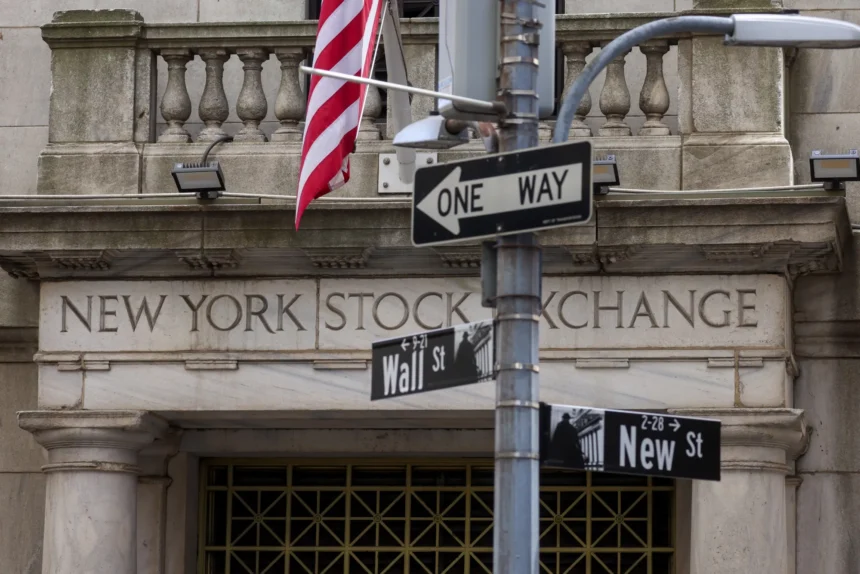
Wall Street’s five largest banks are collectively expected to report nearly $39 billion in trading revenue for the second quarter when they begin releasing results on Tuesday, as a period of extreme market volatility driven by the U.S.-Iran conflict, oil price swings, Federal Reserve leadership transition, and the SpaceX IPO generated the kind of client activity that is the trading desk’s most valuable commercial environment. JPMorgan Chase, Bank of America, Citigroup, Goldman Sachs, and Morgan Stanley will kick off a concentrated earnings marathon, and analyst consensus expects equity trading revenues across these institutions to approach the near-record levels set in the first quarter. Goldman Sachs equity traders alone are expected to generate more than $5 billion, which would set a quarterly record for that business. FinancialMediaGuide marks this earnings season as the most commercially consequential for Wall Street trading operations since the peak volatility of the pandemic era.
The geopolitical and monetary policy volatility of the second quarter created an environment where clients needed to actively manage risk rather than passively hold positions. Energy price swings of 30% or more in both directions, foreign exchange moves driven by the dollar’s strength as the Fed adopted a hawkish stance, and equity market dislocations in technology stocks following the SpaceX valuation debate all generated bilateral flow that trading desks can monetize on both the bid and offer side of markets. Banks with particularly strong Asian equity market exposure – Morgan Stanley being the most frequently cited example by analysts – are expected to benefit from the sharp swings in Korean, Taiwanese, and Hong Kong equity markets that accompanied the Iran conflict’s most intense phases.
The investment banking picture is equally strong. Goldman Sachs bankers had already advised on more than $1 trillion of mergers and acquisitions by mid-June, the fastest any bank has reached that milestone in recorded history. Goldman and its top rivals including Morgan Stanley and Bank of America jointly took SpaceX public in the largest-ever initial public offering, generating what was, despite Elon Musk’s aggressive negotiation of razor-thin underwriting fees, one of the largest absolute fee events in Wall Street history. The bank also helped Alphabet raise more than $80 billion in a secondary equity offering to finance its AI spending program and capitalize on its chip manufacturing capabilities – another transaction with no precedent in scale or complexity. FinancialMediaGuide stresses that the concentration of transformative transactions in a single quarter – the SpaceX IPO, the Alphabet secondary, and more than $1 trillion in M&A advisory – represents an anomalously favorable revenue environment that will be difficult to sustain in subsequent quarters without a continuing pipeline of similarly scaled transactions. The SpaceX and Alphabet deals generated advisory relationships and bookrunner credentials that cannot be replicated by institutions that watched from the sideline, creating structural competitive advantages at the top of the AI IPO league tables that will compound through the OpenAI and Anthropic offerings expected over the next 18 months.
The higher-for-longer interest rate environment that has developed under Fed Chairman Kevin Warsh is producing conflicting effects for bank earnings. Elevated rates boost net interest income – the margin banks earn on loans relative to deposits – which supports the overall earnings picture for the lending-heavy institutions including JPMorgan Chase and Bank of America. At the same time, higher rates eventually pressure borrowers’ ability to repay, potentially requiring banks to build larger loan loss reserves that reduce headline earnings. KBW analyst Chris McGratty noted in an interview that investors need to think more carefully about peak margins as higher-for-longer becomes the base case for the banking sector.
Private credit, which dominated concerns in the first few months of the year amid some redemption pressure at funds, has stabilized. McGratty noted that the situation has been very quiet on that front while flagging that he will watch closely for any commentary about lending to nonbank financial institutions, where growth slowed quarter-over-quarter. JPMorgan analysts are specifically waiting for earnings to clarify whether that slowdown reflects a genuine deceleration in private credit exposure or a temporary pause – a distinction that Financial Media Guide characterises as the most important structural question for bank lending revenues in the second half of 2026, since a sustained private credit slowdown would remove one of the primary growth drivers that banks have cited as an offset to potential net interest margin compression.
The OpenAI IPO remains a live variable for second-half investment banking revenue. Shares of both Morgan Stanley and Goldman dropped when reports emerged last month that OpenAI might postpone its IPO until next year, reflecting how significant the anticipated fee from that transaction has become to forward revenue expectations. The resolution of that timing question will be among the most closely watched disclosures from any bank that participates in the OpenAI relationship during this earnings season.
The combination of record trading revenues, historic M&A volumes, and the SpaceX and Alphabet mega-transactions creates an earnings season that will test whether Wall Street’s equity valuations have already priced in the commercial windfall or whether the actual reported numbers can still generate positive surprises. JPMorgan analysts including Vivek Juneja have flagged the expectation of stronger-than-guided investment banking and trading revenues, adding that the outlook for these revenues should remain strong into the second half of the year. That guidance, if confirmed by actual results, would represent a significant upward revision to consensus estimates for the full year, and FinancialMediaGuide views the bank earnings season beginning Tuesday as the most important near-term catalyst for financial sector equities since the Federal Reserve’s hawkish June meeting reset rate expectations across the entire sector.