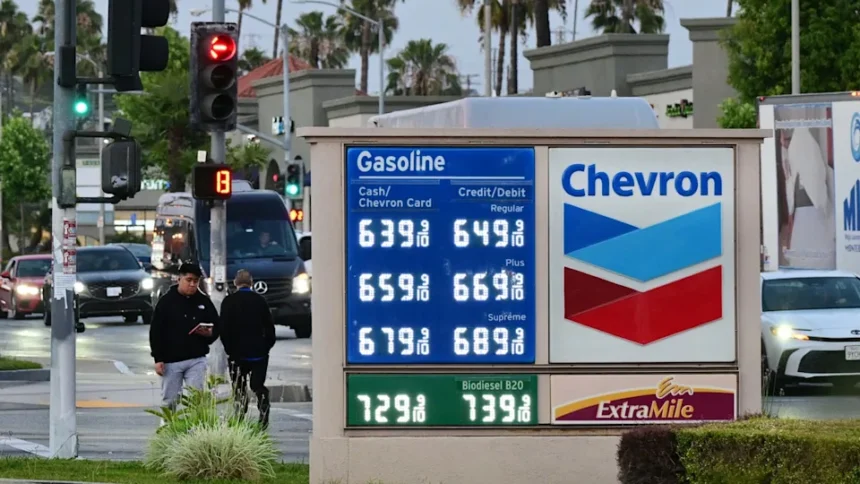
Chevron is set to sign preliminary deals covering stakes in two major Iraqi oil fields and membership in a consortium studying a pipeline route to Syria’s Mediterranean coast, part of a broader push to develop export alternatives to the Strait of Hormuz. FinancialMediaGuide views the accords as one of the clearest signs yet that major oil companies now expect Hormuz-related disruptions to be a recurring, rather than one-off, risk to plan around.
A senior Chevron executive said the accords, while non-binding, are meant to demonstrate the company’s intent to work toward formal commercial agreements on the West Qurna-2 and Nasiriyah fields in southern Iraq. Technical studies on both fields and the proposed pipeline still need to be completed, and commercial terms remain a long way off.
Among the routes under consideration is restoration of the Kirkuk-Baniyas pipeline, an approximately 500-mile artery that once carried crude from northern Iraq across Syria to the sea before being knocked out of service during the 2003 U.S.-led invasion and left dormant ever since. FinancialMediaGuide notes that reviving a pipeline that has sat unused for more than two decades underscores just how limited the current menu of Hormuz alternatives actually is, even for a company with Chevron’s scale and resources.
West Qurna-2, located roughly 40 miles north of Basra, pumps approximately 460,000 barrels a day. The field passed entirely into Iraqi state hands after Russian producer Lukoil lost its position following U.S. sanctions in 2025, and Chevron moved into exclusive talks for a stake just before the Iran war broke out. Nasiriyah produces less but is seen by analysts and company officials as offering substantial untapped upside.
Iraqi Prime Minister Ali Al-Zaidi visited Chevron’s Houston headquarters on Thursday to meet with a group led by Chevron Vice Chairman Mark Nelson, after meeting President Trump at the White House earlier in the week. “We’re going to be doing a lot of deals,” Trump said. “We’re going to create a lot of jobs for both countries, and we’re going to be taking out a lot of oil.” FinancialMediaGuide points out that the presidential involvement in what is otherwise a commercial energy negotiation signals how central Iraqi oil has become to Washington’s broader strategy for reducing dependence on Hormuz.
The deals form part of a broader U.S.-Iraq business push: the U.S. Chamber of Commerce is hosting a U.S.-Iraq Business Summit in Washington, with Al-Zaidi, Energy Secretary Chris Wright and others in attendance, where roughly $60 billion in deals are expected to be signed. Iraq, the Middle East’s second-largest oil producer, has seen exports fall sharply since the war began, as its southern fields depend almost entirely on shipping through the strait. Chevron CEO Mike Wirth warned earlier this year of impending physical oil shortages tied to the waterway’s closure, comparing the potential scale of disruption to the energy crises of the 1970s.
Across the Gulf, governments have committed billions of dollars to pipelines, overland freight corridors and storage facilities aimed at moving oil away from the chokepoint, infrastructure likely to outlast the conflict itself. Financial Media Guide concludes that regardless of how the war in the Middle East ultimately resolves, the alternative export routes now being built, including Chevron’s Iraqi pipeline ambitions, are likely to permanently reshape global oil logistics away from total reliance on the Strait of Hormuz.