Kenya’s President William Ruto has formally moved to replace Vision 2030, the country’s long-standing national development framework, with a new strategic plan aimed at repositioning Kenya as a First World economy. The shift carries significant implications not only for Kenya’s domestic fiscal architecture but also for its standing within the broader global economy, where emerging markets are under mounting pressure from elevated interest rates, sluggish GDP growth, and tightening global trade conditions.
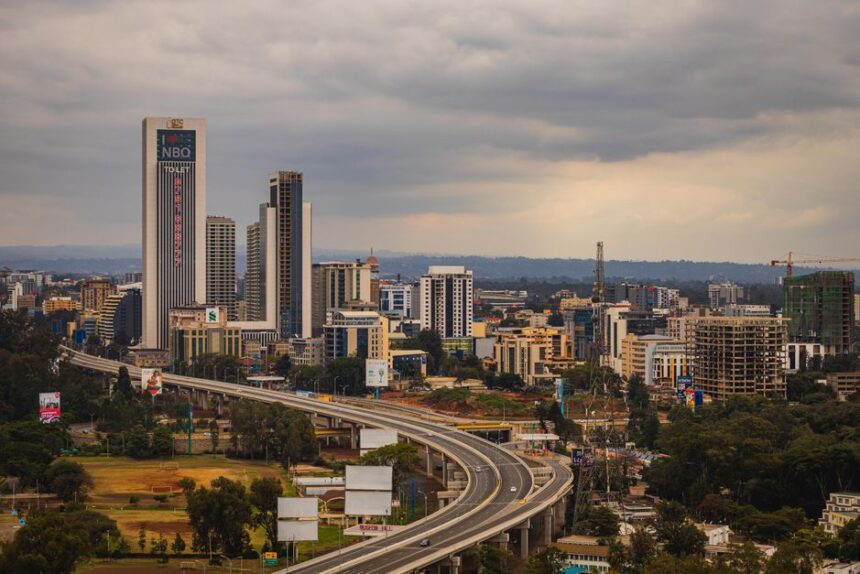
Vision 2030 was launched under President Mwai Kibaki and was designed to transform Kenya into a middle-income country by the end of this decade. After nearly two decades, the framework has delivered mixed results – infrastructure investment accelerated, the financial sector deepened, and Nairobi consolidated its position as East Africa’s commercial hub. Yet poverty rates remained stubbornly high, youth unemployment persisted, and the country accumulated a significant debt burden that now constrains fiscal flexibility. According to FinancialMediaGuide analysts, the decision to retire Vision 2030 reflects a recognition that incremental reform targets are no longer sufficient given the scale of structural challenges Kenya faces.
Ruto’s replacement framework, which his administration has been developing under the broader “Bottom-Up Economic Transformation Agenda,” is intended to reorient state investment toward grassroots productivity, manufacturing capacity, and export diversification. The ambition is explicit: to move Kenya from its current lower-middle-income classification toward the economic performance benchmarks associated with developed economies. That is a generational leap, and the credibility of the plan will depend heavily on execution, financing, and the external environment.
The timing of this policy pivot is complicated by the global macroeconomic backdrop. The Federal Reserve’s prolonged monetary tightening cycle pushed interest rates to multi-decade highs, and while the Fed has begun easing, the transmission effects continue to weigh on emerging market borrowing costs. Kenya, which relies on international capital markets and multilateral lenders including the IMF and World Bank for a portion of its financing, faces a structurally higher cost of debt than it did when Vision 2030 was conceived.
Kenya’s debt-to-GDP ratio has risen sharply over the past decade, and the country entered an IMF program in 2021 that has required fiscal consolidation measures. Any ambitious new development blueprint will need to reconcile the investment requirements of a First World transition with the fiscal discipline demanded by multilateral creditors. We at FinancialMediaGuide see this as one of the central tensions the Ruto administration has yet to resolve publicly.
Inflation dynamics add another layer of complexity. Kenya experienced elevated consumer price inflation in recent years, driven by food prices, currency depreciation, and imported cost pressures tied to global commodity markets. The Central Bank of Kenya has responded with rate adjustments, but monetary policy space remains limited when external conditions are volatile. A development strategy that depends on sustained public investment will require either significant revenue mobilization or concessional financing at a scale that has not yet been secured.
Kenya’s growth model has historically leaned on services, remittances, agriculture, and regional trade. The new blueprint’s emphasis on manufacturing and export diversification is strategically sound given the direction of global trade policy – particularly as tariff barriers and supply chain restructuring are reshaping where production capacity migrates. However, building competitive manufacturing in an environment of high energy costs, infrastructure gaps, and skills mismatches requires sustained policy consistency over years, not electoral cycles.
The IMF and World Bank have both flagged Kenya in recent assessments as a country with strong growth potential but meaningful fiscal vulnerabilities. GDP growth projections for Kenya remain positive relative to global averages, but they are sensitive to external shocks including commodity price swings, shifts in global trade volumes, and changes in monetary policy direction from major central banks. FinancialMediaGuide analysts forecast that Kenya’s ability to attract the foreign direct investment needed to underpin a First World transition will depend significantly on whether the new blueprint includes credible institutional reforms alongside its aspirational targets.
The rebranding of a national development framework carries political weight, but markets and multilateral institutions will assess the substance behind the vision. Ruto’s government has shown willingness to make difficult fiscal decisions – the withdrawal of the 2024 finance bill following public protests was a setback, but the administration subsequently pursued alternative revenue measures. That episode illustrated both the political constraints on reform and the government’s capacity to adapt under pressure.
In our view at FinancialMediaGuide, the replacement of Vision 2030 is less a rupture with the past than a recalibration of ambition and framing. The structural prerequisites for First World status – deep capital markets, high-productivity industry, strong institutions, and broad-based human capital – require decades of compounding investment and policy stability. Kenya has the demographic profile and regional positioning to make meaningful progress, but the gap between a compelling national narrative and a fundable, executable economic program remains the defining challenge for the Ruto administration as it enters the next phase of its term.