Syria’s finance minister has expressed a welcoming stance toward the International Monetary Fund’s positive assessment of the country’s potential for economic recovery. The statement, reported by the Syrian Arab News Agency (SANA), signals a notable shift in the tone of official communications regarding the nation’s financial trajectory following years of conflict and economic hardship.
The minister’s remarks came in response to the IMF’s evaluation, which pointed to emerging indicators that could support a gradual stabilization of Syria’s economy. While the road ahead remains challenging, the acknowledgment from an international financial institution of this scale carries significant weight for a country that has been largely isolated from global financial systems for over a decade.
Background on Syria’s Economic Situation
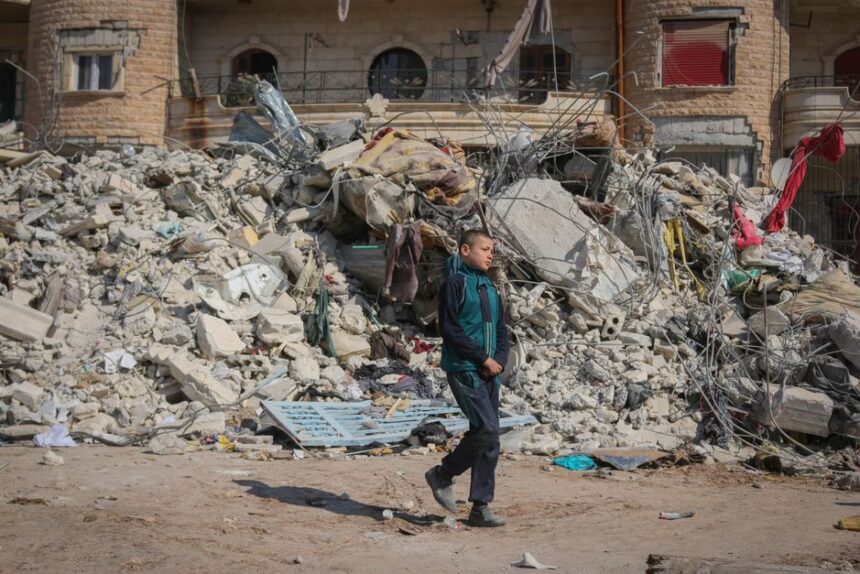
Syria’s economy has endured extraordinary pressure since the outbreak of conflict in 2011. The combination of infrastructure destruction, displacement of millions of citizens, international sanctions, and the collapse of key industries left the country’s financial system in a deeply fragile state. The Syrian pound lost a dramatic portion of its value, inflation reached extreme levels, and access to basic goods became increasingly difficult for ordinary citizens.
In recent years, however, there have been cautious signs of movement toward stabilization. The government has taken steps to restructure certain financial mechanisms, and there has been renewed interest from regional partners in exploring economic cooperation. The IMF’s positive outlook, even if measured and conditional, adds an external layer of credibility to these efforts.
What the IMF Assessment Covers
The IMF’s evaluation reportedly touched on several dimensions of Syria’s economic landscape, including:
- Fiscal management and government revenue collection
- Currency stabilization efforts and monetary policy adjustments
- Potential for reconstruction investment from regional and international partners
The role of the informal economy and how it might be gradually integrated into formal financial structures
Trade relationships and the possibility of easing certain restrictions
The fund’s analysis did not suggest that Syria’s recovery would be swift or without obstacles. Rather, it outlined a framework within which progress could be measured and supported, provided that structural reforms continue and external conditions become more favorable.
The Finance Minister’s Response
The finance minister’s welcoming of the IMF’s outlook reflects a broader governmental interest in re-engaging with international financial institutions. For Syria, any form of positive recognition from bodies like the IMF represents an opportunity to rebuild credibility on the global stage and potentially attract investment that the country desperately needs for reconstruction.
The minister emphasized that Syria remains committed to implementing economic reforms that align with internationally recognized standards of fiscal responsibility. This includes efforts to improve transparency in public spending, reduce dependency on parallel currency markets, and create a more predictable environment for both domestic and foreign investors.
The statement also underscored the importance of lifting or easing international sanctions, which officials argue remain one of the most significant barriers to meaningful economic recovery. Without access to international banking systems and the ability to conduct cross-border transactions freely, even the most well-designed domestic reform programs face severe limitations.
Regional and International Context
Syria’s economic situation does not exist in isolation. The broader Middle East region has seen shifting political dynamics in recent years, with several Arab states moving toward normalization of relations with Damascus. This diplomatic thaw has opened conversations about economic cooperation, infrastructure investment, and trade routes that could benefit Syria’s recovery.
Regional powers with significant financial resources have shown interest in participating in Syria’s reconstruction, though concrete commitments have remained limited pending greater clarity on the political and legal environment. The IMF’s positive signals could serve as a catalyst for more decisive engagement from these potential partners.
International organizations and donor countries have also been watching Syria’s economic indicators closely. Any credible sign of stabilization tends to encourage discussions about humanitarian aid transitioning into development assistance – a shift that would have far more lasting impact on the country’s long-term prospects.
Challenges That Remain
Despite the positive signals, analysts and observers continue to point to a range of structural challenges that Syria must address:
- Rebuilding physical infrastructure, including roads, utilities, and housing
- Restoring agricultural productivity in regions affected by conflict and drought
- Addressing high unemployment, particularly among young people
Reintegrating displaced populations and refugees into the labor market
Strengthening institutional capacity within government ministries
These are not challenges that can be resolved through financial policy alone. They require sustained political will, international cooperation, and significant capital investment over a period of many years.
Looking Ahead
The exchange between Syria’s finance minister and the IMF’s assessment represents a small but meaningful step in a long process of economic rehabilitation. The positive outlook from the fund does not erase the depth of the challenges ahead, but it does suggest that the international financial community is paying attention and is open to supporting progress where it can be demonstrated.
For Syrian citizens who have endured years of economic hardship, the significance of such diplomatic and financial signals lies in their potential to translate into tangible improvements – more stable prices, greater access to goods and services, and the gradual return of economic opportunity. Whether that potential is realized will depend on the consistency of reform efforts and the willingness of the international community to engage constructively with Syria’s recovery process.