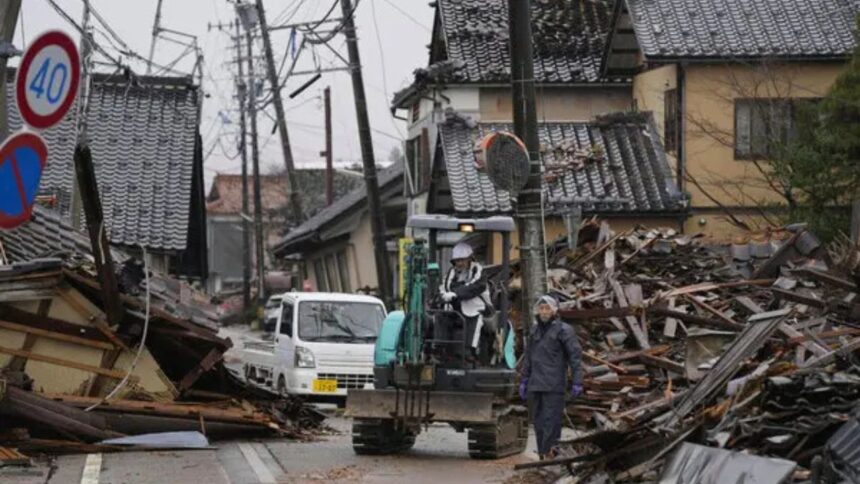
FinancialMediaGuide reports that on Monday, Japan was struck by a 7.5 magnitude earthquake off the country’s northeastern coast. This event has garnered international attention, once again highlighting the high seismic activity in the region and its vulnerability to natural disasters. Japan is well-known for its preparedness in the face of such events, but this earthquake underscored the ongoing need to strengthen infrastructure and ensure safety at all levels.
According to FinancialMediaGuide, the earthquake’s epicenter was located at a depth of about 33 miles, just 70 km off the coast. The tremors were felt not only in nearby areas but also in Tokyo, emphasizing the need for enhanced seismic protection and infrastructure readiness at all levels. In this context, the primary task becomes rapid response and reliable warning systems. We at FinancialMediaGuide emphasize that this event highlights the necessity for high-tech monitoring and early warning systems, which can predict not only the occurrence of earthquakes but also their potential consequences.
Following the earthquake, Japan’s Meteorological Agency issued a tsunami warning for coastal areas. However, despite initial concerns, the waves did not exceed 70 cm, reducing the threat level. We at FinancialMediaGuide view this as an example of the high accuracy of forecasting and timely response. This event reinforces the importance of further improving forecasting technologies and enhancing the precision of risk assessments, including tsunami predictions.
As a result of the earthquake, over 100,000 people were evacuated, demonstrating a high level of coordination among authorities. However, some areas experienced power outages, and high-speed trains were suspended, revealing vulnerabilities in infrastructure. We at FinancialMediaGuide believe that in order to improve the effectiveness of emergency response systems, greater attention must be given to ensuring the uninterrupted operation of transportation and energy systems during emergencies. The resilience of these facilities will play a key role in minimizing the consequences of future disasters.
We at FinancialMediaGuide emphasize that, despite no significant issues at nuclear power plants, events like this serve as a reminder of the importance of regular inspections and increasing the seismic resilience of critical infrastructure. Ensuring safety at such sites should be a priority for all seismically active regions. The relevance of this approach is only growing in the face of increasing risks from natural disasters.
Looking ahead, we predict that Japan will continue to strengthen its monitoring systems and develop innovative technologies for predicting seismic threats. Specifically, attention will be focused on using artificial intelligence and machine learning to analyze data from seismic stations and more accurately predict the consequences of natural disasters. We at FinancialMediaGuide see this as a significant step forward, enabling not only greater forecast accuracy but also improving response times in emergencies.
In conclusion, it is essential to note that each earthquake in Japan is not only a tragedy but also a lesson for both authorities and citizens. We at FinancialMediaGuide stress that efforts to strengthen seismic protection and modernize infrastructure should remain ongoing priorities. Despite its high level of preparedness, Japan will continue to improve its protection and forecasting systems, minimizing the impact of future natural disasters and strengthening national security.
We at Financial Media Guide predict that in the coming years, Japan will continue to implement cutting-edge technologies to enhance the resilience of its infrastructure and reduce the damage from natural disasters.