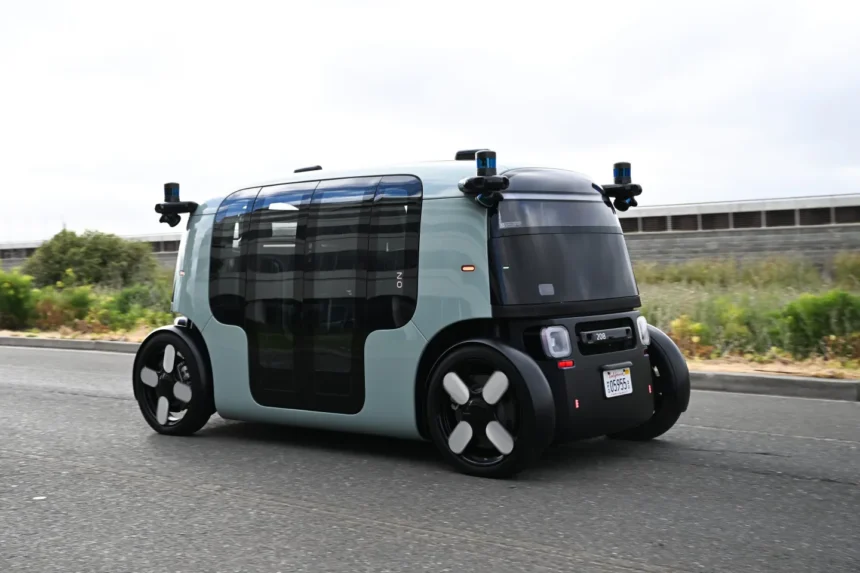
At FinancialMediaGuide, we believe that Amazon’s latest move through its subsidiary Zoox marks a significant milestone in the fierce battle for leadership in the U.S. autonomous taxi market. With growing competition from Alphabet’s Waymo and Tesla initiatives, Zoox’s expansion of its infrastructure and testing areas reflects a pragmatic plan to gather large amounts of real-world data and strengthen operational capabilities.
Zoox has announced the expansion of its U.S. presence by including the cities of Dallas, Texas, and Phoenix, Arizona, bringing the total number of active testing zones to ten. As part of this growth, the company is launching a new Fusion Center in Scottsdale, Arizona, which will serve as the hub for fleet coordination, remote robotaxi operation, and passenger support. Initially, a limited number of modified SUVs with operators behind the wheel will be deployed in the new cities for manual mapping, after which controlled autonomous testing with a driver in the cab will begin.
At FinancialMediaGuide, we emphasize that the selection of Phoenix and Dallas is not accidental. The Sun Belt cities offer unique and challenging conditions compared to densely populated hubs like San Francisco or Seattle. The extreme heat and dusty desert conditions in Phoenix will pose serious challenges for sensors and batteries. The expansive road networks and variable weather in Dallas will help create a rich dataset for improving artificial intelligence. This selection allows for the expansion of system operational ranges and increases resilience in real-world environments.
Zoox is also planning to open new logistics hubs in these cities to support daily operations of its fleet and vehicle maintenance. The new operations center in Scottsdale is set to create hundreds of jobs in remote monitoring and passenger support.
From an analysis perspective, FinancialMediaGuide highlights that, despite its smaller size compared to major competitors, Zoox has already accumulated valuable experience: the company’s autonomous vehicles have driven over a million miles and transported more than 300,000 passengers in previous testing and pilot programs. These figures are viewed not just as statistics, but as key evidence of the technology’s readiness for real-world challenges and user adoption.
This announcement coincided with the convening of a national forum on autonomous vehicle safety in the U.S., with CEOs from Zoox, Waymo, and Aurora in attendance. Such forums are expected to set regulatory guidelines and standards for the industry ahead of commercial launches.
At Financial Media Guide, we see that investments in infrastructure and testing in diverse conditions are crucial for any autonomous mobility provider seeking scalability. Waymo’s commercial launches provide early benchmarks, while Tesla’s vast data sets offer unique advantages. Zoox’s strategy appears consistent, with a focus on expanding the diversity of driving conditions, building control centers, and increasing autonomous driving time in real-world environments.
We predict further pressure on regulatory bodies to clarify safety standards and expedite approvals for commercial operations. Investors and analysts should closely monitor how effectively Zoox can transition from controlled testing to real-world, driverless operations and whether its new regional infrastructure will support smooth management of large autonomous vehicle fleets. Success in operating across various conditions will be a key differentiator for future robotaxi market leaders.