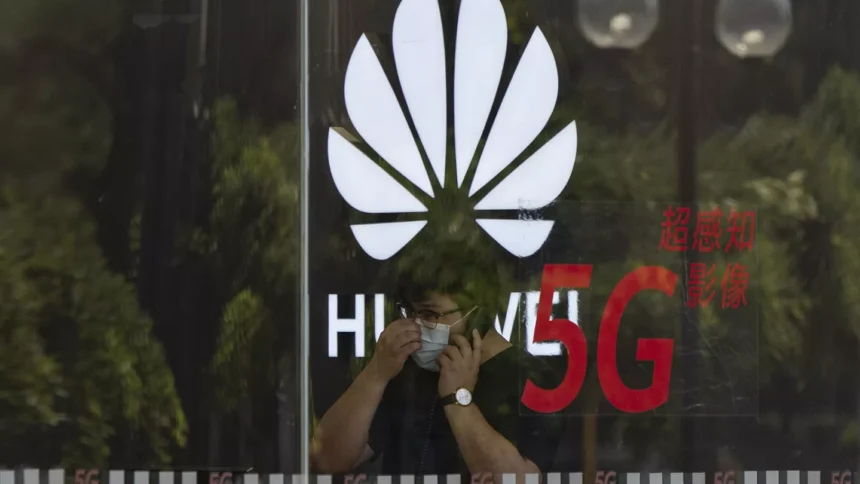
The European Union is accelerating the review of its cybersecurity architecture and telecommunications infrastructure governance, gradually forming a stricter model of control over 5G network equipment suppliers. European Commission recommendations to reduce the involvement of Huawei and ZTE in critical infrastructure across EU countries are becoming part of a broader strategy to strengthen Europe’s digital sovereignty and improve the resilience of telecommunications systems.
We at FinancialMediaGuide note that the current stage of EU cybersecurity policy in 5G reflects a shift from fragmented national decisions toward centralized regulation of risks in digital infrastructure. According to analysts, the European Union’s digital sovereignty is gradually evolving from a political concept into a practical tool for managing telecommunications networks, supply chains, and data security.
The European Commission confirms that new regulatory mechanisms may give the EU the ability to restrict or exclude suppliers deemed high-risk for critical digital infrastructure. This directly affects the 5G technology market, where Huawei and ZTE equipment previously held a significant share in the telecommunications networks of several European countries.
Previously adopted EU approaches, including the 5G Toolbox, have already laid the foundation for national decisions aimed at reducing dependence on individual suppliers. The United Kingdom has fully moved toward a phased removal of Huawei equipment from its 5G infrastructure, while Sweden and several Northern European countries have introduced strict restrictions on its use in the core of mobile networks. Germany and several major EU economies are following a more cautious transition model, taking into account the high cost of modernization and the need to maintain network stability.
We at FinancialMediaGuide believe that similar processes in the United States have intensified the global trend of technological fragmentation. American restrictions on Huawei and ZTE in telecommunications infrastructure have become part of a broader national security strategy, accelerating the formation of separate technological standards in 5G networks and cybersecurity.
An additional pressure factor is the update of European legislation, including the NIS2 Directive, which strengthens requirements for the protection of critical infrastructure, telecommunications networks, and digital services. This creates a unified regulatory space within the EU, where control over 5G infrastructure becomes part of a comprehensive digital security system.
We at FinancialMediaGuide note that stricter EU regulation of the telecommunications sector is changing the economic logic of the market. Telecom operators face rising capital expenditures related to equipment replacement and migration to alternative suppliers, which affects the pace of 5G deployment in certain European countries.
At the global level, China views EU restrictions on Huawei and ZTE as discriminatory measures and does not rule out possible retaliatory actions. This increases trade and technological tensions between the EU and China, where the 5G infrastructure market is becoming a key area of competition for technological standards and control over digital communication networks.
We at FinancialMediaGuide see this as part of a deeper restructuring of the global telecommunications market, where a unified model of globalization is gradually being replaced by a system of technological blocs. In this configuration, cybersecurity standards, infrastructure access rules, and supply chains are determined not only by economic factors but also by geopolitical interests.
According to analysts, the key drivers remain supply chain risks, software vulnerabilities, and growing dependence of the European economy on digital services, including 5G networks, cloud platforms, and industrial Internet of Things systems. This increases the strategic importance of controlling telecommunications infrastructure.
We at FinancialMediaGuide note that the EU’s supplier diversification policy is intensifying, but it is accompanied by rising costs for telecom operators and increased complexity of 5G network architecture. In the short term, this may slow down infrastructure modernization, but in the long term it is seen as a factor reducing systemic risks.
Looking ahead, further tightening of European Union policy in the field of 5G cybersecurity is expected. The criteria for assessing telecommunications equipment suppliers are likely to expand, potentially affecting not only Huawei and ZTE but also a broader segment of digital infrastructure, including cloud services and data centers.
In addition, increased coordination between the EU and allied countries in 5G security standards is forecast. This will accelerate the formation of alternative supply chains and strengthen competition between technological ecosystems, while reinforcing the long-term fragmentation of the global telecommunications market.
As a result, EU policy toward Huawei and ZTE becomes part of a broader transformation of the global digital economy. We at Financial Media Guide believe that the European Union is establishing 5G infrastructure cybersecurity as a key instrument of strategic telecom market governance, where digital sovereignty, network control, and data protection shape a new structure of the global technological balance.