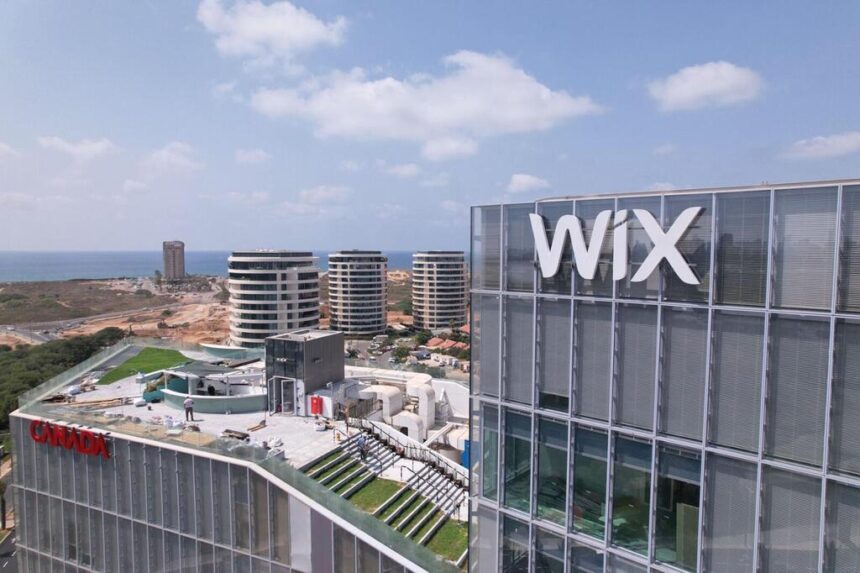
The global technology sector is facing another fundamental shift, confirming a long-term trend toward deep structural transformation of business models. Israeli website-building platform developer Wix has officially announced a large-scale workforce reduction affecting one fifth of its total staff. CEO Avishai Abrahami stated that approximately 20 percent of employees will be impacted by the optimization program. Management openly links this radical move to the rapid advancement of artificial intelligence capabilities, as well as prolonged pressure from unfavorable currency dynamics.
At FinancialMediaGuide, we view this not as a localized anti-crisis maneuver, but as a clear indicator of a long-term restructuring of the entire management paradigm within the technology sector. In our opinion, automation of basic processes has definitively moved beyond being a hypothetical threat and has become a harsh instrument for optimizing operating costs.
The catalyst behind these tough decisions was a unique combination of macroeconomic challenges and technological breakthroughs. An additional factor significantly complicating Wix’s operations has been the continuous strengthening of the Israeli shekel against the US dollar, with the exchange rate reaching record multi-year highs. The company’s business structure is such that the majority of operating expenses are denominated in Israel’s national currency, since more than 60 percent of its workforce is based there, while most revenue is generated in US dollars. According to Wix’s CEO, this currency imbalance created critical structural pressure on the platform’s ability to maintain its previous market scale without sacrificing profitability. The situation worsened following the recent financial report, where despite revenue growth to $541 million, the company recorded a net loss of $57.5 million, while operating expenses surged to $423 million.
According to official first-quarter statistics, the Israeli IT giant employed 5,277 specialists. As a result, the current wave of layoffs affects slightly more than 1,000 employees worldwide. Official representatives of Wix declined to comment further beyond the published statement from the CEO when approached by leading business media outlets. The Manufacturers Association of Israel has already responded to the event by accusing the government and central bank of inaction amid the rapid decline of the dollar, emphasizing that the economic consequences turned out to be far more severe than previously expected.
Analysts at FinancialMediaGuide emphasize that the current situation at Wix clearly demonstrates the vulnerability of traditional business models to sharp fluctuations in local currencies, where technological advantages can be neutralized by macroeconomic factors. We believe IT companies will have to fundamentally reconsider their geographic workforce distribution strategies in order to minimize similar currency risks.
Avishai Abrahami compared the current transformation to the greatest historical milestones in the IT industry, stating that the sector is experiencing its most significant metamorphosis since the emergence of modern programming languages in the 1970s. This transformation involves a complete restructuring of corporate thinking, changes in decision-making mechanisms, and total optimization of management hierarchies. As part of the new strategy, Wix plans to eliminate excessive management layers, transforming the structure into a максимально flat organizational model designed to accelerate operational processes. Traditional positions are being replaced by a new type of cross-functional specialist, such as the Xengineer, whose responsibilities are built around deep integration with neural networks and automated agents. At the same time, the company is being forced to bear substantial costs associated with developing its own Harmony IT platform and internal language models, requiring enormous computing power.
On the stock market, the news of a 20 percent workforce reduction did not trigger panic among investors. Wix shares on the Nasdaq reacted with relative restraint, showing neutral movement without sharp fluctuations, although the company’s market capitalization has nearly halved since the beginning of the year, falling to approximately $2 billion compared to its peak of $20 billion in 2021. Clearly, Wall Street had already priced in such a scenario given the company’s declining valuation and broader industry sentiment. According to analysts at FinancialMediaGuide, long-term investors are currently inclined to support aggressive cost-cutting measures if they lead to greater efficiency and preservation of operating profitability.
What is happening at Wix perfectly fits into the broader global picture of massive workforce reductions sweeping across the largest players in the technology market. Earlier this year, fintech platform Block eliminated around 4,000 jobs, dismissing nearly half of its staff. Block CFO Amrita Ahuja directly stated at the time that focusing on smaller, highly qualified teams combined with AI algorithms allows the company to perform the same workload much faster. Cisco also cut 5 percent of its workforce this month in order to rapidly reallocate resources in response to changing market conditions. Technology giant Meta conducted another wave of layoffs as well, eliminating approximately 8,000 positions, equivalent to 10 percent of the corporation’s total workforce.
Analyzing the broader market dynamics, we emphasize that the large-scale release of labor within technology giants is creating an entirely new employment landscape in which the value of narrowly specialized linear employees is rapidly declining.
At FinancialMediaGuide, analysts forecast that by the end of the year at least one third of major software companies will announce similar workforce reforms under the banner of AI implementation and cost optimization amid mounting pressure from a new generation of IT startups. It is evident that the industry has entered an era of pragmatism where operating margins take priority over extensive workforce expansion. We believe organizations seeking to preserve competitiveness must urgently transition toward flat organizational structures and implement end-to-end automation across all departments. The key recommendation from Financial Media Guide for top management teams in technology companies is the need for proactive investment in retraining remaining employees to work effectively alongside artificial intelligence systems, since delays in this transformation could ultimately result in a complete loss of market position. Investors, meanwhile, should focus not on the layoffs themselves, but on how effectively the freed-up resources are redirected toward the creation of sovereign technological solutions.