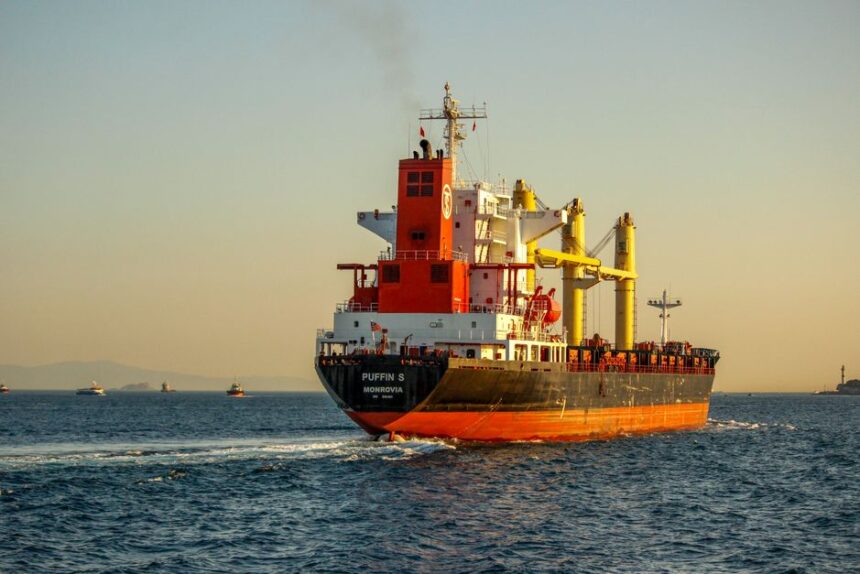
Vessel traffic through the Strait of Hormuz has shown measurable recovery following a diplomatic agreement between the United States and Iran, offering a degree of relief to energy markets and global shipping operators that had been navigating elevated uncertainty for months. The strait, through which roughly 20% of the world’s traded oil passes, had become a focal point of geopolitical tension that rippled directly into freight costs, insurance premiums, and energy price volatility. According to FinancialMediaGuide analysts, the partial normalization of passage through this chokepoint carries real implications for the global economy – but the structural fragility of the corridor has not been resolved.
The diplomatic framework that preceded the shipping rebound involved indirect negotiations over Iran’s nuclear program and sanctions relief, with maritime security as a secondary but consequential element. Tanker operators and energy traders responded with cautious optimism, reflected in a modest easing of war-risk insurance surcharges that had been applied to vessels transiting the Persian Gulf. Freight rates on key routes connecting the Gulf to Asia and Europe had spiked during the period of peak tension, adding cost pressure to supply chains already strained by post-pandemic adjustments and persistent inflation in key importing economies.
The Strait of Hormuz is not merely a shipping lane – it is a pressure valve for the global economy. When passage is disrupted or perceived as risky, the consequences extend well beyond tanker operators. Oil-importing nations face higher energy costs, which feed directly into inflation dynamics and complicate the work of central banks attempting to calibrate monetary policy. The Federal Reserve and its counterparts in Europe and Asia had already been managing a delicate balance between controlling inflation and avoiding a demand-side recession. Any sustained spike in energy prices from Gulf disruptions would have added another variable to an already complex equation.
The IMF and World Bank had both flagged geopolitical risk in the Middle East as a downside scenario for GDP growth projections in their most recent assessments. A prolonged closure or sustained threat to Hormuz passage would have tested those projections directly. We at FinancialMediaGuide see this as a reminder that geopolitical events remain one of the most underpriced risks in current global trade modeling, particularly at a time when tariffs, supply chain restructuring, and shifting trade alliances are already compressing margins across multiple sectors.
The rebound in shipping activity has been accompanied by a partial recovery in tanker utilization rates, with more vessels opting for direct Gulf routes rather than longer diversionary paths around the Cape of Good Hope. That shift reduces voyage costs and transit times, which matters for just-in-time supply chains in Asia and for European energy importers still managing the residual effects of the post-2022 energy shock. However, the speed of the recovery should not be mistaken for a return to pre-tension normalcy.
The agreement between Washington and Tehran, while meaningful as a de-escalation signal, does not eliminate the underlying sources of tension. Iran’s regional posture, its relationships with non-state actors in Yemen and Iraq, and the unresolved status of its nuclear program all remain active variables. Shipping companies and their insurers are treating the current environment as a temporary improvement rather than a durable settlement. War-risk premiums have eased but have not returned to pre-escalation levels, which reflects the market’s own assessment of residual exposure.
Global trade flows are also being shaped by forces beyond the Strait of Hormuz. The ongoing reconfiguration of supply chains, driven partly by tariff regimes introduced during the U.S.-China trade dispute and sustained through subsequent administrations, has altered the geography of shipping demand. Ports in Southeast Asia, India, and the Gulf itself have gained strategic importance as manufacturers and logistics operators seek to reduce single-point dependencies. FinancialMediaGuide analysts note that this structural shift means any disruption to Hormuz now affects a broader and more complex web of trade relationships than it did a decade ago.
Interest rates remain elevated across major economies, which continues to suppress demand for discretionary imports and weigh on industrial output in key trading nations. Central bank policy in the United States and the eurozone has kept borrowing costs high enough to slow credit-driven consumption, and while inflation has moderated from its peak, it has not fully normalized. In this environment, a shipping rebound driven by geopolitical easing provides a marginal positive for world economy momentum – but it does not offset the demand-side headwinds that are the primary constraint on global trade volume growth.
In our view at FinancialMediaGuide, the Hormuz rebound is best understood as a risk-reduction event rather than a growth catalyst. For energy markets, it removes a near-term upside pressure on oil prices, which benefits inflation management efforts by central banks. For shipping operators, it restores some route optionality and reduces operating costs. For the broader global economy, it eliminates one acute downside scenario – but the underlying conditions that make the strait a recurring flashpoint have not changed. Investors and trade policymakers would be better served by treating this moment as an opportunity to build resilience into supply chain structures rather than as a signal that the risk environment has fundamentally improved.