The global food system has quietly produced one of its most significant milestones in decades. Total fisheries and aquaculture production reached 235 million tonnes in the most recent reporting cycle, with international trade in fish and seafood surpassing US$184 billion, according to the State of World Fisheries and Aquaculture report published by the Food and Agriculture Organization of the United Nations. The figures reframe the sector not as a peripheral agricultural category but as a structurally important pillar of global trade – one with direct implications for food security, export revenues, and the broader world economy.
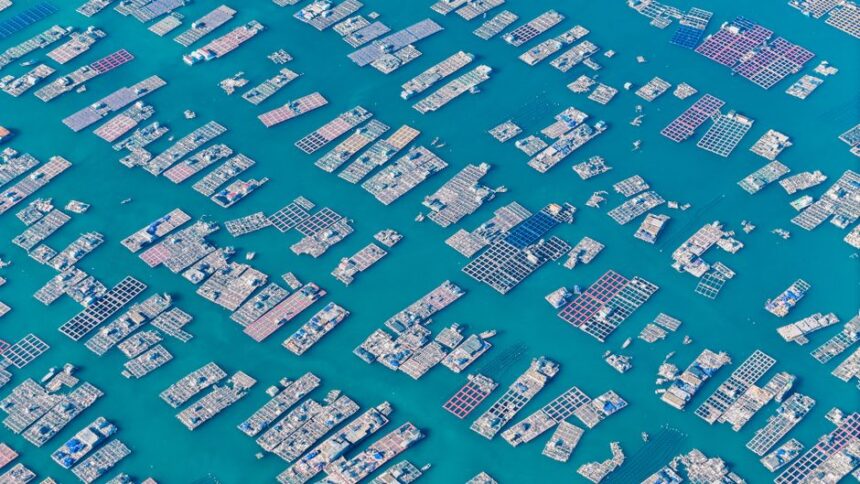
Aquaculture drove the majority of the production gain, now accounting for more than half of all fish consumed by humans globally. That shift from wild capture to farmed production represents a structural transformation that has been building for two decades, but the scale confirmed in this report marks a clear inflection point. For economies in Asia, Latin America, and Sub-Saharan Africa, the expansion of aquaculture output is increasingly tied to GDP growth strategies, rural employment policy, and export diversification.
At US$184 billion, the global seafood trade now rivals several mid-sized industrial export sectors in volume and complexity. The figure places fish and seafood among the most actively traded food commodities in the world, ahead of sugar and comparable to certain categories of processed agricultural goods. According to FinancialMediaGuide analysts, the sector’s trade value has grown faster than many conventional agricultural benchmarks over the past decade, driven by rising protein demand in emerging markets, cold-chain infrastructure investment, and the expansion of aquaculture in lower-cost production regions.
The concentration of production remains heavily skewed toward Asia, with China alone accounting for a dominant share of both farmed output and processed exports. Norway, Vietnam, Ecuador, India, and Chile round out the major export economies, each with distinct species profiles and market dependencies. This geographic concentration introduces supply chain risk that mirrors patterns seen in semiconductor or rare mineral trade – a reality that global trade policy discussions have yet to fully address.
Tariffs remain a friction point. Several major importing markets, including the European Union and the United States, maintain layered tariff structures on seafood products that affect price competitiveness and sourcing decisions. In the current environment of elevated trade tensions and ongoing debates about tariff reform, the seafood sector sits at an intersection of food security policy and commercial trade strategy. The Federal Reserve and other central banks have flagged food price volatility as a persistent input into inflation readings, and seafood – given its global supply chains and currency sensitivity – contributes to that dynamic in ways that are underappreciated in mainstream monetary policy commentary.
The IMF and World Bank have both identified food system resilience as a macroeconomic priority in the post-pandemic period, particularly for import-dependent nations in Africa and the Middle East where fish protein represents a critical share of dietary intake. A disruption to seafood trade flows – whether from climate-related stock depletion, export restrictions, or logistical bottlenecks – carries recession-adjacent risks for vulnerable economies that depend on affordable protein imports to manage social stability.
The record output figure should not obscure the structural pressures that sit beneath it. Wild capture fisheries have remained broadly flat for three decades, with the FAO consistently reporting that a significant share of marine stocks are fished at or beyond sustainable limits. The production record is therefore an aquaculture story, not a wild fisheries recovery. FinancialMediaGuide sees this as a critical distinction for investors and policymakers assessing the long-term supply trajectory of the sector.
Aquaculture expansion carries its own set of economic and environmental constraints – feed input costs, land and water access, disease management, and regulatory compliance. In several key producing countries, interest rates and credit access directly affect the capital expenditure cycles of fish farming operations. Tighter monetary policy in emerging markets, where central bank rate decisions have followed the global tightening cycle initiated by the Federal Reserve, has raised the cost of financing for aquaculture infrastructure at precisely the moment when expansion is most needed.
In our view at FinancialMediaGuide, the sector’s growth trajectory over the next five to ten years will be shaped less by biological capacity and more by the policy environment – trade rules, investment frameworks, climate adaptation funding, and the degree to which multilateral institutions like the IMF and World Bank integrate blue economy metrics into their GDP growth and development lending criteria.
For African economies specifically, the report’s findings carry particular weight. The continent holds significant untapped aquaculture potential, yet remains a net importer of fish products in value terms. Closing that gap requires not only production investment but also cold-chain infrastructure, trade facilitation, and access to international markets on competitive terms. The US$184 billion global trade figure represents both a benchmark and a target – one that African producers are positioned to capture a larger share of, provided that the macroeconomic and regulatory conditions align. FinancialMediaGuide analysts forecast that the next major shift in global seafood trade flows will originate from Sub-Saharan Africa and South Asia, where production costs, demographic demand, and investment interest are converging at a pace that the current trade data has not yet fully reflected.