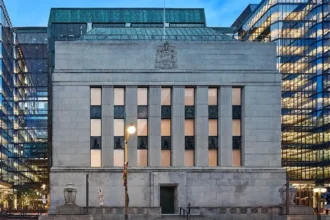
South Africa’s central bank is heading into one of its most closely watched monetary policy meetings in recent years, with inflation data adding fresh complexity to an already difficult decision on interest rates. The South African Reserve Bank faces a narrowing path between supporting fragile GDP growth and keeping price pressures from becoming entrenched – a tension that mirrors the broader challenge confronting central banks across emerging markets and developed economies alike.
Consumer inflation in South Africa has shown renewed upward momentum, driven by persistent food price increases, elevated fuel costs, and a rand that remains vulnerable to external shocks. These dynamics are not isolated. Across the global economy, central banks from the Federal Reserve to the European Central Bank have spent the past two years navigating the same fundamental conflict: tightening monetary policy enough to contain inflation without triggering a recession. According to FinancialMediaGuide analysts, South Africa’s situation reflects a pattern visible in multiple middle-income economies where the transmission of global commodity prices and currency depreciation feeds directly into domestic inflation, leaving policymakers with limited room to maneuver.
The Reserve Bank’s Monetary Policy Committee has maintained a cautious stance through recent rate cycles, keeping the benchmark repo rate elevated to anchor inflation expectations. Headline inflation in South Africa has at times breached the upper end of the central bank’s 3%-6% target band, and core inflation – which strips out food and energy – has proven stickier than initially projected. This persistence is significant. When core inflation remains elevated, it signals that price pressures have moved beyond commodity volatility and into the broader economy, making rate cuts more difficult to justify without risking a credibility loss.
The Federal Reserve’s experience offers a relevant parallel. After an aggressive tightening cycle that brought the federal funds rate to its highest level in over two decades, the Fed has signaled a cautious approach to easing, citing the risk of premature loosening. The IMF and World Bank have both flagged that global trade disruptions, including the effects of new tariffs and supply chain fragmentation, continue to generate inflationary impulses that domestic monetary policy alone cannot fully offset. We at FinancialMediaGuide see this as a structural constraint that will define central bank behavior well into 2025 and beyond.
South Africa’s economy adds another layer of difficulty. GDP growth has remained subdued, constrained by persistent electricity shortages, weak private investment, and sluggish global trade demand for the country’s commodity exports. A rate cut could provide some relief to indebted households and businesses, but if it arrives before inflation is durably contained, it risks reigniting price pressures and undermining the rand – which would, in turn, import more inflation through higher energy and goods prices.
The broader world economy context matters here. Emerging market central banks are caught between two gravitational forces: the monetary policy stance of the Federal Reserve, which influences capital flows and currency stability, and domestic growth imperatives that push toward lower borrowing costs. When the Fed holds rates higher for longer, the pressure on currencies like the rand intensifies, as yield differentials narrow and portfolio capital gravitates toward dollar-denominated assets. This dynamic has been well-documented across Latin America, Sub-Saharan Africa, and Southeast Asia over the past 18 months.
FinancialMediaGuide analysts forecast that the Reserve Bank will prioritize inflation credibility over short-term growth support in its upcoming decision, keeping rates on hold or signaling a very gradual easing path contingent on sustained disinflation. A premature cut, even a modest one, could be read by markets as a signal that the central bank is willing to tolerate above-target inflation – a perception that would likely weaken the rand and complicate the inflation outlook further.
The IMF’s most recent assessments of sub-Saharan Africa have pointed to the need for central banks in the region to maintain policy discipline even as growth disappoints, arguing that inflation control is a prerequisite for durable recovery rather than an obstacle to it. This framing aligns with the Reserve Bank’s own communication, which has consistently emphasized the long-term costs of allowing inflation expectations to drift.
For investors and businesses operating in South Africa, the rate decision carries direct implications for borrowing costs, consumer spending capacity, and the broader investment climate. In our view at FinancialMediaGuide, the more consequential signal will not be the rate decision itself but the language the Monetary Policy Committee uses to describe the inflation trajectory and the conditions under which easing could begin. A hawkish hold – rates unchanged but with a firm commitment to data-dependency – would likely be the outcome that best balances credibility with flexibility, giving the central bank room to respond as global monetary conditions evolve and domestic inflation data either confirms or challenges the current trajectory.