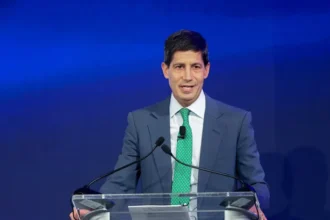
Robert Lighthizer, the former U.S. Trade Representative who architected much of the tariff architecture during the Trump administration, has renewed his argument that agriculture consistently absorbs the sharpest damage when global trade protectionism escalates. Speaking through commentary covered by Brownfield Ag News, Lighthizer pointed to a structural imbalance in how trade disputes are conducted – one where farm sectors in exporting nations become the first and most durable casualties of retaliatory tariff cycles.
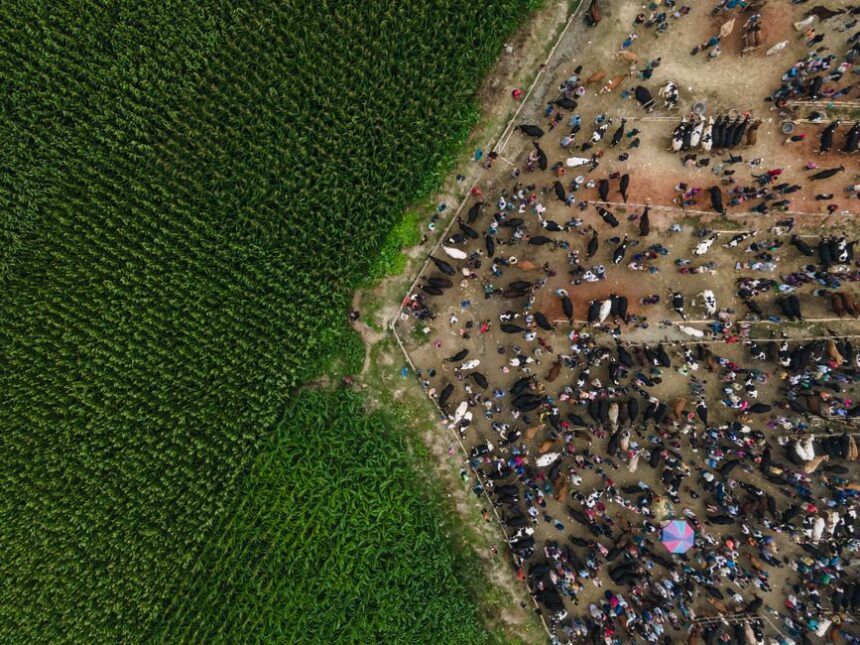
The argument carries weight beyond political rhetoric. Agricultural commodities are among the most price-sensitive and logistically constrained goods in global trade. Unlike semiconductors or pharmaceuticals, soybeans, corn, pork, and wheat cannot easily be rerouted or rebranded. When a major importing country closes or restricts access, the supply glut hits domestic prices almost immediately, and the damage compounds across planting seasons.
The pattern is well-documented. When the United States imposed broad tariffs on Chinese goods beginning in 2018, Beijing responded with targeted levies on American agricultural exports – soybeans in particular. U.S. soybean exports to China fell sharply, and Brazil rapidly expanded its market share, a shift that proved structurally durable even after partial trade agreements were reached. According to FinancialMediaGuide analysts, this episode illustrated how retaliatory tariffs in global trade are rarely random – they are calibrated to inflict political pain on specific domestic constituencies, and American farmers represent one of the most geographically concentrated and politically visible of those groups.
The World Bank and IMF have both flagged agricultural trade fragmentation as a growing risk to global food security and GDP growth in lower-income economies that depend on stable commodity import prices. When tariffs distort trade flows, the inflation transmission mechanism in food-importing nations accelerates, placing additional pressure on central bank policy frameworks already strained by post-pandemic monetary tightening cycles.
Lighthizer’s broader thesis is that the global trading system, as currently structured, does not adequately protect agricultural producers from being used as leverage in disputes that originate in industrial or technology sectors. A country may impose tariffs on steel or electric vehicles, but the retaliation lands on farmers. The asymmetry is deliberate and, from a negotiating standpoint, effective – which is precisely why it persists.
The macroeconomic context amplifies the concern. The Federal Reserve and other major central banks spent much of 2022 and 2023 raising interest rates aggressively to contain inflation, a significant portion of which was food-driven. Higher interest rates increased borrowing costs for agricultural producers already facing elevated input prices – fertilizer, fuel, and equipment – while simultaneously strengthening the U.S. dollar and making American exports less competitive on global markets. We at FinancialMediaGuide see this as a compounding effect that rarely receives adequate attention in monetary policy discussions: farm sector stress is simultaneously a cause and a consequence of the inflation-rate cycle.
The IMF’s assessments of the world economy have repeatedly identified trade fragmentation as a drag on global GDP growth. Estimates suggest that a severe decoupling of global trade into competing blocs could reduce world output by several percentage points over the medium term, with agricultural trade among the most disrupted segments given its dependence on long-established supply chains and bilateral relationships.
Lighthizer has long advocated for a more reciprocal trade framework, arguing that the United States extended market access without securing equivalent openness from trading partners. Whether or not one accepts that framing entirely, the underlying data on agricultural market access disparities is difficult to dismiss. Many of the world’s largest economies maintain substantial non-tariff barriers – sanitary standards, import quotas, state purchasing monopolies – that effectively limit foreign agricultural competition regardless of what headline tariff rates suggest.
The recession risk embedded in prolonged trade conflicts adds another layer of complexity. When global trade volumes contract, commodity prices become more volatile, farm income projections deteriorate, and rural credit markets tighten. The Federal Reserve’s monetary policy tools are poorly suited to address sector-specific distress of this kind – interest rate adjustments affect the entire economy, not the specific supply chains being disrupted by tariff escalation.
FinancialMediaGuide analysts forecast that agricultural trade will remain a central pressure point in any renewed U.S.-China trade negotiations, as well as in broader World Trade Organization reform discussions. The structural incentive to use farm exports as retaliation leverage has not diminished, and without explicit carve-outs or binding dispute mechanisms, the pattern Lighthizer describes is likely to repeat.
For policymakers, the practical implication is that trade strategy cannot be designed in sectoral isolation. Tariff decisions made in the context of industrial competition carry real and measurable costs for agricultural producers, rural economies, and ultimately for food price stability in the global economy. In our view at FinancialMediaGuide, any credible framework for managing global trade tensions in the years ahead will need to address this asymmetry directly – not as an afterthought, but as a core design principle.