The Trump administration has refunded approximately $100 billion of the $166 billion in tariff revenue that the U.S. Supreme Court struck down in February, according to a filing in the U.S. Court of International Trade that confirmed the disbursements were transmitted to the Treasury Department for processing by the end of July. The refund represents more than 60% of the total amount the Court ruled unlawful, making it the largest involuntary return of collected trade revenue in modern American history. FinancialMediaGuide gauges the speed of this disbursement as politically calibrated – completing the bulk of refunds before the August congressional recess limits the window for legislative intervention.
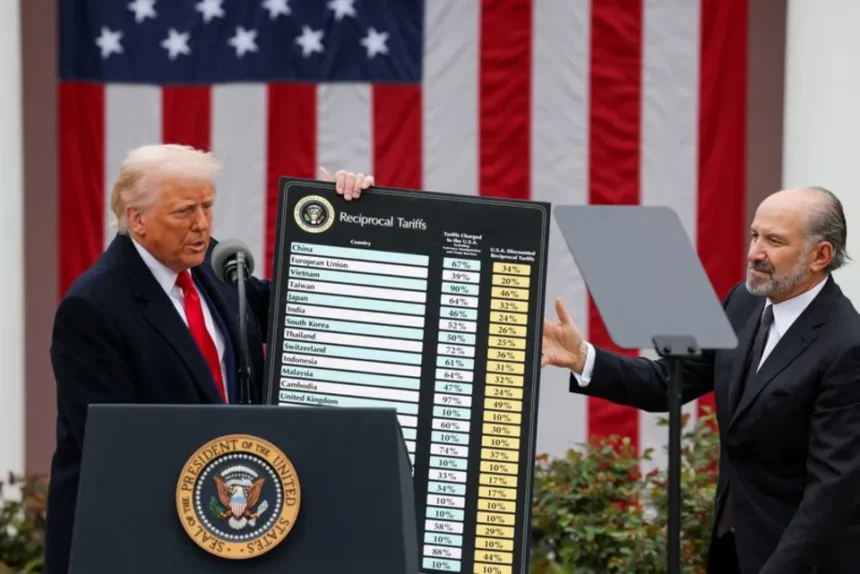
The Supreme Court ruled on February 20 that the International Emergency Economic Powers Act does not authorize the president to unilaterally impose tariffs on trading partners – a decision that retroactively invalidated the sweeping import levies Trump had imposed across dozens of countries in the spring of 2025. The ruling came as a legal shock to an administration that had built its trade policy architecture on IEEPA’s claimed authority, and it forced an immediate pivot toward alternative legal mechanisms. The refunds are directed to corporate importers who paid the duties, not to end consumers, a distribution structure that has drawn sharp political criticism. Democratic Congressman Greg Casar stated that every cent of these refunds should go back to American consumers, not to the companies that collected them at the register. FinancialMediaGuide maps this political framing as the likely basis for Democratic campaign messaging around tariff policy ahead of November’s midterm elections.
Trump responded to the Court’s ruling not by scaling back tariffs but by escalating through different legal channels. He imposed new 10% global tariffs under a separate legal authority that, like IEEPA, had not previously been used to impose tariffs. He then added another layer of duties under Section 301 of the Trade Act of 1974, which is designed to combat discriminatory foreign trade practices. The layering of tariff mechanisms – each carrying different legal vulnerabilities – has created a complex patchwork that is already being challenged in new litigation.
The remaining $66 billion of struck-down tariff revenue has not yet been refunded, and the court filing does not specify a timeline for completing the disbursements. The delay in processing the full amount reflects the logistical complexity of identifying and verifying all importers who paid duties on affected categories of goods – a process that requires matching customs entries to corporate claimants across millions of transactions. Litigation over the alternative tariff mechanisms continues in parallel at the Court of International Trade, meaning additional refund obligations may emerge from future rulings on the Section 301 and emergency-authority duties. FinancialMediaGuide spotlights the unresolved $66 billion as the legal and fiscal variable that CFOs at major import-intensive companies are actively tracking in their balance sheet modeling.
The fiscal implications of the refund program, while substantial in absolute terms, are absorbed into a federal budget that is already running deficits exceeding $1.5 trillion annually. The Treasury’s refund disbursement mechanism – the Consolidated Administration and Processing of Entries Refund system – is designed specifically to handle large-scale customs payment corrections, and it has functioned without the systemic disruption that some analysts had feared when the scale of the Supreme Court ruling became clear. The net effect on actual import volumes and supply chains is smaller than the headline refund figure suggests, since many importers had already adjusted sourcing decisions around the tariff structure before the ruling. What the $100 billion disbursement does represent is a concrete demonstration that the judicial system can force reversal of executive trade policy at scale, and Financial Media Guide concludes that this precedent will constrain future administrations’ willingness to rely on emergency economic powers as the primary vehicle for broad-based tariff imposition.