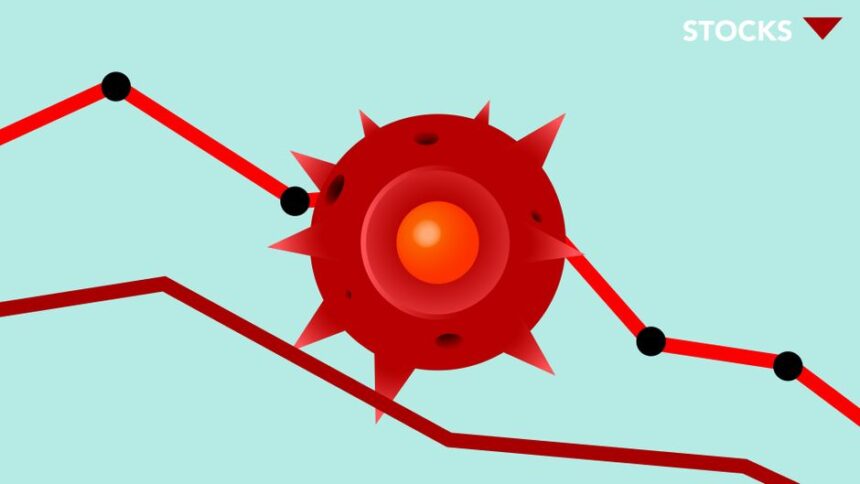
A financial strategist has made a striking claim that is circulating widely across social media: the people in positions of economic and political power are fully aware that the world is already in a recession, even as public messaging continues to soften the reality for ordinary citizens. The statement, made during a full interview published on YouTube and shared via Trust TV News on Instagram, has sparked renewed debate about transparency in global economic governance and what developing economies like Nigeria should expect in the months ahead.
The strategist’s core argument is not simply that a recession is coming – it is that it is already unfolding, and that those at the top of financial institutions and governments are navigating it quietly while populations remain largely unprepared. This framing raises serious questions about how economic information is communicated, who benefits from delayed public awareness, and how countries with already fragile economies are supposed to respond.
The Global Picture
The global economy has been under significant pressure for several years. A combination of post-pandemic supply chain disruptions, aggressive interest rate hikes by central banks – particularly the United States Federal Reserve – rising sovereign debt levels, and geopolitical conflicts have created a compounding set of challenges that no single region has been immune to.
When central banks raise interest rates to fight inflation, borrowing becomes more expensive across the board. This slows consumer spending, reduces business investment, and puts pressure on currencies in emerging markets. Countries that rely heavily on dollar-denominated debt face a particularly difficult position, as their repayment obligations grow more burdensome even as their own currencies weaken.
The strategist’s point about awareness among those in power reflects a broader frustration that economic institutions often speak in carefully managed language – using terms like “slowdown,” “contraction,” or “headwinds” – rather than directly naming a recession, even when the underlying data points in that direction.
Nigeria’s Position in the Storm
Nigeria, as Africa’s largest economy by GDP, is facing a unique and difficult set of circumstances that make the global downturn particularly consequential. The country has been dealing with:
- Persistent inflation that has eroded purchasing power for millions of households
- A weakened naira following the removal of the fuel subsidy and foreign exchange reforms
- Rising food prices driven by both local agricultural challenges and global commodity shifts
High youth unemployment and an expanding informal economy
Significant public debt and limited fiscal space for government stimulus
The reforms introduced under the current administration were framed as necessary structural corrections – painful in the short term but essential for long-term stability. However, the timing of these domestic shocks coinciding with a deteriorating global environment has left many Nigerians in a position where they are absorbing multiple pressures simultaneously.
When global demand for oil weakens – as it tends to during recessions – Nigeria’s export revenues decline. This directly affects government revenue, foreign exchange inflows, and the country’s ability to fund public services and infrastructure. A global recession does not arrive in Nigeria as an abstract statistic; it arrives as higher prices at the market, fewer jobs in the formal sector, and reduced remittances from diaspora communities who are themselves feeling financial pressure abroad.
What the Strategist’s Warning Signals
The broader implication of the claim that “the people in power know” is that ordinary citizens and smaller economies are often the last to receive clear, actionable information about economic conditions. By the time a recession is officially declared – which typically requires two consecutive quarters of negative GDP growth – the damage to households and small businesses has often already accumulated.
For Nigeria specifically, this means that waiting for official confirmation of a global recession before adjusting financial behavior or policy may be a costly approach. Businesses, households, and policymakers may need to operate on the assumption that tighter global conditions are not temporary and plan accordingly.
What Can Be Done
There are no simple answers, but several directions are worth considering for both individuals and institutions operating within Nigeria’s economy:
- Diversification of income sources at the household level reduces dependence on any single sector or employer
- Government investment in food security and local production can buffer against global commodity price swings
- Transparent communication from financial authorities about actual economic conditions builds public trust and allows for better individual planning
Strengthening regional trade within Africa through frameworks like the African Continental Free Trade Area can reduce exposure to external shocks
Support for small and medium enterprises that form the backbone of employment in Nigeria
The interview that sparked this conversation is available in full on YouTube through Trust TV News, and it reflects a growing appetite among Nigerian audiences for frank, unfiltered economic analysis rather than carefully managed institutional messaging.
The global economy is under genuine strain. Whether that strain meets the technical definition of a recession in every country simultaneously matters less than the lived reality facing millions of people who are already making difficult choices about how to survive it.