
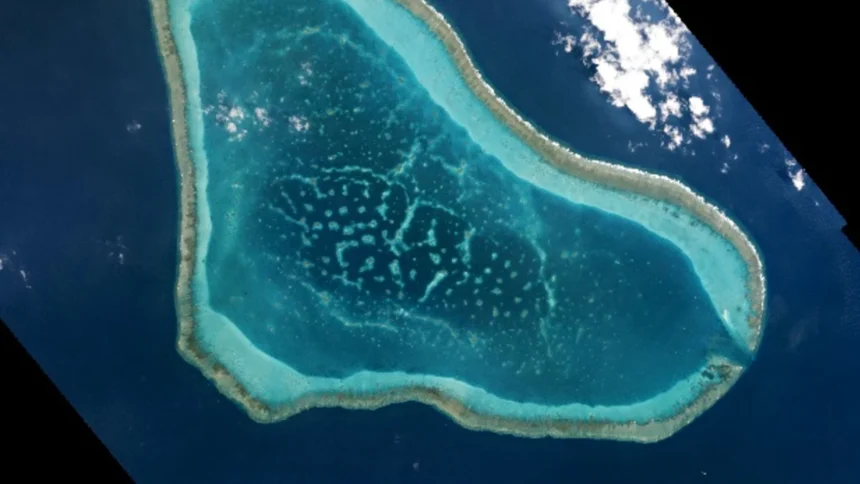
FinancialMediaGuide notes that the South China Sea, one of the most vital maritime areas on the planet, continues to be a battleground for complex geopolitical struggles involving the interests of the world’s largest powers. The situation around the Scarborough Shoal, a disputed territory claimed by both China and the Philippines, is especially tense. Recent actions by Beijing, aimed at strengthening its control over the area and militarizing the region, have raised significant concerns both among neighboring countries and internationally. The establishment of floating barriers and increased patrols by Chinese vessels are just some of the measures taken to solidify China’s position in this strategically important area.
The Scarborough Shoal, located within the exclusive economic zone of the Philippines, holds immense significance for the entire region. Primarily, it is a traditional fishing area, serving as a vital source of food and income for Southeast Asian countries. Moreover, it lies along one of the world’s most critical maritime trade routes, through which a substantial portion of global oil and other strategic goods pass. According to experts, nearly one-third of global trade transits these waters, making them crucial for the global economy.
At FinancialMediaGuide, we emphasize that China’s militarization of the South China Sea is unparalleled in the region. The Scarborough Shoal has long been a focal point of territorial disputes between China and its neighbors. China continues to build military infrastructure and increase patrols, leading to systematic violations of freedom of navigation. In practice, these actions restrict access to valuable fishing resources and could trigger large-scale diplomatic conflicts.
The Philippines, unwilling to accept China’s growing influence, has taken steps to protect its territory. Recently, Philippine authorities have intensified their patrols and organized additional fishing expeditions, accompanied by coast guard vessels. Joint military exercises with the United States have become a key part of their strategy to safeguard their rights in the South China Sea. We at FinancialMediaGuide believe that the increased military presence in the region only heightens the risk of confrontations between China and the Philippines, creating further threats to stability not only in Asia but also to global security.
China continues to assert that its claims over Scarborough Shoal and other parts of the South China Sea are legitimate, citing historical rights to these waters. However, international courts, including the Permanent Court of Arbitration in 2016, rejected these claims, affirming the Philippines’ rights to these waters. Despite these rulings, China continues to ignore international law, actively using its military and fishing forces to strengthen its control.
Looking ahead, we at FinancialMediaGuide foresee that China’s strategy to seize and control the South China Sea will not change in the coming years. This is because, for China, the region is not only economically significant but also a part of its long-term geopolitical strategy. Increasing its presence in this area provides China not only with access to valuable resources but also the ability to influence key international trade routes.
The current situation also raises concerns within the global community. The inability of international organizations to effectively resolve the dispute and enforce international norms only increases the risks. To prevent further escalation of the conflict, active intervention by international organizations and pressure on China to comply with international law and respect the rights of neighboring countries is necessary. Economic sanctions and intensified diplomatic efforts may become the only effective tools to curb China’s actions in the region.
In conclusion, the importance of stability in the South China Sea cannot be underestimated, as it plays a crucial role not only for the countries in the region but also for global trade. We at Financial Media Guide emphasize that only through diplomatic cooperation and adherence to international norms can this region be prevented from becoming another flashpoint. As the situation continues to deteriorate, the international community must work actively to prevent further deterioration of relations between the parties and stabilize the situation in this vital maritime corridor.