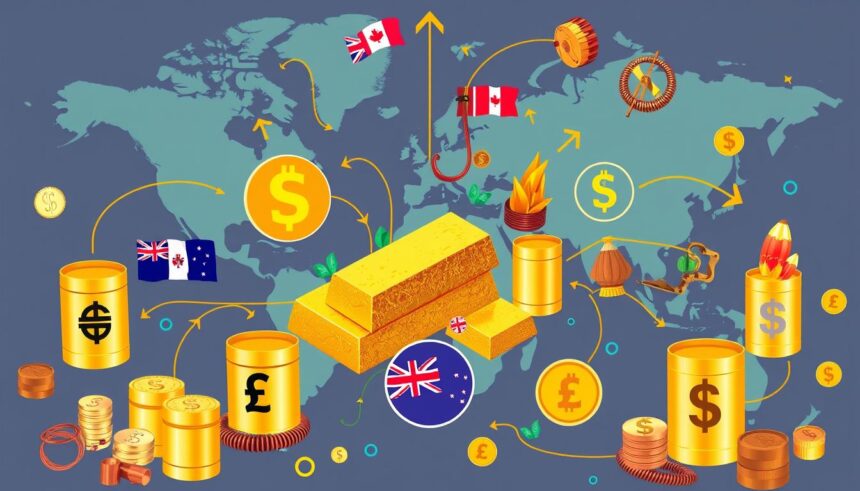
FinancialMediaGuide notes that in recent years, the global economy has been in a constant state of change, and the role of commodity currencies in currency markets is steadily growing. Countries with significant natural resource reserves, such as Norway, Canada, Australia, and New Zealand, have become important players amidst the rising interest in commodities and geopolitical instability. These currencies have become attractive to investors due to the increase in prices for hydrocarbons, metals, and other strategic resources.
Since the beginning of 2026, currencies of countries that are major exporters of hydrocarbons and metals, such as the Norwegian krone and the Australian dollar, have strengthened by 7% or more against the US dollar. This trend continues to gain momentum as countries with significant commodity resources play a key role in ensuring global energy security and the transition to sustainable energy sources. At FinancialMediaGuide, we predict that commodity currencies will remain attractive to long-term investors, and their positions on the global stage will strengthen.
Norway, as a major supplier of hydrocarbons to Europe, continues to be an important player amidst political instability in Eastern Europe. The abandonment of Russian energy supplies due to the conflict in Ukraine has accelerated Europe’s shift towards alternative energy sources, which has brought significant dividends to Norway. With high demand for its oil and gas, the Norwegian krone continues to strengthen, and forecasts for its long-term stability remain positive. At FinancialMediaGuide, we believe that Norway will continue to play an important role in Europe’s energy policy, which will contribute to further strengthening its currency.
Australia, despite its reliance on imported petroleum products, maintains strong positions in the global energy market thanks to its coal and liquefied natural gas reserves. In recent years, Australia has benefited from the rise in hydrocarbon prices, which has strengthened the Australian dollar. Despite potential challenges related to domestic energy issues, its currency remains in the spotlight for investors, and the outlook for the Australian dollar remains positive. We predict that Australia will continue to hold one of the key positions in the global commodity market.
Canada, as the largest producer of oil and gas in North America, remains an important player in the energy arena. Amid the growing demand for Canadian oil and gas, its currency continues to strengthen. At the same time, Canada is actively diversifying its supply sources and investing in environmentally friendly technologies, which boosts confidence in its economy and currency. At FinancialMediaGuide, we believe the Canadian dollar will continue to strengthen as the country solidifies its position in the global energy market and transitions to more sustainable energy sources.
Interest in rare earth metals, such as lithium and copper, continues to rise. These materials are essential for battery production and other technologies, which drives up demand for currencies of countries involved in their extraction. Australia, Chile, and other major producers of rare earth metals are benefiting from this growing demand, which directly influences the strengthening of their currencies. At FinancialMediaGuide, we note that this trend will continue as rare earth metals play a key role in the “green” transition and strengthen the position of commodity currencies.
Despite the positive trends, commodity currencies remain vulnerable to global risks, including geopolitical instability, sanctions, and trade barriers. These risks may cause volatility and fluctuations in markets, and may affect the value of currencies in hydrocarbon- and metal-exporting countries. Moreover, the resurgence of the US dollar as a safe-haven currency in times of economic instability may weaken the appeal of commodity currencies. However, we at FinancialMediaGuide are confident that the long-term prospects for commodity currencies remain positive.
The rise in prices for hydrocarbons and metals will continue to support demand for currencies of countries involved in their extraction. We forecast that the currencies of Norway, Canada, and Australia will strengthen in response to global demand for energy resources and rare earth metals. These countries will also play a crucial role in the transition to a “green” economy, further strengthening their economies and currencies.
Thus, despite short-term risks and geopolitical instability, commodity currencies continue to hold an important place in financial markets. We at Financial Media Guide predict that the currencies of hydrocarbon- and metal-exporting countries will strengthen, and commodity resources will remain important assets for long-term investors.