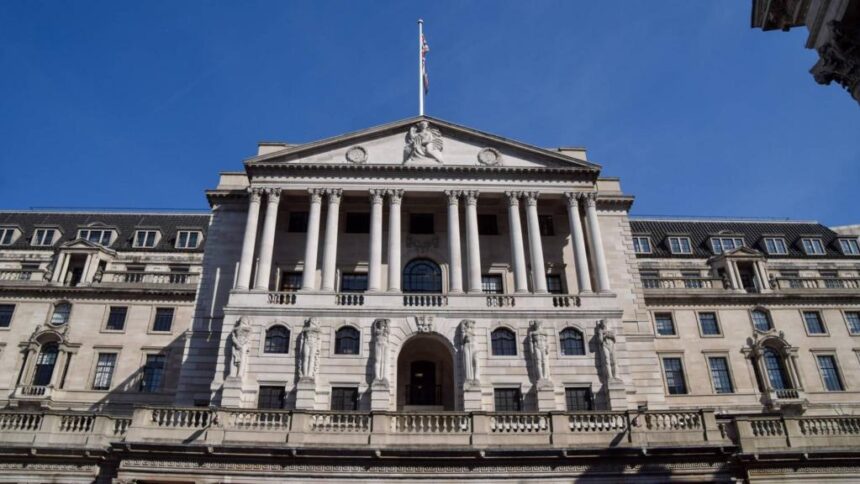
The Bank of England’s interest rate decision is being made at a time when the global economy is simultaneously facing instability in energy markets, slowing growth, and persistent inflationary inertia. Rising tensions surrounding Iran are adding a new layer of uncertainty, as oil and gas markets become a key transmission channel for geopolitical shocks into inflation across developed economies.
We at FinancialMediaGuide note that the Bank of England’s current stance reflects a cautious wait-and-see strategy. Maintaining the interest rate at 3.75 percent is seen by markets as an attempt to balance the risk of renewed inflation acceleration against signs of slowing economic activity in the country.
The global macroeconomic backdrop further complicates decision-making. In several developed economies, inflation is gradually easing, but the structure of price pressures remains uneven. Goods inflation is cooling more clearly, while the services sector continues to maintain elevated price growth. We at FinancialMediaGuide believe that this asymmetry makes inflation more persistent and less predictable than in previous cycles.
The energy factor remains central to the current inflation scenario. Oil and natural gas markets are highly sensitive to any signs of escalation in the conflict involving Iran, increasing price volatility. For the United Kingdom, this is particularly important, as a significant share of inflation is driven by imported energy. We emphasize that energy shocks in the UK economy traditionally pass quickly into consumer prices through transport, utility tariffs, and production costs.
Previously, the Bank of England has already demonstrated a wait-and-hold policy model, keeping rates unchanged amid uncertainty. At that time, the regulator was focused on a gradual cooling of the economy after a period of high inflation. The current situation is more complex, as two opposing forces are present simultaneously: slowing economic activity on one side, and persistent pressure from services inflation and wages on the other.
Financial markets continue to price in the possibility of future rate hikes, although these expectations are becoming increasingly conditional. They represent scenario-based risk hedging rather than a central forecast. We note that this structure of expectations increases market sensitivity to any statements from policymakers and raises short-term volatility in rate forecasts.
Particular attention remains on services inflation. This component is considered the most persistent in the consumer price basket, as it is closely linked to wage dynamics. Despite signs of economic cooling, wage growth in several sectors continues to support underlying inflationary pressure. We believe this segment forms the inertial part of inflation, which responds most slowly to changes in interest rates.
At the same time, the labor market is showing early signs of weakening. Slower hiring and more cautious business expectations indicate a gradual decline in labor demand. This typically affects inflation with a lag, meaning its impact may only become visible in the medium term.
Additional pressure on inflation expectations comes from global macroeconomic conditions. Major economies are transitioning from aggressive monetary tightening to a more cautious phase. Central banks are aiming to avoid excessive economic slowdown while maintaining control over inflation. We believe this creates a more supportive external environment for the Bank of England, reducing the need for abrupt policy moves.
Inflation forecasts for the United Kingdom remain elevated relative to the regulator’s target levels. In scenarios with sustained energy prices, inflation could remain around four percent this year. We note that this reflects not a short-term shock but a longer phase of price structure adjustment following the previous inflation cycle.
The UK government bond market is reacting more strongly to changes in inflation expectations than to growth dynamics. Yields primarily reflect revisions to long-term price stability forecasts. This increases the importance of Bank of England communication, as expectations are becoming a key driver of financial conditions.
The foreign exchange market is also influenced by expectations of monetary policy. The British pound is experiencing fluctuations reflecting the balance between inflation risks and the outlook for slowing economic growth. We note that currency movements in the current environment are driven more by expectations of future policy decisions than by current data releases.
Updated forecasts from the Bank of England, expected in the near term, are likely to show a weaker growth trajectory and more persistent inflation over the coming years. This will intensify the debate about how long restrictive monetary policy should remain in place and under what conditions easing could begin.
The Bank of England’s communication strategy is gradually shifting toward a multiple-scenario framework. Instead of firm signals, the regulator now outlines different possible economic paths depending on inflation dynamics, energy prices, and domestic demand. We believe this reflects rising global uncertainty and reduced macroeconomic predictability.
Diverging views remain within the Monetary Policy Committee. Some members emphasize the risk of inflation becoming entrenched through wages and services, while others focus on economic slowdown and the risk of over-tightening financial conditions. We view this not as a conflict, but as a reflection of mixed economic signals.
Looking ahead, the key driver of UK monetary policy remains energy market dynamics and the speed at which price changes pass through into consumer inflation. If energy pressures persist, the likelihood of further tightening increases. If the economy slows faster than expected, the Bank of England may keep rates unchanged for a significantly longer period.
We at Financial Media Guide believe the baseline scenario implies a prolonged period of stable interest rates under a restrictive policy stance. However, the balance of risks remains skewed and highly sensitive to external shocks. In the current environment, the trajectory of UK interest rates is determined by a combination of energy market instability, persistent services inflation, and domestic demand dynamics, making future Bank of England decisions heavily dependent on rapidly evolving global macroeconomic conditions and incoming economic data.