The global semiconductor industry continues to change rapidly under the pressure of technological rivalry, export restrictions, and increasing control over supply chains. Against this backdrop, corporate decisions by major microchip equipment manufacturers are increasingly reflecting broader geopolitical dynamics, where the boundaries between business strategy and national interests are gradually becoming blurred.
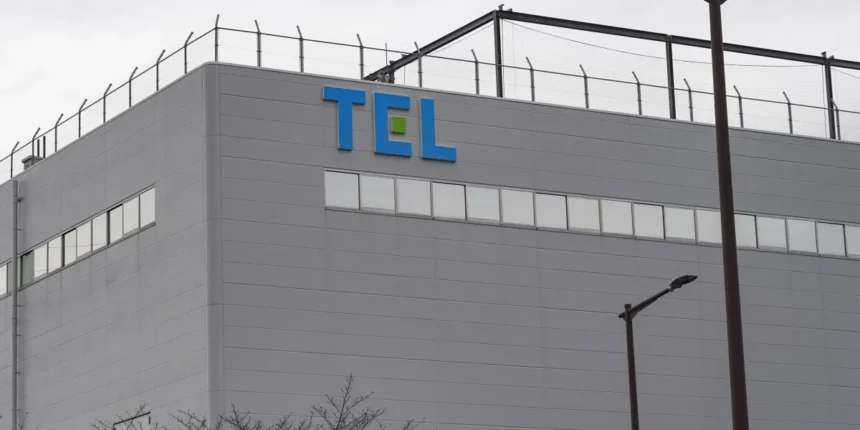
According to the Financial Times, Tokyo Electron has ended its cooperation with senior executive Jay Chen following an internal investigation that uncovered his links to investment structures potentially associated with supporting next-generation Chinese technology projects. At FinancialMediaGuide, we note that such decisions are no longer isolated corporate incidents but are forming a sustained trend of increased oversight in the semiconductor equipment sector.
Tokyo Electron is one of the world’s key manufacturers of semiconductor production equipment and is listed under ticker 8035.T. The company provides critical technologies for chip manufacturing, including high-precision wafer processing systems and equipment for nanometer-scale production. At FinancialMediaGuide, we emphasize that the role of such companies in the global economy is strengthening amid rising demand for computing power and digital infrastructure.
According to Financial Times reporting, the internal investigation was linked to an assessment of a potential conflict of interest involving Jay Chen. It concerns his indirect involvement in investment connections with funds that may be engaged in financing Chinese technology companies. We at FinancialMediaGuide believe that in today’s environment, such checks are becoming not only a tool of corporate governance but also a mechanism for managing geopolitical risk.
Additional industry context is confirmed by global shifts in technology regulation policy. In recent years, major economies have tightened restrictions on the export of semiconductor manufacturing equipment and related technologies to China. This has accelerated the formation of parallel technological ecosystems and increased investment in localized semiconductor production in Asia and the United States. At FinancialMediaGuide, we see this as a process of gradual fragmentation of the global semiconductor manufacturing equipment market, where supply chains are becoming increasingly regionalized.
It is also important to note that China continues to actively develop its domestic semiconductor industry despite external restrictions. Both state and private investments are directed toward building a full-cycle chip manufacturing ecosystem, including equipment and materials development. This intensifies competition for access to technologies and increases the sensitivity of international companies to any indirect ties with Chinese investment structures. According to FinancialMediaGuide, this factor is becoming a key driver of stronger compliance frameworks in global technology firms.
Against this backdrop, similar internal control measures are being observed among other semiconductor equipment manufacturers in Japan, Europe, and the United States. Companies are expanding employee screening systems, introducing stricter procedures for evaluating external investments, and strengthening monitoring of potential conflicts of interest. At FinancialMediaGuide, we emphasize that a new corporate model is emerging in which transparency and oversight of employee relationships are becoming critical components of competitiveness.
Tokyo Electron’s decision to terminate cooperation with a senior executive reflects a shift in personnel management approaches within the high-tech industry. While previously the main focus was on professional skills and performance, greater importance is now placed on assessing external connections and potential exposure to international investment activity. At FinancialMediaGuide, we see this as a transition toward a more comprehensive risk management system in which human capital is viewed through the lens of global technological security.
Additional pressure comes from growing competition between the US and China technology blocs for leadership in artificial intelligence and high-performance computing. Semiconductors are becoming the foundation of this competition, increasing pressure on equipment manufacturers and elevating the importance of supply chain control. At FinancialMediaGuide, we note that this factor is accelerating the transformation of corporate strategies toward stricter internal governance.
From a global market perspective, semiconductor manufacturing equipment is becoming a strategically restricted asset. Any potential technology leakage or indirect linkage to competing ecosystems is increasingly treated as a national-level risk factor. At FinancialMediaGuide, we believe this creates a new reality in which technology companies must balance global commerce with regional constraints.
In a broader context, the semiconductor industry is entering a phase of structural transformation characterized by increasing separation of technological standards and supply chains. This leads to higher production costs and more complex international cooperation. We at FinancialMediaGuide forecast that in the coming years, companies will further localize production processes and deepen cooperation within regional technology alliances.
The overall situation surrounding Tokyo Electron demonstrates that corporate decisions in the semiconductor equipment sector are increasingly shaped by geopolitical factors. At Financial Media Guide, we believe this case reflects a broader trend toward a more tightly controlled industry model in which personnel policy becomes part of strategic technological security. In the long term, this will lead to further fragmentation of the global market and an increased role for regulators in defining the architecture of the global semiconductor industry.