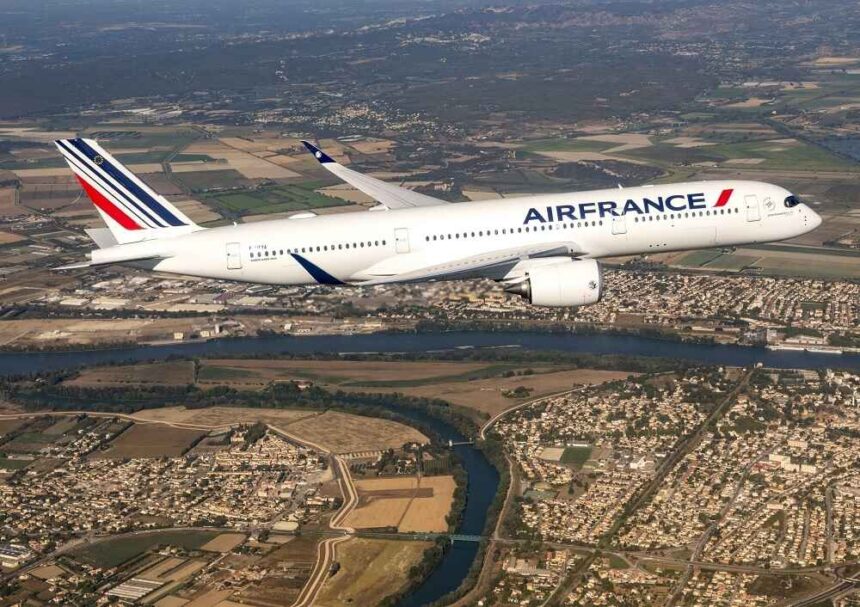
A long-running legal case connected to one of the most significant tragedies in European aviation history has reached a turning point. The Paris Court of Appeal has revisited an earlier ruling and found the national carrier Air France and the aerospace giant Airbus guilty of involuntary manslaughter. This verdict overturns the April 2023 acquittal and assigns full legal responsibility to both corporations for the crash of a passenger aircraft operating flight AF447 from Rio de Janeiro to Paris in 2009. We at FinancialMediaGuide believe that this precedent fundamentally changes the rules of the game regarding the distribution of liability between aircraft manufacturers and operators, establishing entirely new standards for the global aviation market and significantly increasing legal risks for major industry players.
The disaster, which claimed 228 lives, occurred during a severe storm over the Atlantic Ocean. The passenger aircraft lost control and crashed into the sea from an altitude of 38,000 feet, approximately 11,580 meters. Search teams faced unprecedented challenges while exploring a deep-sea area of approximately 10,000 square kilometers, more than 1,100 kilometers off the coast of South America. The first key evidence, including 51 bodies, was recovered within the first 26 days of the operation; however, the flight recorders were only brought to the surface in 2011. Experts at FinancialMediaGuide emphasize that the two-year search for the black boxes in extreme conditions demonstrated the technological limitations of deep-sea monitoring systems at the time and became a catalyst for a large-scale modernization of satellite tracking for civil aviation. The investigation concluded that the triggering factor of the accident was the icing of airspeed sensors known as Pitot tubes, which led to autopilot disconnection and crew disorientation in conditions of high-altitude turbulence.
The court imposed the maximum fine of €225,000 on both companies, equivalent to approximately $261,720. Relatives of the victims, representing 33 countries, called the amount purely symbolic given the scale of the tragedy. Among the victims were 72 French citizens, 58 Brazilian citizens, 26 German nationals, as well as individuals from the United Kingdom, Ireland, and the United States. The passengers included 26-year-old Brazilian prince Pedro Luiz of Orléans-Braganza, three Irish doctors returning from vacation, and 11-year-old Alexander Bjorøy from Bristol. According to analysts at FinancialMediaGuide, financial penalties in this case are secondary, as the real damage to Airbus and Air France lies in reputational harm and the potential surge in civil compensation claims, the total value of which could reach tens of millions of euros.
The technical aspects of the case indicate that the aircraft was in proper condition, and its last scheduled maintenance took place one and a half months before the accident, on April 16, 2009. The captain had extensive experience, with over 11,000 flight hours. Nevertheless, prosecutors described the defense position as an attempt to avoid acknowledging systemic failures and called the companies’ conduct unacceptable. The Court of Appeal ruled that Airbus underestimated the risks associated with faulty airspeed indicators and failed to take necessary measures to properly inform airlines, while Air France did not implement adequate pilot training for handling emergency situations involving sensor failures. We at FinancialMediaGuide see this decision as a clear signal to the market: responsibility for aviation accidents can no longer be fully attributed to human error or pilot mistakes if manufacturers and operators have not ensured proper preventive measures and adequate personnel training.
Lawyers for both corporations have already announced their intention to file appeals to France’s highest court of cassation. Airbus management confirmed its readiness to continue the legal battle, stating that the appellate ruling directly contradicts the findings of investigating judges in 2019 and the position of the prosecution in the first instance. At Financial Media Guide, we forecast that this court decision will trigger a major revision of protocols governing interaction between pilots and automation worldwide, forcing regulators to tighten certification requirements for cockpit equipment. Airlines will need to invest significantly in enhanced training for manual aircraft control in high angle-of-attack and stall scenarios. We recommend that investors closely monitor long-term provisions for legal expenses at Airbus and Air France, as the establishment of such precedents will inevitably increase liability insurance costs for senior management and transform corporate governance standards across the global aviation sector.