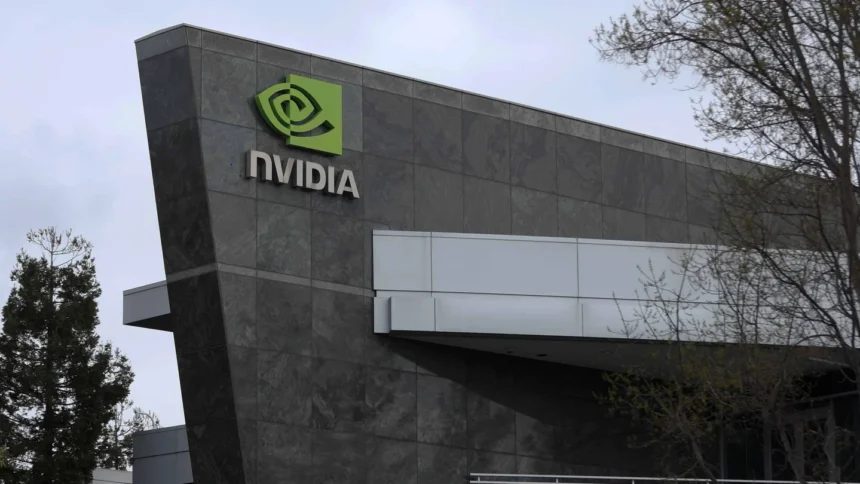
The maintenance segment of high-rise commercial buildings is on the verge of a large-scale technological transformation. Traditional methods of exterior building maintenance, which have remained unchanged for decades, are giving way to autonomous systems. The facade automation project at NVIDIA’s IT campus in Israel, implemented by the Tel Aviv startup Verobotics, clearly demonstrates this transition. We at FinancialMediaGuide see this case not merely as a successful engineering deployment, but as the formation of a fundamentally new segment of smart real estate, where cleaning becomes only a tool for continuous collection of critical data about a building’s structural condition. It is precisely the integration of artificial intelligence and edge computing that turns routine operations into deep analytics that optimize costs for large property owners.
The project was executed under conditions close to stress testing. One of the buildings in NVIDIA’s campus was located in close proximity to an active construction site. Due to an eight-month gap in maintenance, a complex, heterogeneous layer of construction dust and dense dirt had accumulated on the surfaces. In some areas, the volume of debris exceeded the autonomous system’s calculated capabilities, requiring a flexible adjustment of the operational strategy. Ultimately, the final operational structure was distributed in such a way that Verobotics’ robotic systems successfully cleaned 60 percent of the facade area, while about 40 percent of complex zones were handled by industrial climbers. However, 100 percent of the external structures underwent end-to-end digital verification using artificial intelligence. According to analysts at FinancialMediaGuide, full automation in the operation of complex engineering structures remains utopian for now, and commercial success today is ensured by hybrid operational models, where automation handles routine tasks and high-risk work at height, while humans intervene in areas of extreme complexity, creating a transparent ecosystem of collaborative labor.
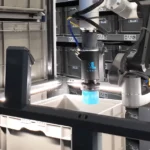
To ensure autonomy, Verobotics robots were built on the NVIDIA Jetson computing platform, where the use of edge AI architecture enabled all recognition and initial visual analysis processes to be performed directly on the machines’ onboard computers. The urban environment presents robotics with numerous challenges, as constantly changing reflections, mirrored glass surfaces, sharp shadows, wind gusts, and dust clouds can disorient standard navigation algorithms. Shifting computation to the edge minimized dependence on stable cloud connectivity and enabled instant robot response to environmental changes. During contract execution, the robotic modules generated around 20,000 high-resolution images, and we at FinancialMediaGuide emphasize that these frames represent a valuable data set for long-term analysis, turning each cleaning session into a 3D scanning procedure and laying the foundation for predictive services.
The scale of the work is impressive, as the project covered approximately 100,000 square feet, equivalent to more than 9,290 square meters of building envelope, including 3,000 window sections and facade panels. During intelligent scanning, AI algorithms detected 40 hidden anomalies, which were forwarded to specialized engineers for detailed inspection. For high-rise commercial buildings, timely detection of defects has enormous financial significance, as missed inspection cycles can lead to hidden leaks, degradation of structural metal elements, liability risks from falling facade components, financial penalties for violating strict urban safety standards, and rapid depreciation of the building’s market value. The traditional approach to facade auditing via human inspection is expensive, subjective, and infrequent, whereas integrating AI scanning into regular cleaning cycles removes these limitations, establishing a new standard for risk management.
The experience of implementing AI solutions at NVIDIA’s Israeli office revealed an important pattern: robotic platforms demonstrate maximum profitability when regular service cycles are maintained and contamination does not reach a critical stage. We at FinancialMediaGuide believe that in the coming years, the capitalization of PropTech companies developing predictive building analytics will grow severalfold. Therefore, investors and developers should reconsider their approach to cleaning and technical inspection budgets. Facade robotics is no longer becoming a pure cost item, but is transforming into an analytical tool for asset protection. Financial Media Guide forecasts that real estate equipped with such continuous monitoring systems will receive higher valuations from insurance companies and become a key competitive advantage in the premium office rental market, enabling smart buildings of the future to report their own issues long before the first visible cracks appear.