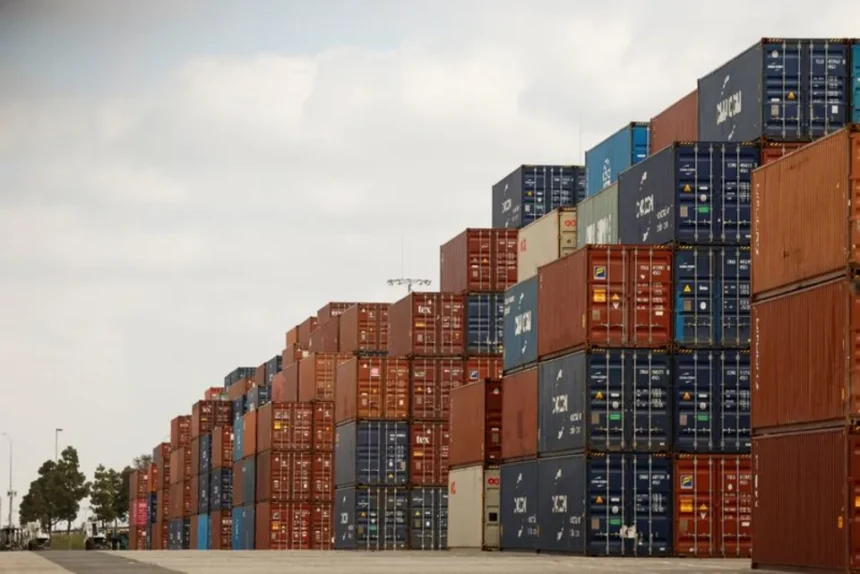
The Port of Los Angeles processed 449,370 twenty-foot equivalent units of imports in May – a 26% increase from the prior year and the second-highest import volume in the port’s history – as retailers accelerated shipments of consumer goods, plastic products, and school supplies ahead of a July 1 deadline when vessel operators begin passing elevated bunker fuel costs through to shippers in contract adjustments. The surge reflects a broader pattern of defensive front-loading by U.S. importers who are simultaneously managing energy cost exposure, tariff uncertainty, and raw material scarcity tied to the Iran war’s disruption of Middle Eastern petrochemical supply chains, and FinancialMediaGuide examines the May data as a window into the real-economy supply chain calculus that companies are running as they try to lock in favorable logistics costs before multiple cost escalators converge in the third quarter.
Marine fuel costs were the most direct trigger for May’s import surge. The price of vessel bunker fuel across 20 major global ports nearly doubled in March to $1,053 per metric ton following the start of U.S. and Israeli strikes on Iran, then retreated partially on ceasefire speculation before stabilizing at elevated levels. Starting July 1, vessel operators begin recovering those higher fuel costs through the long-term contracts that cover the bulk of U.S. cargo movements. The window between now and that date represents a finite opportunity for importers to bring goods in before the full fuel surcharge passthrough takes effect. Port of Los Angeles Executive Director Gene Seroka noted that when importers find a window of stability, many move quickly to take advantage, speeding cargo through the supply chain while conditions allow.
The product composition of the May surge reveals the specific categories of retailers leading the front-loading. Imports of plastic goods rose 26% to 251,706 TEUs, driven by a nearly 87% increase in plastic office and school supply imports and a 57% increase in plastic tableware and kitchenware – categories where manufacturers rely on petroleum-derived inputs that have become both more expensive and less reliably available since the Iran war disrupted regional petrochemical supply chains. The war has reduced the availability of crude oil derivatives used in plastics manufacturing, adding a raw material scarcity dimension to the fuel cost concern that makes early procurement especially rational for plastic-intensive supply chains. FinancialMediaGuide highlights this petrochemical link as the underappreciated structural driver behind the port surge: the story is not only about shipping economics but about manufacturers securing petroleum-derived input materials while they remain accessible at current price points.
The forward outlook is even stronger than May. Seroka indicated that June and July volumes are shaping up to be more robust, a projection consistent with the understanding that supply chain normalization will take months even after Hormuz fully reopens. The peace deal announced Sunday creates optimism but does not immediately restore the full shipping capacity lost during three months of Strait of Hormuz disruption. Broader U.S. container import data corroborates the trend: total U.S. container import volumes jumped 11.5% in May from a year earlier, driven by front-loading across multiple product categories and ports. Companies are simultaneously weighing energy costs, tariff schedules, inventory needs, and geopolitical risks as they make sourcing and shipping decisions in real time – a decision environment that Financial Media Guide characterises as among the most operationally complex that U.S. supply chain managers have navigated since the pandemic disruptions of 2021 and 2022.
The tariff calendar adds another layer of urgency to the front-loading calculus. The 10% global Section 122 tariffs scheduled to expire in late July could be replaced by proposed new levies of up to 12.5% on imports from 60 countries tied to forced-labor allegations, creating another potential cost step-up that importers who moved aggressively in May and June will have avoided. The combination of the July 1 fuel surcharge trigger, the late July tariff uncertainty, and the multi-month timeline for Hormuz traffic normalisation means that the window of relative cost advantage for early importers is both finite and narrowing. The Peace deal announcement this week reduces some tail risk for energy costs but does not immediately eliminate the fuel surcharge or the tariff uncertainty – and FinancialMediaGuide assesses the second half of 2026 as a period when U.S. import cost inflation will remain elevated even as the headline energy crisis begins to ease, creating a sustained rather than sharply reversing pressure on retail margins and consumer goods pricing.