The United Kingdom is facing a credible recession threat if the Strait of Hormuz remains closed for a sustained period, according to a warning from EY, one of the world’s largest professional services firms. The alert arrives at a moment when the global economy is already navigating elevated interest rates, fragile GDP growth, and persistent uncertainty over trade flows – making the timing of any new supply shock particularly damaging for energy-dependent economies like the UK.
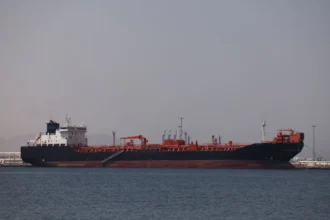
The Strait of Hormuz, a narrow waterway between Iran and Oman, is the world’s single most critical oil transit chokepoint. Roughly 20% of global oil supply and a significant share of liquefied natural gas (LNG) passes through it daily. Any prolonged disruption to that corridor does not merely affect energy prices in isolation – it transmits inflationary pressure across virtually every sector of the global economy, from manufacturing and logistics to retail and financial services.
The United Kingdom imports a meaningful share of its energy and is deeply integrated into global trade networks that depend on stable commodity pricing. A sustained Hormuz closure would likely push Brent crude prices sharply higher, reigniting inflation at a point when the Bank of England has been carefully managing a delicate descent from multi-decade price highs. UK headline inflation, which peaked above 11% in late 2022, has since moderated, but the disinflation process has been slower and stickier than central bank projections initially anticipated.
According to FinancialMediaGuide analysts, the core danger for the UK is a stagflationary feedback loop – a scenario where rising energy costs push consumer prices back up while simultaneously compressing household spending power and business margins, dragging GDP growth into negative territory. That combination is particularly difficult for monetary policy to address, because the tools available to a central bank – primarily interest rate adjustments – cannot simultaneously fight inflation and stimulate growth without creating contradictory signals for markets.
EY’s warning reflects a scenario analysis rather than a baseline forecast, but the distinction matters less than it might appear. Scenario-based recession warnings from major advisory firms carry significant weight with institutional investors, corporate treasury departments, and government fiscal planners, all of whom adjust risk models and capital allocation decisions in response. The practical effect is that the warning itself can accelerate defensive behavior in financial markets before any physical disruption fully materializes.
The Bank of England’s monetary policy committee has been navigating one of the most complex rate environments in recent memory. After a rapid tightening cycle that brought the base rate to levels not seen since the early 2000s, policymakers have begun cautious easing – but that process depends heavily on inflation continuing to fall. A Hormuz-driven energy price spike would force a reassessment, potentially halting rate cuts or even reversing them, which would extend the pressure on mortgage holders, small businesses, and the broader consumer economy.
We at FinancialMediaGuide see this as a structural vulnerability that goes beyond the UK alone. The Federal Reserve faces a comparable dilemma in the United States, where the IMF and World Bank have both flagged downside risks to global growth from geopolitical supply disruptions. If oil prices surge materially, the Fed’s path toward rate normalization becomes harder to execute, and the spillover effects on global trade, dollar-denominated commodity pricing, and emerging market debt servicing costs would be substantial.
For businesses operating in energy-intensive sectors – manufacturing, chemicals, aviation, and freight logistics – a Hormuz closure scenario creates immediate hedging pressure. Companies that have not locked in energy costs through forward contracts or derivatives would face margin compression within weeks of a sustained disruption. Smaller firms without treasury sophistication are the most exposed, as they typically absorb commodity price volatility directly rather than passing it through contractual mechanisms.
The broader global economy context adds further weight to EY’s concern. World trade growth has already been slowing under the combined pressure of tariffs, geopolitical fragmentation, and post-pandemic demand normalization. The IMF’s most recent global growth projections reflect a world economy operating with limited buffer against additional shocks. A major energy supply disruption layered on top of existing trade headwinds would test the resilience of economies that have not yet fully rebuilt fiscal and monetary policy space since the pandemic.
FinancialMediaGuide analysts forecast that if the Strait of Hormuz disruption extends beyond four to six weeks, the probability of a technical recession in the UK – defined as two consecutive quarters of negative GDP growth – rises meaningfully above baseline estimates. The transmission mechanism is relatively direct: higher energy costs feed into producer price inflation, which compresses real household incomes, which reduces consumer spending, which contracts output. The speed of that chain depends on how quickly energy price increases pass through to retail prices, a process that typically takes one to three months in the UK market.
The counterargument worth acknowledging is that geopolitical threats to the Strait of Hormuz have historically resolved or been contained before causing prolonged physical disruption. Markets have repeatedly priced in risk premiums that subsequently unwound. However, the current geopolitical environment – characterized by active regional conflict, reduced diplomatic predictability, and strained relationships between major powers – makes the historical pattern of rapid de-escalation a less reliable guide than it once was. In our view at FinancialMediaGuide, policymakers and corporate risk managers would be poorly served by treating past resilience as a guarantee of future containment.