Brazil’s monetary tightening cycle is gaining new momentum. Bradesco, one of the country’s largest private banks, has revised its year-end forecast for the Selic rate upward to 13.75%, a move that reflects deepening concerns about inflation persistence, fiscal pressures, and the broader trajectory of emerging market monetary policy. The revision places Brazil among the most aggressive rate environments in the world and carries implications that extend well beyond domestic borders.
The Selic rate is Brazil’s benchmark interest rate, set by the Banco Central do Brasil’s Monetary Policy Committee, known as Copom. After a prolonged easing cycle that brought the rate down to 10.5% in mid-2023, the central bank reversed course in late 2024 as inflation proved more stubborn than anticipated. According to FinancialMediaGuide analysts, the upward revision by Bradesco signals that the market now expects Copom to deliver additional hikes beyond what was previously priced in, reflecting a reassessment of both domestic inflation dynamics and external risks.
Brazil’s inflation has been driven by a combination of factors: a weakening real, elevated food and energy prices, and fiscal uncertainty surrounding the government’s spending framework. The exchange rate depreciation has added imported inflation pressure, complicating the central bank’s task. In this context, a Selic forecast of 13.75% is not a marginal adjustment – it represents a meaningful tightening signal that will affect credit conditions, consumer spending, and GDP growth across the Brazilian economy.
The Bradesco revision does not occur in isolation. Globally, central banks are navigating a difficult environment where inflation has proven more durable than models predicted, and where the Federal Reserve’s monetary policy decisions continue to set the tone for capital flows into and out of emerging markets. The Fed has maintained elevated interest rates for an extended period, and while markets have anticipated cuts, the timeline has shifted repeatedly. This dynamic has kept the U.S. dollar strong and increased the cost of holding emerging market assets, forcing central banks in countries like Brazil to maintain tighter stances to defend their currencies and anchor inflation expectations.
The IMF and World Bank have both flagged the risk that prolonged high interest rates in advanced economies could suppress GDP growth in developing nations by tightening financial conditions and reducing access to external financing. For Brazil, which carries a significant public debt load, higher domestic rates also mean rising debt servicing costs – a fiscal feedback loop that adds complexity to any forward-looking monetary policy assessment. We at FinancialMediaGuide see this as one of the central tensions in Brazil’s current economic position: the central bank must tighten to control inflation, but tightening itself creates fiscal stress that can undermine medium-term stability.
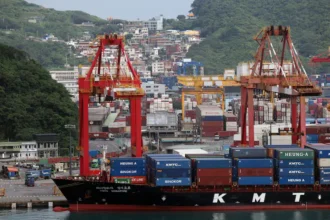
Global trade dynamics add another layer of pressure. Tariff uncertainty, particularly stemming from shifts in U.S. trade policy, has weighed on commodity exporters and disrupted supply chains. Brazil, as a major exporter of agricultural commodities and raw materials, is sensitive to changes in global trade flows. A slowdown in global demand – whether driven by recession fears in Europe, softer growth in China, or tighter financial conditions worldwide – would reduce export revenues and put additional pressure on the real, potentially requiring even more aggressive monetary tightening than currently forecast.
A Selic rate at 13.75% makes Brazilian fixed-income assets highly attractive in nominal terms, but the real return picture depends heavily on whether inflation is brought under control. If Copom’s tightening succeeds in anchoring expectations, investors could see meaningful real yields. If inflation remains elevated, the purchasing power of those returns erodes. FinancialMediaGuide analysts forecast that the credibility of the central bank’s commitment to its inflation target will be the decisive variable in determining how markets price Brazilian sovereign risk over the next 12 months.
For equity markets, high interest rates represent a structural headwind. Brazilian equities have faced valuation compression as the risk-free rate rises, reducing the relative attractiveness of stocks and increasing the discount rate applied to future earnings. Sectors with high leverage – utilities, real estate, and consumer credit – are particularly exposed. Foreign investors weighing exposure to Brazilian assets must balance the appeal of high carry against currency risk and political uncertainty surrounding fiscal policy.
The broader lesson from Brazil’s experience is relevant for the global economy. Emerging markets that entered the post-pandemic period with weaker fiscal buffers and higher inflation sensitivity are now facing a prolonged period of restrictive monetary policy, even as some advanced economies begin to ease. This divergence in monetary cycles creates volatility in global capital flows, affects exchange rates, and complicates the coordination of economic policy across borders. In our view at FinancialMediaGuide, Bradesco’s revised Selic forecast is a data point that reflects not just domestic Brazilian conditions, but the broader reality that the global fight against inflation is far from uniform – and for many emerging economies, the path back to neutral monetary policy remains long and uncertain.