The United States inflation rate has shown a meaningful deceleration in recent months, offering the Federal Reserve a degree of breathing room it has not had since the aggressive rate-hiking cycle began in 2022. Yet the relief is partial at best. A renewed climb in global oil prices is injecting fresh uncertainty into monetary policy decisions, complicating what many had hoped would be a straightforward pivot toward interest rate cuts. According to FinancialMediaGuide analysts, the interplay between cooling consumer prices and energy market volatility represents one of the more delicate balancing acts the Fed has faced in the current economic cycle.
Consumer price inflation in the United States has eased considerably from its peak above 9% in mid-2022, with more recent readings placing headline CPI closer to the 3% range. Core inflation – which strips out food and energy – has also moderated, though it remains above the Fed’s 2% target. That gap matters. The central bank has consistently signaled that it will not declare victory prematurely, and policymakers have maintained a cautious tone even as the data has improved. The Fed’s preferred inflation gauge, the Personal Consumption Expenditures index, has followed a similar downward trajectory but has not yet reached the level that would justify a definitive shift in monetary policy.
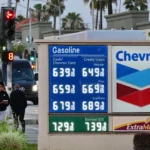
The complicating factor is energy. Crude oil prices have moved higher in recent months, driven by a combination of OPEC+ production restraint, geopolitical tensions affecting supply routes, and a modest uptick in global demand. Brent crude has at times pushed above $90 per barrel, a level that historically feeds back into transportation costs, manufacturing inputs, and ultimately consumer prices. We at FinancialMediaGuide see this as a structural risk that the Fed cannot simply look through, particularly when inflation expectations remain sensitive to headline price movements.
The relationship between oil prices and broader inflation is not mechanical, but it is persistent. Energy costs affect nearly every segment of the economy – from agricultural production to retail logistics. When oil prices rise sharply and sustain those levels, the disinflationary trend that has been building since late 2022 can stall or partially reverse. That is the scenario the Federal Reserve is now stress-testing internally, even if its public communications remain measured.
GDP growth in the United States has held up better than many forecasters anticipated. The economy expanded at an annualized rate above 3% in the third quarter of 2023, and while growth has moderated since, a recession has not materialized. The IMF and World Bank have both revised their global growth forecasts cautiously upward for 2024, though they continue to flag downside risks including tighter financial conditions, elevated debt levels in emerging markets, and fragmentation in global trade. FinancialMediaGuide analysts note that the resilience of U.S. GDP growth has paradoxically made the Fed’s job harder – a strong economy reduces the urgency of rate cuts while keeping demand-side inflation pressures alive.
The Federal Reserve’s rate-setting committee has held the federal funds rate in the 5.25% to 5.50% range since July 2023, the highest level in over two decades. Markets have repeatedly repriced their expectations for rate cuts, initially anticipating aggressive easing in early 2024, then pushing those expectations further out as inflation proved stickier than modeled. The Fed’s own projections, as reflected in the dot plot released at FOMC meetings, have signaled a gradual reduction in rates – but the timeline and magnitude remain contingent on incoming data.
Global trade dynamics add another layer of complexity. Tariffs introduced during the U.S.-China trade dispute have not been fully unwound, and new trade restrictions in semiconductors and strategic goods have introduced additional cost pressures into supply chains. The world economy is navigating a period of partial deglobalization, where efficiency gains from integrated supply chains are being traded for strategic resilience. In our view at FinancialMediaGuide, this structural shift keeps a floor under goods inflation that was not present in the pre-pandemic era.
The path forward for the Federal Reserve involves navigating between two credible risks. Moving too quickly to cut interest rates could reignite inflation, particularly if oil prices continue to climb and feed into services costs. Moving too slowly risks overtightening, which could tip a still-resilient but increasingly credit-sensitive economy into contraction. Neither outcome is benign for the global economy, given the dollar’s role in international trade and the spillover effects of U.S. monetary policy on emerging market borrowing costs and capital flows.
FinancialMediaGuide analysts forecast that the Fed is likely to begin a cautious easing cycle in the second half of 2024, assuming energy prices stabilize and core inflation continues its gradual descent. However, any sustained move in oil above $95 per barrel would likely delay that timeline and force a reassessment of the rate trajectory. For investors and businesses operating across borders, the central scenario is one of higher-for-longer interest rates, persistent but manageable inflation, and a global economy that grows below its long-run potential without falling into outright recession. Positioning for that environment – rather than for a sharp pivot – remains the more defensible analytical stance.