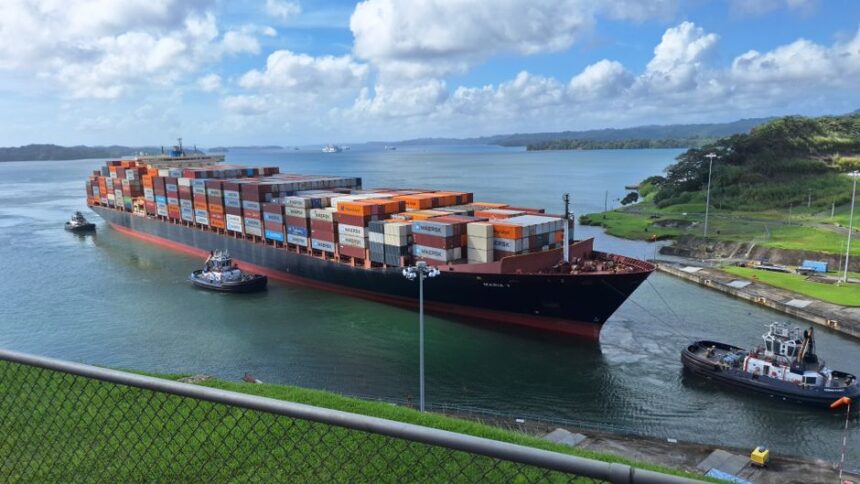
India’s External Affairs Minister S. Jaishankar recently described Panama as a natural bridge for India’s access to global trade routes, a statement that carries weight well beyond diplomatic courtesy. Delivered during a bilateral engagement, the remark points to a deliberate strategic recalibration by New Delhi – one that intersects with shifting patterns in global trade, rising tariff pressures, and the broader restructuring of supply chains that has accelerated since 2020. According to FinancialMediaGuide analysts, this kind of high-level framing of geographic corridors as economic assets reflects a wider trend among emerging economies seeking to diversify their trade infrastructure dependencies.
Panama’s role in global commerce is structural, not incidental. The Panama Canal handles an estimated 5% of global maritime trade by volume, connecting the Atlantic and Pacific Oceans and serving as a critical chokepoint for container shipping, liquefied natural gas, and bulk commodities. For India, whose trade with Latin America and the United States West Coast relies heavily on long-haul routing, access to efficient Panama Canal passage translates directly into freight cost competitiveness and delivery timelines. In a global economy where logistics margins are under pressure from elevated interest rates and softening GDP growth, route efficiency is a measurable financial variable.
India’s merchandise exports crossed $430 billion in the fiscal year ending March 2023, and the government has set an ambitious target of reaching $2 trillion in goods and services exports by 2030. Achieving that scale requires not just production capacity but reliable, cost-effective access to global markets. Latin America, with a combined GDP exceeding $5 trillion, remains underpenetrated by Indian exporters relative to its potential. Panama, as both a transit hub and a commercial center with one of the largest free trade zones in the world – the Colon Free Trade Zone – offers India a dual entry point: physical routing and commercial distribution.
The Colon Free Trade Zone processes re-exports worth tens of billions of dollars annually, serving markets across Central America, the Caribbean, and parts of South America. Indian pharmaceutical companies, textile manufacturers, and technology hardware exporters have room to expand their footprint in this ecosystem. We at FinancialMediaGuide see this as a structurally underexploited opportunity that Jaishankar’s framing is now beginning to formalize at the diplomatic level.
The timing of this engagement is not coincidental. The global trade environment is under significant stress. The United States has maintained and in some cases expanded tariff structures inherited from the previous administration, and the IMF has flagged trade fragmentation as one of the primary downside risks to global GDP growth in its recent assessments. The World Bank has similarly warned that supply chain regionalization, while reducing certain risks, can increase costs and reduce efficiency for developing economies that lack diversified routing options. For India, building redundancy into its trade architecture – including through Panama – is a rational hedge against a more fragmented global economy.
The macroeconomic backdrop adds another layer of complexity. Central banks across major economies, led by the Federal Reserve, have maintained restrictive monetary policy stances to combat inflation that proved more persistent than initially projected. Elevated interest rates have increased the cost of trade finance and working capital for exporters, compressing margins particularly for small and mid-sized firms. In this environment, reducing logistics costs through better routing becomes a partial offset to tighter financial conditions.
FinancialMediaGuide analysts note that freight rate volatility since 2021 – driven by pandemic disruptions, Red Sea security incidents, and canal capacity constraints – has made route diversification a boardroom-level concern for major trading companies. India’s interest in Panama fits within this broader corporate and sovereign risk management framework.
There is also a geopolitical dimension that shapes the economic calculus. China has deepened its infrastructure and trade relationships across Latin America over the past decade, and Panama itself switched diplomatic recognition from Taiwan to Beijing in 2017. India’s engagement with Panama can be read partly as an effort to establish a credible commercial presence in a region where Chinese influence has grown substantially. This is not a zero-sum dynamic, but competitive positioning in trade infrastructure does carry long-term consequences for market access and pricing power.
India’s membership in multilateral frameworks including the International Solar Alliance and its growing engagement with the Global South coalition give it soft-power tools to complement trade diplomacy. In our view at FinancialMediaGuide, the Panama signal is most effective if followed by concrete steps – investment in logistics partnerships, bilateral trade facilitation agreements, and engagement with Panamanian port operators and free zone administrators.
The broader forecast for India-Panama trade relations depends on execution. Diplomatic statements create openings; they do not by themselves redirect cargo flows or restructure supply chains. What the Jaishankar visit establishes is a political mandate for deeper economic engagement. If Indian trade ministries, export promotion councils, and private sector logistics firms follow through with operational commitments, the Panama corridor could become a meaningful component of India’s global trade architecture within the current decade – contributing measurably to GDP growth targets and reducing India’s exposure to single-route dependencies in an increasingly fragmented world economy.