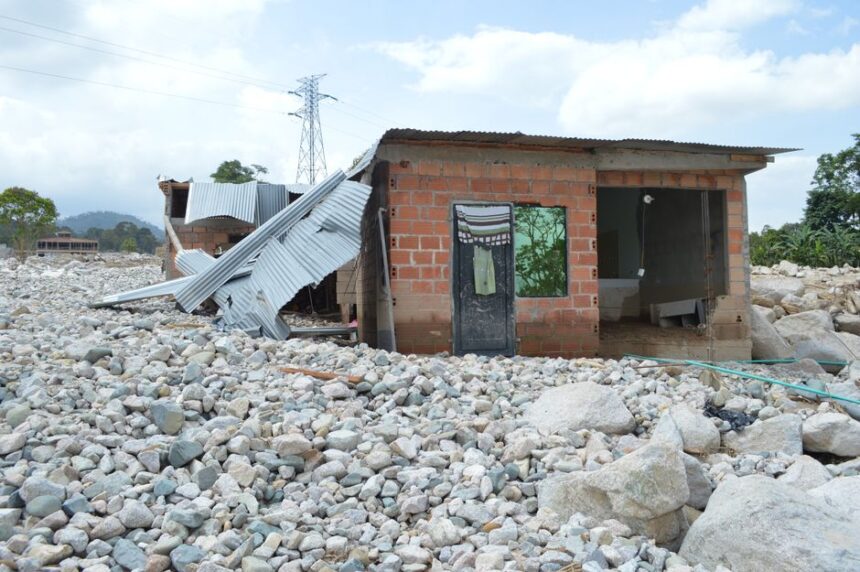
A catastrophic earthquake has pushed Venezuela further into crisis, with the death toll surpassing 5,000 and the country’s already fragile economic infrastructure facing additional strain. The International Monetary Fund has responded by releasing emergency financial assistance, a move that carries implications not only for Venezuela’s domestic recovery but also for broader discussions around sovereign debt, monetary policy, and the role of multilateral institutions in disaster-affected economies.
Venezuela’s economic situation before the earthquake was already among the most distressed in the Western Hemisphere. Years of hyperinflation, GDP contraction, and isolation from global trade had left the country with minimal fiscal buffers. According to FinancialMediaGuide analysts, the earthquake compounds a pre-existing structural collapse rather than creating a new crisis from scratch – the distinction matters because it shapes how international creditors and institutions calculate risk and recovery timelines.
The IMF’s decision to release funds reflects the institution’s emergency financing instruments, which operate outside standard program conditionality in acute disaster scenarios. These mechanisms, including the Rapid Financing Instrument and the Catastrophe Containment and Relief Trust, allow the Fund to disburse capital quickly without requiring a full macroeconomic adjustment program in place. For a country like Venezuela, which has had a deeply complicated relationship with the IMF and the World Bank for over a decade, this kind of engagement represents a significant shift in diplomatic and financial posture.
The release of funds does not automatically signal a return to normalized relations between Venezuela and the global financial system. Debt arrears, sanctions exposure, and unresolved disputes with international creditors remain active obstacles. We at FinancialMediaGuide see this as a humanitarian carve-out rather than a structural re-engagement – the IMF is responding to a natural disaster, not endorsing a macroeconomic framework.
For context, Venezuela’s GDP had contracted by an estimated 75% between 2013 and 2021, one of the steepest peacetime economic collapses on record. Inflation, while having moderated from its hyperinflationary peak of over 1,000,000% in 2018, remained elevated by any global standard heading into 2024. The earthquake now threatens to reverse modest stabilization gains made in recent years, particularly in the oil sector, which remains the country’s primary source of hard currency.
Oil infrastructure damage is a critical variable. Venezuela’s petroleum industry, operated primarily through PDVSA, had been slowly recovering output after years of underinvestment and U.S. sanctions. Any significant disruption to production or export capacity would affect not only Venezuela’s fiscal position but also regional energy supply dynamics – a factor that global trade analysts are monitoring carefully given current volatility in commodity markets.
The Venezuela situation arrives at a moment when the global economy is navigating a complex transition. The Federal Reserve and other major central banks have been managing the aftermath of aggressive interest rate cycles designed to bring inflation under control. The IMF’s World Economic Outlook projections have repeatedly flagged that emerging market economies face disproportionate exposure to tightening global financial conditions, higher borrowing costs, and reduced capital flows.
A disaster-driven financing event in Venezuela adds another data point to the pattern of stress in developing economies. FinancialMediaGuide analysts forecast that the IMF’s engagement here will be closely watched by other vulnerable sovereign borrowers as a signal of how the institution balances humanitarian response with fiscal discipline requirements. Countries in sub-Saharan Africa, South Asia, and parts of Latin America facing their own debt sustainability challenges will draw conclusions from how this case is handled.
The World Bank’s parallel role in post-disaster reconstruction financing is also relevant. Historically, the Bank has coordinated with the IMF on sequencing – emergency liquidity first, then structural reconstruction lending. Whether that sequencing can function effectively in Venezuela given its governance and sanctions environment remains an open question that multilateral institutions have not yet answered publicly.
From a monetary policy perspective, the disaster does not materially alter the Federal Reserve’s calculus, but it contributes to a broader picture of geopolitical and humanitarian risk that influences global investor sentiment. Emerging market spreads, commodity price volatility, and capital flow patterns are all sensitive to cascading crises in resource-rich but institutionally weak economies.
In our view at FinancialMediaGuide, the Venezuela earthquake and the IMF’s response illustrate a recurring tension in international finance – the gap between the speed of humanitarian need and the pace of institutional decision-making. Emergency financing helps bridge that gap in the short term, but without a credible path toward macroeconomic stabilization, debt restructuring, and restored access to global trade and capital markets, the funds released now will address symptoms rather than causes. The reconstruction of Venezuela’s economy, if it is to be durable, will require a level of multilateral coordination and political resolution that goes well beyond what any single IMF disbursement can deliver.