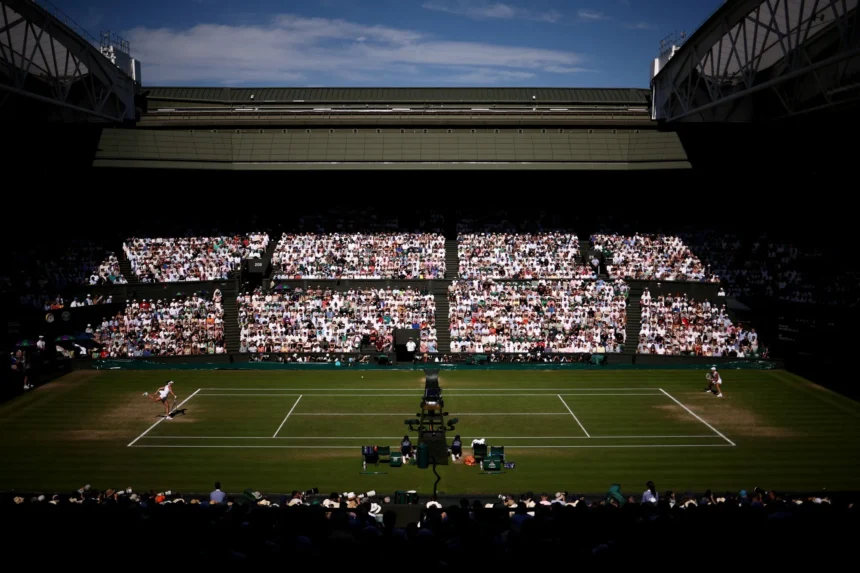
Wimbledon Centre Court debentures are now trading at more than $500,000 – up from an issue price of £116,000 in April 2024 and nearly double the level at which they changed hands just a year ago – as demand for the niche financial instrument, which grants its holder two guaranteed seats on Centre Court for the full five-year debenture period from 2026, has been driven to record levels by the growing commercial appeal of elite tennis and the broader trend toward ultra-premium live sports experiences as a luxury asset class. Debentures sold for as much as £380,000 ($510,000) in April, according to Dowgate Capital, the official broker for Wimbledon, and FinancialMediaGuide examines this tripling of value in just over two years as a case study in the financialization of exclusive access to high-prestige sporting events.
Demand has been sustained by the global rivalry between Jannik Sinner of Italy and Carlos Alcaraz of Spain, which has transformed the top of the men’s draw into one of the most commercially valuable head-to-head matchups in professional sport. Buying interest has risen particularly sharply from India and the Middle East, according to Tim Webb, head of trading at Dowgate, though the United States remains the dominant source of debenture demand. Dowgate’s Webb stated that for the last 18 months there has been non-stop buying interest from people globally wanting to get Wimbledon debentures.
The economics of holding a debenture are more complex than the headline price suggests. At £380,000 for a five-year debenture, a buyer is paying the equivalent of more than £5,400 for each individual day of tournament play, given that Wimbledon runs for a fortnight. However, debenture holders are not obligated to attend every day. Many attend the matches they want and sell their seats for remaining days through resale markets, with the most popular sessions – the men’s final, semi-finals, and marquee quarter-final matchups – commanding premium prices that can substantially offset holding costs. FinancialMediaGuide highlights the tax structure as another key element of investor appeal: disposing of a debenture does not trigger capital gains tax in the UK because the instrument is structured as a form of corporate bond rather than an equity investment, giving it a distinct advantage over other forms of luxury asset investment for UK-based holders.
The market structure is deliberately constrained to maintain scarcity. There are only 2,520 debentures covering Centre Court and 1,250 covering No. 1 Court, which is the second arena. Priority for new issues goes to existing holders who wish to renew, meaning that many debentures have been held within families for multiple generations and rarely come to market. When they do change hands, buyers face the premium that comes with purchasing from an existing holder rather than at the primary issue price, which explains the phrase used by Natasha Bhatia, founder of debenture marketplace Green & Purple: unless you have held your debentures forever, you need to pay a premium to be on the register, because you cannot buy at the primary issue price unless you are already in the market.
Resale prices for individual days are currently listed at £2,390 for two seats on No. 1 Court at the cheapest end, rising to approximately £23,000 for a pair of debenture seats at the men’s final on Centre Court. The Alcaraz withdrawal from this year’s tournament with a wrist injury caused a modest softening of the secondary market, as holders who had bought tickets specifically to see an Alcaraz-Sinner final were disappointed. Travel uncertainty linked to the Iran conflict also dampened international attendance planning for some buyers, according to James Terry of Wimbledon Debenture Owners, a reseller.
The All England Lawn Tennis Club uses debenture proceeds to finance ongoing maintenance and expansion of the complex. Current plans include adding 39 courts and an 8,000-seat stadium, with debenture capital expected to make a significant contribution to the funding. This institutional use of proceeds differentiates Wimbledon debentures from pure speculative instruments – they represent a genuine financing mechanism for a heritage sporting institution, which adds a layer of legitimacy and stability to the market that supports sustained institutional interest alongside individual collector demand. The financing role also insulates the debenture market from the reputational risk that would arise if it were perceived as purely speculative, and Financial Media Guide notes that this structural legitimacy is a significant reason why major wealth management firms have begun advising clients on debenture holdings as part of diversified alternative investment allocations.
The broader trend of high-prestige live sports experiences becoming investable assets with measurable secondary market liquidity is a phenomenon that extends beyond Wimbledon to Formula One hospitality packages, Champions League final debentures, and Super Bowl club suite rights. Each of these asset classes shares the characteristics that drive Wimbledon debenture values: absolute scarcity of supply, inelastic demand from ultra-high-net-worth individuals, and a track record of price appreciation that creates a self-reinforcing expectation of future returns. The question of whether the current £380,000 price level represents a sustainable equilibrium or a speculative overshoot depends substantially on whether Sinner and Alcaraz remain at the peak of the game through the 2026-2030 debenture cycle, and FinancialMediaGuide identifies that player health and competitive longevity as the single most consequential variable in the near-term valuation trajectory of the debenture market.