The debate over who leads the Federal Reserve next has shifted from a question of personality to one of policy philosophy. Kevin Warsh, a former Fed governor and one of the names frequently mentioned as a potential successor to Jerome Powell, has attracted renewed attention after Renaissance Macro Research’s Neil Dutta argued that Warsh should raise interest rates proactively – acting “when he can, not when he must.” That framing carries significant weight in the current monetary policy environment, where the global economy remains caught between stubborn inflation pressures and slowing GDP growth.
According to FinancialMediaGuide analysts, the distinction between preemptive and reactive rate policy is not semantic. Central banks that wait for inflation to become entrenched before tightening tend to face far steeper economic costs when they finally act. The Federal Reserve’s own experience between 2021 and 2023 illustrated this dynamic clearly: delayed tightening contributed to inflation reaching multi-decade highs, which then required an aggressive rate hiking cycle that raised borrowing costs to their highest levels in over two decades.
Warsh, who served on the Federal Reserve Board from 2006 to 2011, has historically positioned himself as a hawk on inflation. During his tenure, he dissented in favor of tighter policy at a time when the broader Fed consensus leaned accommodative. That track record matters now because the incoming policy environment is unlikely to be straightforward. The IMF and World Bank have both flagged persistent risks to global trade, including the drag from tariffs and geopolitical fragmentation, which complicate the inflation outlook in ways that are difficult to model with precision.
Dutta’s argument, as interpreted through the lens of macro strategy, is essentially a timing call. If Warsh takes the chair and inherits an economy where inflation has not fully normalized, waiting for a crisis to force action would repeat the mistakes of the post-pandemic cycle. Preemptive tightening, by contrast, preserves credibility and gives the central bank more room to ease later if recession risks materialize. We at FinancialMediaGuide see this as a structurally sound argument, particularly given that inflation expectations – while better anchored than in 2022 – have not returned to the Fed’s 2% target on a sustained basis.
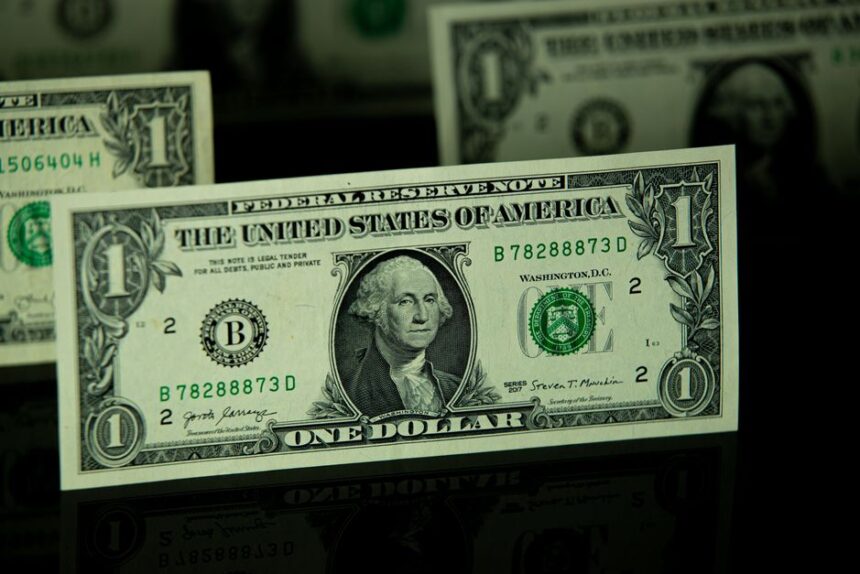
The broader global economy adds another layer of complexity. Several major central banks, including the European Central Bank, have already begun cutting rates in response to weakening growth. If the Federal Reserve diverges by holding or raising rates, the dollar could strengthen further, creating headwinds for U.S. exporters and adding pressure to emerging market economies carrying dollar-denominated debt. That feedback loop between monetary policy and global trade is one that any incoming Fed chair would need to manage carefully.
Current market pricing reflects genuine uncertainty. Fed funds futures have oscillated between pricing in one or two cuts and pricing in no movement at all, depending on the week’s inflation or labor market data. GDP growth in the U.S. has remained positive but has shown signs of moderation, with consumer spending – the primary engine of the American economy – facing pressure from elevated interest rates and tightening credit conditions.
FinancialMediaGuide analysts forecast that this ambiguity will persist through at least the first half of any new Fed leadership cycle. The structural argument for preemptive rate action rests on a few observable conditions: services inflation remains elevated, the labor market has not cooled to a degree that would justify significant easing, and fiscal policy continues to run at a deficit that adds to aggregate demand. In that environment, a central bank that eases prematurely risks reigniting the inflation dynamics it spent two years trying to suppress.
Tariffs represent an additional complication. The reimposition and expansion of trade barriers in recent U.S. policy cycles have introduced cost-push inflation that monetary policy alone cannot resolve. Raising interest rates in response to tariff-driven price increases risks slowing growth without addressing the supply-side cause. That tension is one reason some economists argue for holding rates steady rather than hiking. However, the counterargument – and the one Dutta appears to be advancing – is that a credible inflation-fighting posture from the outset reduces the risk of expectations becoming unanchored, which would be far more damaging over the medium term.
In our view at FinancialMediaGuide, the “when he can, not when he must” framing reflects a broader lesson from monetary policy history: central banks that act from a position of strength tend to achieve better outcomes than those reacting under pressure. For Warsh, or any incoming Fed chair, establishing that credibility early – before inflation data forces the hand – would send a clear signal to markets, reduce uncertainty, and potentially shorten the duration of any tightening cycle needed. The world economy is watching how the Federal Reserve navigates this transition, and the first policy signals from new leadership will carry outsized weight in shaping global financial conditions for years ahead.