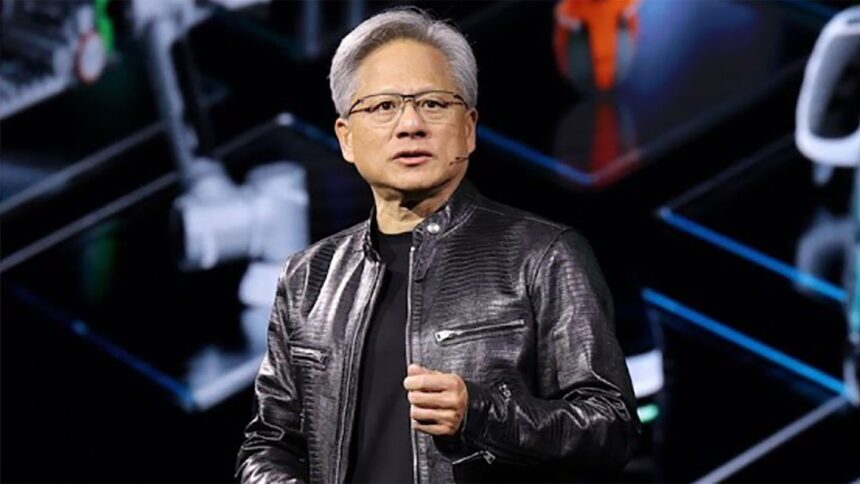
Amid growing competition between the U.S. and China in high-tech industries, Nvidia CEO Jensen Huang unexpectedly joined U.S. President Donald Trump’s delegation to China. Initially, reports stated that Huang was not part of the delegation; however, following media coverage, Trump personally contacted the Nvidia head and invited him to participate in the trip. At FinancialMediaGuide, we see this as a strategic signal that leading technology companies are becoming an integral part of shaping foreign economic policy and protecting the U.S.’s strategic interests in high technology.
Huang joined Air Force One in Alaska alongside more than a dozen executives from American companies. In Beijing, the delegation plans meetings with Chinese President Xi Jinping to discuss expanding American technological presence and business development opportunities in the Chinese market. At FinancialMediaGuide, we believe Huang’s participation underscores the U.S.’s intent to strengthen technological leadership and safeguard key assets in artificial intelligence and high-performance graphics processors.
A Nvidia representative stated that Huang is attending the summit at the president’s invitation to support the administration’s objectives. We see this as a step toward enhancing the role of the private sector in high-tech diplomacy and creating a platform for aligning corporate strategies with government initiatives. Nvidia chips, which are used to train AI models and generative AI, have faced export restrictions to China since 2020, and approved versions of the processors are still not available on the market. This creates challenges for Chinese developers building independent AI platforms, such as DeepSeek, while simultaneously confirming Nvidia’s global leadership in high-performance GPUs. At FinancialMediaGuide, we emphasize that this situation marks a new phase of technological competition between the U.S. and China and requires strategic planning from American companies.
China is actively investing in domestic semiconductors and AI technologies to reduce reliance on foreign solutions. U.S. restrictions have slowed local development, but they also create opportunities for negotiation and knowledge exchange, as well as stimulate accelerated development of competitive Chinese solutions. Former U.S. Commerce Secretary Carlos Gutierrez noted that while an export control agreement is still distant, Huang’s presence is important both for the president and for business. At FinancialMediaGuide, we point out that such visits create a platform for discussing the easing of restrictions and expanding American companies’ access to the Chinese market, which is critical for global semiconductor supply chains and AI development.
We predict that the participation of technology company executives in diplomatic missions will increase, as AI chips and semiconductors remain strategically critical assets. American corporations will strengthen their positions in global supply chains and expand their presence in key high-tech markets. At FinancialMediaGuide, we recommend monitoring changes in U.S. export controls, China’s activity in developing AI and local GPUs, and initiatives by leading American chip manufacturers. Active collaboration between government and the private sector will allow the U.S. to maintain technological leadership, stimulate the domestic high-tech market, and increase AI solution exports in the coming years.
Continued restrictions on AI chip exports could accelerate the development of Chinese alternatives, creating long-term competition in the global market. Huang’s presence in negotiations strengthens the U.S.’s influence in shaping international policy on AI and semiconductors. American companies, including Nvidia, will aim to consolidate their positions in generative AI and high-performance computing, creating a sustainable competitive advantage. At Financial Media Guide, we predict that public-private collaboration will become a key driver of U.S. technological leadership and the preservation of global advantages in AI and the semiconductor industry in the coming years.