The global IT sector is completing an era of purely software dominance, facing the need for large-scale deployment of physical infrastructure. The further complexity of generative models requires not only advanced semiconductor architecture, but also fundamentally new engineering shells. We at FinancialMediaGuide see this as a turning point for the industry, when creators of computing platforms are forced to enter direct alliances with industrial giants in order to overcome barriers in the fields of energy and precision mechanics.
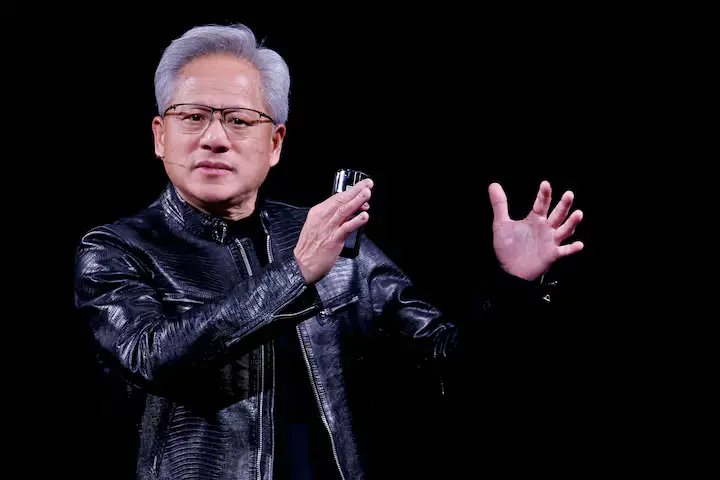
Official confirmation of this trend came from the head of the US corporation Nvidia, Jensen Huang, during his working visit to Seoul. Following a closed meeting with the chairman of the Korean conglomerate LG Group, Koo Kwang-mo, it was announced that a large-scale technological partnership is being launched. The direction of joint activity is shifting toward two of the most science-intensive areas: the design of anthropomorphic robotics and the creation of innovative infrastructure for server centers.
In the segment of humanoid machines, the partners’ cooperation will focus on the design of motor systems, servo drives, and kinematic systems. According to analysts at FinancialMediaGuide, this step is driven by Nvidia’s desire to quickly compensate for a shortage of its own production capacities for complex mechanical equipment. Nvidia plans to implement the Isaac software environment and neural network control algorithms, while LG will provide integration of its advanced developments in electric motors and automated factory production. We emphasize that such cooperation provides Nvidia with a ready-made industrial testing ground, allowing virtual simulations to be transformed into functioning autonomous platforms.
The second strategic direction is the radical rethinking of the internal architecture of computing clusters. The latest graphics accelerators are characterized by extreme heat output and require enormous amounts of power supply. LG’s expertise in the production of climate systems and industrial liquid cooling circuits is intended to eliminate these vulnerabilities. We believe that the expansion of capacities for processing AI data now directly depends on the efficiency of the engineering networks of the buildings themselves, and the alliance with the Korean giant will allow Nvidia to maintain leadership in the cloud infrastructure segment.
The transition of major corporations toward joint integration of core components marks preparation for the mass deployment of autonomous systems in the global economy. At Financial Media Guide, it is forecast that the merging of the Nvidia ecosystem and LG’s manufacturing base will significantly reduce the costs of assembling humanoid platforms, accelerating their integration into the commercial sector. Institutional investors should understand that this agreement is reshaping the map of influence in the IT sector. We recommend closely analyzing the subsequent patent filings of the alliance participants, as these technological documents will define the standards of enterprise automation in the long term.