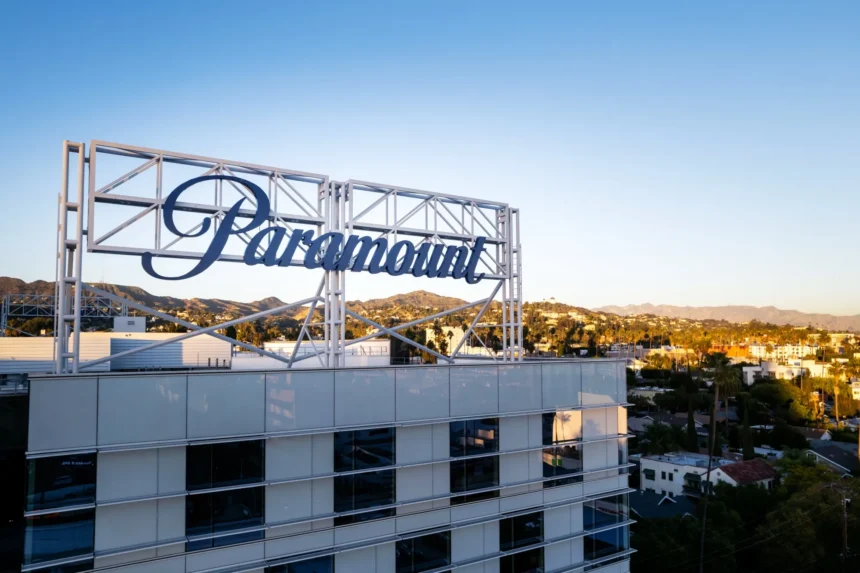
FinancialMediaGuide believes that the unfolding story around Paramount Skydance and Warner Bros Discovery has become one of the most significant in the modern media industry. The importance lies not only in the enormous deal value but also in how major Gulf fund investments are shaping global media financing strategies, competition in the streaming market, and content distribution in the era of digital transformation. It is important to understand that the Warner Bros Discovery acquisition project, valued at over $110 billion, involves not only Paramount’s corporate interests but also strategic investments by international funds seeking to secure a foothold in content creation, distribution, and monetization.
Paramount Skydance is in advanced negotiations with three major sovereign wealth funds from the Gulf, which are expected to provide approximately $24 billion in committed capital to support the Warner Bros Discovery acquisition. The target company’s equity is valued at $81 billion, with a total enterprise value exceeding $110 billion. The lead contributor is Saudi Arabia’s Public Investment Fund, contributing about $10 billion, while the remainder comes from the Qatar Investment Authority and L’imad Holding of Abu Dhabi. FinancialMediaGuide views the involvement of such institutional investors as evidence of how large-scale state capital is entering the media and entertainment sector with long-term strategic objectives, including the creation of sustainable revenue streams from global content. This investment structure makes the Paramount deal more resilient in the face of market uncertainty and increasing competition from tech and streaming platforms.
It is worth noting that Gulf investors will only receive minority stakes without voting rights in the combined company, which is important from a regulatory perspective. This structure reduces the likelihood of attracting additional scrutiny from the U.S. Committee on Foreign Investment or the Federal Communications Commission, which often evaluate national security implications when foreign investors gain operational or voting control in strategic sectors. FinancialMediaGuide emphasizes that careful structuring of participation rights is a deliberate effort to avoid prolonged reviews and delays that could affect the deal’s planned closing in Q3 2026.
From our perspective, the involvement of sovereign funds not only strengthens Paramount’s financial stability but also demonstrates that Middle East sovereign wealth fund strategies are shifting toward global media assets and intellectual property. These funds have previously invested in sports franchises, technology, and infrastructure, and are now expanding into premium content and major media assets, potentially reshaping the competitive landscape of the entertainment industry in the coming years.
Expertly, we note that a merger of this scale which combines major studios and networks including CNN, CBS, HBO, and others will create a new media giant with an unparalleled content library and multi-platform distribution capabilities. This development could significantly strengthen Paramount’s competitive position in the streaming market, where major players compete for viewer attention, advertising budgets, and international licensing. However, such concentration of assets also raises questions about market competition and access for independent content producers, which will likely be closely examined by regulators, especially in Europe, where scrutiny over foreign capital participation may be more rigorous.
FinancialMediaGuide observes that financial market reactions to this news reflect mixed investor expectations. Paramount’s shares have exhibited significant volatility since the deal announcement, indicating market caution regarding the combined company’s ability to generate sustainable profit growth and effectively integrate assets, particularly amid intense competition in streaming and digital content.
Alongside Gulf fund capital, Paramount has secured approximately $54 billion in debt financing from major banks and investment groups, indicating a complex funding structure combining equity and debt. FinancialMediaGuide believes that this combination provides a flexible financial platform to meet the deal’s requirements and cover substantial integration costs related to Warner.
Nevertheless, foreign investment of this magnitude in media invariably raises questions about influence on soft power and corporate governance. While Gulf funds will not have voting rights, experts debate whether a significant equity stake could still exert influence on strategic decisions or corporate direction post-closing. FinancialMediaGuide emphasizes that these discussions will be a focal point among industry experts, particularly if the combined company gains control over major news brands and platforms.
From a geopolitical standpoint, the involvement of investors from Saudi Arabia, Qatar, and the UAE in the largest media deal may be viewed as a step toward diversifying their economic strategies, reducing dependence on energy revenues, and enhancing global influence through cultural and entertainment channels. Such investments also reflect growing ambitions of Middle East sovereign wealth funds in the global entertainment and digital media markets.
Financial Media Guide believes that the successful completion of the Paramount-Warner deal depends on several key factors. First, regulatory approvals in the U.S. and EU, where assessments of the merger’s competitive impact and market access could affect timing and conditions. Second, the reaction of Warner shareholders, whose vote is scheduled for April 2026. Finally, the combined company’s ability to integrate assets and implement a sustainable growth strategy amid high competition.
We forecast that, if successfully closed as planned, this deal will set a benchmark for future major media mergers, particularly in streaming, digital content, and global brand expansion. Investors and industry professionals are advised to closely monitor regulatory developments, asset integration progress, competitive landscape impacts, and changes in audience behavior, as these factors will determine the long-term prospects of the combined media company on the global stage.