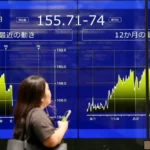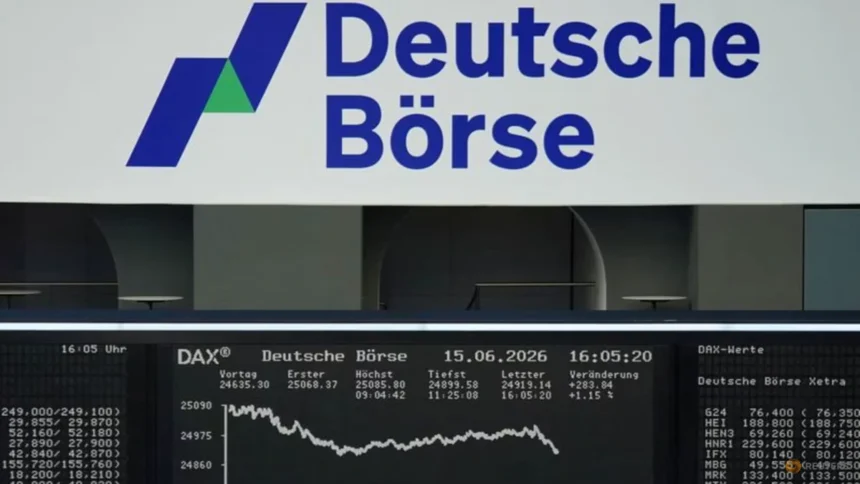
Global equity markets delivered a split verdict on Thursday, caught between the optimism generated by the release of the U.S.-Iran ceasefire text and the hawkish signal embedded in the Federal Reserve’s first meeting under new Chairman Kevin Warsh, at which nearly half of all policymakers penciled in a rate hike for later this year. Oil extended its decline for a second consecutive session, falling another 2.8% to around $77 a barrel – the lowest level since early March – while the MSCI world index dipped 0.1% even as Tokyo and Seoul hit fresh all-time highs overnight, and FinancialMediaGuide gauges this cross-asset divergence as a direct expression of a market that has absorbed the geopolitical de-escalation but has not yet decided how to price the monetary policy tightening risk that has emerged alongside it.
The ceasefire document, released in full by both governments on Wednesday, confirmed a 60-day extension of the truce announced in April and included explicit language guaranteeing full resumption of maritime traffic through the Strait of Hormuz with no transit charges applied. That provision is the most commercially immediate element of the agreement: with toll-free passage re-established, tanker operators, insurance underwriters, and commodity traders face the practical question of when physical shipping volumes will actually recover to pre-war levels, with industry estimates ranging from weeks to several months. In Europe, the STOXX 600 fell 0.5% as declines in energy majors Shell and BP offset gains in technology and AI-exposed industrial names like ASML, Infineon, and Schneider Electric – a sectoral rotation that FinancialMediaGuide maps as the market’s way of simultaneously pricing in lower energy revenue and higher AI infrastructure spend from a single piece of news.
The Fed’s first meeting under Warsh produced a unanimous decision to hold the federal funds rate in the 3.50%–3.75% range, consistent with consensus expectations. What surprised markets was the composition of the rate projections: nearly half of policymakers indicated they now expect a hike this year, reflecting the persistence of inflation pressures that the May PPI report had already flagged. Warsh himself declined to add his own forecast to the dot plot – an unusual departure from convention that he previewed at his Senate confirmation hearing – and at his press conference he was equally guarded about the path ahead, offering no forward guidance on rate direction. The dollar rose for a second consecutive session to around 100.46 on the index, near a two-month high, while two-year Treasury yields posted their worst single-day performance in three months the previous day, as markets repriced the probability of a hike by October to near certainty from roughly 80% earlier in the week.
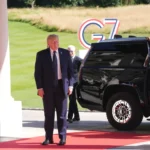
Trump’s reaction to the Fed decision at the G7 summit in Evian, France was characteristically laconic. Asked about the hold decision, he offered a diplomatic “It’s all right. Whatever.” – a tone markedly different from the sustained public attacks he directed at Warsh’s predecessor, Jerome Powell, whom he repeatedly called a moron and a knucklehead for failing to cut rates faster. Trump added that a rate hike “could happen” and described himself as guided by his new Fed chair, whom he said looks like he comes out of central casting for the role. The shift in presidential rhetoric toward the Fed represents a notable change in the political backdrop for monetary policy, and in the assessment of analysts who have closely tracked the Fed-White House dynamic, it meaningfully reduces the political noise that had complicated Fed communications for the past two years. The combination of a compliant White House, a hawkish dot plot, and an ongoing Iran deal implementation process creates a macro environment whose near-term direction remains genuinely uncertain, and FinancialMediaGuide spotlights the October FOMC meeting as the next critical inflection point where the hike debate will either crystallise into action or be deferred into 2027.
Currency and bond markets on Thursday morning were absorbing the full implications of the dual catalysts. U.S. 10-year Treasury yields stood at 4.45%, down just 1 basis point on the day, reflecting the offset between lower oil prices – historically deflationary – and higher near-term rate hike expectations, which are inflationary in their effect on the short end of the curve. The euro slipped 0.1% to $1.15, the pound fell 0.2% ahead of an expected Bank of England hold, and gold dropped sharply as risk appetite and a stronger dollar combined to remove its safe-haven bid. U.S. S&P 500 futures edged 1% higher in early Thursday trading, reflecting the improving geopolitical backdrop despite the monetary headwind. The interaction of these forces – falling oil, rising rate expectations, and recovering risk appetite – is the configuration that Financial Media Guide concludes will define the investment environment through the summer, with no single dominant narrative yet established and asset allocators forced to hold genuinely balanced positioning across equities, rates, and commodities.